 New Book Alert!!
Nick Polyak and I are continuing our adventures in writing, leading, and “mindset shifting” with our fifth leadership book, coming out in early 2025:
Leading for Tomorrow’s Schools Today
Description of Book
Leading for Tomorrow’s Schools Today is a forward-thinking guide for educational leaders navigating the rapidly changing landscape of 21st-century schools. Authored by seasoned superintendents Mike Lubelfeld & Nick Polyak, this book offers practical strategies and insightful reflections on how to lead effectively in times of change and uncertainty. Drawing on years of experience and a deep understanding of the educational field, the authors provide a roadmap for fostering growth, embracing innovation, and driving meaningful transformation in schools. The book emphasizes the importance of change and growth planning, highlighting proven approaches to cultivating a positive school culture, empowering teachers, and enhancing student outcomes. With a focus on both the challenges and opportunities that lie ahead, Leading for Tomorrow’s Schools Today equips leaders with the tools and mindset necessary to create learning environments that prepare students for success in a complex and dynamic world. This book is an essential resource for current and aspiring school leaders committed to shaping the future of education.
We are grateful to our publisher, Rowman & Littlefield/Bloomsbury and the teams of editors there!
As a “tip of the hat” to the recent Generative Artificial Intelligence tools from Google’s Notebook LM, we took part of our author marketing materials and shared them with the advanced Gen AI tools. The Robot Podcasters made a 15 minute “conversation” as to why you should give the book a read!
Link to 15 minute “podcast” Google Notebook LM AI Podcast “conversation”
We are very grateful to the following inspiring leaders for writing testimonials:
Luvelle Brown
Joe Sanfelippo
Courtney Orzel
Christopher Nesmith
Dr. Lupita Ley Hightower
Grateful to the following for writing essays in the book:
Glenn Robbins
Dr. Zandra Jo Galván
Gladys I Cruz
Jeff Dillon
Tremendous thank you to Thomas C. Murray for writing the Foreword!!
We are grateful and honored by the support, partnership, writing, messaging, and inspiration!
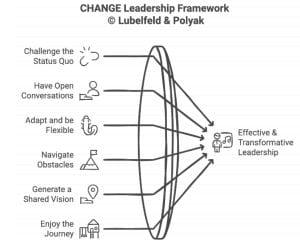
We introduce our new CHANGE leadership framework too!!
If you don’t want to listen to the Google Robots, check out the transcript (courtesy of TurboScribe)
Transcript of Google NotebookLM Podcast from TurboScribe
Proud of the support from our Boards of Education, Leadership Team Members, Teachers, Educational Support Staff, Business Partners, Communities, Students and so many more! Humbled by opportunities to share and proud to add to the leadership literature.
We are always grateful to the teams at AASA, The School Superintendents Association for their support and encouragement over the years!!
Table of Contents
Acknowledgments
Foreword by Tom Murray
List of Tables & Figures
Preface
Introduction
Section 1: Leadership is Change
Chapter 1: Cultivating Change
Chapter 2: Selection of Staff, Who, How, and How Long?
Voices from the Field: Leading Transformation in a VUCA World: A Progressive Vision for Brigantine Public School District, Glenn Robbins, Superintendent, Author
Section 2: Go Where the Smart People Are – Learning From Others
Chapter 3 : Networks and Professional Organizations
Chapter 4: Language Matters
Voices from the Field: My Journey of People-Centered Leadership as Superintendent, Dr. Zandra Jo Galvan
Section 3: You Can Do It
Chapter 5 : We’re Not Broke, We’re Broken
Chapter 6 Transformation: Flip the Mindset
Voices from the Field: Expanding Pathways to Success, Gladys I. Cruz
Section 4: Change Faster – Embrace Your Context – Revolutionary Change
Chapter 7: Bomb Threats and Social Media
Chapter 8: Artificial Intelligence & Innovation
Voices from the Field: Jeff Dillon, The Student’s Bill of Rights
Conclusion
References
About the Authors
Appendix A Interviews from the Pandemic Era-Use Case for Generative AI and Leadership
Appendix B Teach AI Guidance
Appendix C Listing of Generative Artificial Intelligence Tools Used Throughout this Book
Leading for Tomorrow’s Schools Today: A Briefing (From Google’s Notebook LM)
Authors: Dr. Michael Lubelfeld and Dr. Nick Polyak
Target Audience: Current and aspiring educational leaders, particularly superintendents and principals.
Main Themes:
- Navigating Change: The book emphasizes the inevitability of change in the 21st-century educational landscape and provides practical frameworks, like the Satir Change Model and the authors’ own CHANGE framework, to lead through it successfully.
“Polyak and Lubelfeld urge us to adapt and be flexible, framing leadership as an evolving journey rather than a destination.” – Courtney Orzel, Superintendent
- Fostering Innovation: The authors champion a future-focused approach, specifically highlighting the integration of generative AI in education to prepare students for the future workforce.
“Their emphasis on future-focused leadership is critical as we guide districts in integrating technology and real-world learning experiences into the curriculum.” – Christopher Nesmith, Superintendent
- Creating Positive School Cultures: Building trust, empowering teachers, and fostering open communication are presented as crucial for successful leadership and achieving desired student outcomes.
“They effectively demonstrated how they employed successful strategies to motivate staff and achieve positive outcomes across different school systems.” – Dr. Lupita Ley Hightower, Superintendent
- Practical Application: The book grounds its theoretical framework in real-world case studies, demonstrating how the principles and frameworks can be successfully implemented in various educational contexts.
Key Features:
- CHANGE Leadership Framework: A six-step framework (Challenge the Status Quo, Have Open Conversations, Adapt and Be Flexible, Navigate Obstacles, Generate a Shared Vision, Enjoy the Journey) designed to guide leaders through change management.
- Real-world Case Studies: Compelling examples of how the book’s principles have been applied in real-world educational settings, showcasing their effectiveness and providing tangible solutions to common challenges.
- Voices from the Field: Vignettes from experienced superintendents, including AASA past president Gladys Cruz, provide valuable insights and perspectives.
- Reflection Questions: Each chapter includes questions designed to stimulate further study, analysis, and action, encouraging readers to apply the concepts to their own leadership contexts.
Critical Acclaim:
The book has received high praise from prominent figures in the education field, emphasizing its practicality, relevance, and inspirational approach:
- Luvelle Brown: “Their text should be required reading for any leader wishing to be highly effective with change management and the implementation of generative artificial intelligence into their practices.”
- Joe Sanfelippo: “This is an inspiring and practical guide for anyone looking to lead purposefully and prepare everyone in their organization for the future.”
Relevance to Specific Courses:
This book is particularly relevant for courses in superintendent and principal certification programs, including:
- Superintendent Leadership Preparation
- Principal Leadership Preparation
- Technology and Future School Leadership
- School Board Relations
- Change Management
- Communication
- Student-Centered Leadership
Overall, “Leading for Tomorrow’s Schools Today” provides a comprehensive roadmap for current and aspiring educational leaders seeking to navigate change, foster innovation, and create positive learning environments that equip students for success in the 21st century.
FAQ From the Gen AI synthesis tool!
Leading for Tomorrow’s Schools Today: FAQ (From Google’s Notebook LM
1. What is the core message of “Leading for Tomorrow’s Schools Today”?
This book provides a practical roadmap for educational leaders to navigate the complexities of modern education and prepare students for the future. It emphasizes adapting to change, fostering innovation, and creating positive school cultures where everyone thrives.
2. Who are the authors and what makes their perspective unique?
Dr. Michael Lubelfeld and Dr. Nick Polyak are seasoned superintendents with a combined six decades of experience in various educational roles. Their extensive hands-on experience, coupled with their deep understanding of educational leadership, forms the foundation of their practical advice and actionable insights.
3. What specific leadership frameworks does the book utilize?
The book employs two key frameworks: the Satir Change Model, which helps understand and manage the emotional and psychological aspects of change, and the authors’ own CHANGE Leadership Framework. This framework, with its six steps—Challenge the Status Quo, Have Open Conversations, Adapt and Be Flexible, Navigate Obstacles, Generate a Shared Vision, and Enjoy the Journey—provides a structured approach to leading change initiatives.
4. How does the book address the role of technology in education?
“Leading for Tomorrow’s Schools Today” acknowledges the transformative potential of technology, specifically generative AI. It encourages educational leaders to embrace these advancements and integrate them into learning environments to equip students with the skills needed for the future workforce.
5. What is the significance of the real-world case studies included in the book?
The book features compelling case studies that demonstrate the successful implementation of the principles discussed. These real-world examples provide tangible evidence of the book’s effectiveness and offer practical solutions to common challenges faced by educational leaders.
6. How does the book address the concept of change management in education?
The book acknowledges that change is an inherent part of the educational landscape. It equips leaders with the necessary tools and strategies to manage change effectively, including fostering open communication, building trust, and addressing resistance with empathy.
7. What key areas of educational leadership does the book focus on?
“Leading for Tomorrow’s Schools Today” addresses various crucial aspects of leadership, including:
- Cultivating a Growth Mindset: Encouraging a culture of continuous learning and improvement within the school community.
- Building Trust: Establishing strong relationships and open communication among stakeholders.
- Staff Selection: Emphasizing the importance of recruiting and retaining talented educators.
- Adapting to a Rapidly Changing World: Preparing students for a future characterized by constant technological advancements and evolving career landscapes.
- Community Engagement: Building strong partnerships with parents and the wider community.
8. How can aspiring and current school leaders benefit from this book?
This book serves as an invaluable resource for both aspiring and current school leaders seeking to:
- Enhance their leadership skills in navigating change, driving innovation, and creating thriving school environments.
- Gain practical insights from experienced superintendents and learn from real-world case studies.
- Develop a forward-thinking mindset to effectively prepare students for the challenges and opportunities of the future.
Endorsements of the Book from Experts in the Field
#1 The vast amount of professional experience and talent that exists with Mike Lubelfeld and Nick Polyak is on full display in Leading for Tomorrow’s Schools Today. They inspire me and others through research, practical frameworks, and case studies that reveal strategic and successful approaches to innovating in school. Their text should be required reading for any leader wishing to be highly effective with change management and the implementation of generative artificial intelligence into their practices.
Luvelle Brown
Superintendent, Ithaca City School District
Founder/CEO Love2Achieve LLC.
#2 Leading for Tomorrow’s Schools Today provides a rich blend of real-world experience and practical insights from two seasoned superintendents who have navigated and led change in schools for nearly 60 years. Through compelling stories, Mike and Nick emphasize how creating supportive conditions and fostering innovation leads to long-term success. The book offers lessons that extend beyond education, making it a valuable read for leaders in all fields of leadership. Mike and Nick provide a clear framework for understanding and managing the complexities of organizational change. This is an inspiring and practical guide for anyone looking to lead purposefully and prepare everyone in their organization for the future.
Joe Sanfelippo
Superintendent, Author, Speaker, Wisconsin
#3 In Leading for Tomorrow’s Schools Today, Polyak and Lubelfeld delve deep into the realities of leadership, embracing the chaos and resistance that often accompany the drive for change. They do not shy away from the difficulties but instead confront them head-on, offering a wealth of success stories that illuminate their points, offering real-world examples of how visionary leadership can yield remarkable results and a candid exploration of the obstacles leaders face. Polyak and Lubelfeld urge us to adapt and be flexible, framing leadership as an evolving journey rather than a destination.Their approach is both pragmatic and inspirational, thought-provoking yet practical, encouraging leaders to view challenges as opportunities for growth rather than insurmountable barriers. Leading for Tomorrow’s Schools Today is a vital read for anyone in educational leadership.
Courtney Orzel
Superintendent
Lemont Bromberek Combined School District 113A, Illinois
#4 Leading for Tomorrow’s Schools Today by Nick Polyak and Michael Lubelfeld offers a robust framework that has become a cornerstone for how we approach change management in our AASA Redefining Ready work. The practical tools and insights in this book have directly supported our mission to redefine what it means for students to be college, career, and life-ready.
Polyak and Lubelfeld’s CHANGE Framework—Challenge the Status Quo, Have Open Conversations, Adapt and Be Flexible, Navigate Obstacles, Generate a Shared Vision, and Enjoy the Journey—is particularly valuable in guiding school leaders through the transformation required in our AASA initiatives. We’ve applied this framework to help districts across the country rethink outdated measures of success, shifting focus to real-world indicators such as career pathways, internships, and dual credit programs, which better prepare students for life after graduation.
Their use of the Satir Change Model has given us a structured process for managing resistance and chaos that inevitably arise when implementing new readiness metrics. This model provides the emotional and psychological scaffolding that leaders need to navigate through disruption and arrive at a new, more equitable status quo—one where students are assessed not just by test scores, but by their demonstrated readiness for the future.
Additionally, their call for embracing AI and innovation mirrors the cutting-edge work we are doing in Redefining Ready to prepare students for the future workforce. Their emphasis on future-focused leadership is critical as we guide districts in integrating technology and real-world learning experiences into the curriculum.
This book is not just theory—it’s a playbook for action. It has been instrumental in shaping our strategies, and I believe it’s a must-read for any school leader looking to foster transformative, sustainable change in their district.
Christopher Nesmith
Superintendent
Elma School District, Washington
#5 Dr. Michael Lubefield and Dr. Nick Polyak are nationally renowned and highly esteemed leaders. They are masterful at fostering strong relationships on behalf of their school district communities. Through their co-teaching of both aspiring and current superintendent classes, they effectively impart their extensive knowledge, experience, and expertise to many leaders.
Their book, Leading for Tomorrow’s Schools Today, is a valuable resource for all leaders working in different organizations including school systems. It serves not only as a comprehensive guide but also as a compelling call to action, emphasizing the critical role we play in shaping the future of our students. Leadership at all levels matters tremendously!
I was particularly impressed by their authenticity and their ability to provide real-life examples of challenging situations. They effectively demonstrated how they employed successful strategies to motivate staff and achieve positive outcomes across different school systems. Their commitment to generating clarity, fostering a shared vision for success, and encouraging constructive dialogue to challenge the status quo highlights their dedication to forward-thinking leadership. This approach is crucial, as it underscores our responsibility to build future-ready schools that meet the needs of ALL students.
Gracias!
Dr. Lupita Ley Hightower
Superintendent/Treasure Hunter
Arizona Superintendent of the Year 2023
Tolleson Elementary School District, Arizona


 Preparing for 2035: What’s Coming Next?
 Another session showed a simple but powerful illustration of education’s trajectory. From 1970 to 2020, progress was steady, linear. But from 2020 to 2022, education was thrown into chaos of COVID disruptions, remote learning, technological acceleration.
 Leaps = Structural change (e.g., competency-based, AI-personalized education).
 Ensure AI is equitable, closing gaps instead of widening them.