New Book Alert! Leading For Tomorrow’s Schools Today

Imagery that will be part of the book cover in productionNew Book Alert!!

Nick Polyak and I are continuing our adventures in writing, leading, and “mindset shifting” with our fifth leadership book, coming out in early 2025:

Leading for Tomorrow’s Schools Today

Description of Book
Leading for Tomorrow’s Schools Today is a forward-thinking guide for educational leaders navigating the rapidly changing landscape of 21st-century schools. Authored by seasoned superintendents Mike Lubelfeld & Nick Polyak, this book offers practical strategies and insightful reflections on how to lead effectively in times of change and uncertainty. Drawing on years of experience and a deep understanding of the educational field, the authors provide a roadmap for fostering growth, embracing innovation, and driving meaningful transformation in schools. The book emphasizes the importance of change and growth planning, highlighting proven approaches to cultivating a positive school culture, empowering teachers, and enhancing student outcomes. With a focus on both the challenges and opportunities that lie ahead, Leading for Tomorrow’s Schools Today equips leaders with the tools and mindset necessary to create learning environments that prepare students for success in a complex and dynamic world. This book is an essential resource for current and aspiring school leaders committed to shaping the future of education.

We are grateful to our publisher, Rowman & Littlefield/Bloomsbury and the teams of editors there!

As a “tip of the hat” to the recent Generative Artificial Intelligence tools from Google’s Notebook LM, we took part of our author marketing materials and shared them with the advanced Gen AI tools. The Robot Podcasters made a 15 minute “conversation” as to why you should give the book a read!

Link to 15 minute “podcast” Google Notebook LM AI Podcast “conversation”

We are very grateful to the following inspiring leaders for writing testimonials:

Luvelle Brown

Joe Sanfelippo

Courtney Orzel

Christopher Nesmith

Dr. Lupita Ley Hightower

Grateful to the following for writing essays in the book:

Glenn Robbins

Dr. Zandra Jo Galván

Gladys I Cruz

Jeff Dillon

Tremendous thank you to Thomas C. Murray for writing the Foreword!!

We are grateful and honored by the support, partnership, writing, messaging, and inspiration!

We introduce our new CHANGE leadership framework too!!
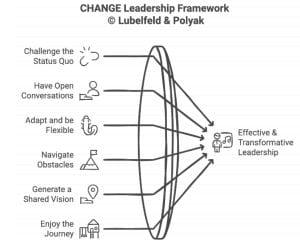
Graphic of the CHANGE leadership framework from Lubelfeld/Polyak

If you don’t want to listen to the Google Robots, check out the transcript (courtesy of TurboScribe)
Transcript of Google NotebookLM Podcast from TurboScribe

Proud of the support from our Boards of Education, Leadership Team Members, Teachers, Educational Support Staff, Business Partners, Communities, Students and so many more! Humbled by opportunities to share and proud to add to the leadership literature.

We are always grateful to the teams at  AASA, The School Superintendents Association for their support and encouragement over the years!!


Table of Contents

Acknowledgments

Foreword by Tom Murray

List of Tables & Figures

Preface

Introduction

Section 1: Leadership is Change

Chapter 1: Cultivating Change

Chapter 2: Selection of Staff, Who, How, and How Long?

Voices from the Field: Leading Transformation in a VUCA World: A Progressive Vision for Brigantine Public School District, Glenn Robbins, Superintendent, Author

Section 2: Go Where the Smart People Are – Learning From Others

Chapter 3 : Networks and Professional Organizations

Chapter 4: Language Matters

Voices from the Field: My Journey of People-Centered Leadership as Superintendent, Dr. Zandra Jo Galvan

Section 3: You Can Do It

Chapter 5 : We’re Not Broke, We’re Broken

Chapter 6 Transformation: Flip the Mindset

Voices from the Field: Expanding Pathways to Success, Gladys I. Cruz

Section 4: Change Faster – Embrace Your Context – Revolutionary Change

Chapter 7: Bomb Threats and Social Media

Chapter 8: Artificial Intelligence & Innovation

Voices from the Field: Jeff Dillon, The Student’s Bill of Rights

Conclusion

References

About the Authors

Appendix A Interviews from the Pandemic Era-Use Case for Generative AI and Leadership

Appendix B Teach AI Guidance

Appendix C Listing of Generative Artificial Intelligence Tools Used Throughout this Book

Leading for Tomorrow’s Schools Today: A Briefing (From Google’s Notebook LM)

Authors: Dr. Michael Lubelfeld and Dr. Nick Polyak

Target Audience: Current and aspiring educational leaders, particularly superintendents and principals.

Main Themes:

  • Navigating Change: The book emphasizes the inevitability of change in the 21st-century educational landscape and provides practical frameworks, like the Satir Change Model and the authors’ own CHANGE framework, to lead through it successfully.

“Polyak and Lubelfeld urge us to adapt and be flexible, framing leadership as an evolving journey rather than a destination.” – Courtney Orzel, Superintendent

  • Fostering Innovation: The authors champion a future-focused approach, specifically highlighting the integration of generative AI in education to prepare students for the future workforce.

“Their emphasis on future-focused leadership is critical as we guide districts in integrating technology and real-world learning experiences into the curriculum.” – Christopher Nesmith, Superintendent

  • Creating Positive School Cultures: Building trust, empowering teachers, and fostering open communication are presented as crucial for successful leadership and achieving desired student outcomes.

“They effectively demonstrated how they employed successful strategies to motivate staff and achieve positive outcomes across different school systems.” – Dr. Lupita Ley Hightower, Superintendent

  • Practical Application: The book grounds its theoretical framework in real-world case studies, demonstrating how the principles and frameworks can be successfully implemented in various educational contexts.

Key Features:

  • CHANGE Leadership Framework: A six-step framework (Challenge the Status Quo, Have Open Conversations, Adapt and Be Flexible, Navigate Obstacles, Generate a Shared Vision, Enjoy the Journey) designed to guide leaders through change management.
  • Real-world Case Studies: Compelling examples of how the book’s principles have been applied in real-world educational settings, showcasing their effectiveness and providing tangible solutions to common challenges.
  • Voices from the Field: Vignettes from experienced superintendents, including AASA past president Gladys Cruz, provide valuable insights and perspectives.
  • Reflection Questions: Each chapter includes questions designed to stimulate further study, analysis, and action, encouraging readers to apply the concepts to their own leadership contexts.

Critical Acclaim:

The book has received high praise from prominent figures in the education field, emphasizing its practicality, relevance, and inspirational approach:

  • Luvelle Brown: “Their text should be required reading for any leader wishing to be highly effective with change management and the implementation of generative artificial intelligence into their practices.”
  • Joe Sanfelippo: “This is an inspiring and practical guide for anyone looking to lead purposefully and prepare everyone in their organization for the future.”

Relevance to Specific Courses:

This book is particularly relevant for courses in superintendent and principal certification programs, including:

  • Superintendent Leadership Preparation
  • Principal Leadership Preparation
  • Technology and Future School Leadership
  • School Board Relations
  • Change Management
  • Communication
  • Student-Centered Leadership

Overall, “Leading for Tomorrow’s Schools Today” provides a comprehensive roadmap for current and aspiring educational leaders seeking to navigate change, foster innovation, and create positive learning environments that equip students for success in the 21st century.

FAQ From the Gen AI synthesis tool!

Leading for Tomorrow’s Schools Today: FAQ (From Google’s Notebook LM

1. What is the core message of “Leading for Tomorrow’s Schools Today”?

This book provides a practical roadmap for educational leaders to navigate the complexities of modern education and prepare students for the future. It emphasizes adapting to change, fostering innovation, and creating positive school cultures where everyone thrives.

2. Who are the authors and what makes their perspective unique?

Dr. Michael Lubelfeld and Dr. Nick Polyak are seasoned superintendents with a combined six decades of experience in various educational roles. Their extensive hands-on experience, coupled with their deep understanding of educational leadership, forms the foundation of their practical advice and actionable insights.

3. What specific leadership frameworks does the book utilize?

The book employs two key frameworks: the Satir Change Model, which helps understand and manage the emotional and psychological aspects of change, and the authors’ own CHANGE Leadership Framework. This framework, with its six steps—Challenge the Status Quo, Have Open Conversations, Adapt and Be Flexible, Navigate Obstacles, Generate a Shared Vision, and Enjoy the Journey—provides a structured approach to leading change initiatives.

4. How does the book address the role of technology in education?

“Leading for Tomorrow’s Schools Today” acknowledges the transformative potential of technology, specifically generative AI. It encourages educational leaders to embrace these advancements and integrate them into learning environments to equip students with the skills needed for the future workforce.

5. What is the significance of the real-world case studies included in the book?

The book features compelling case studies that demonstrate the successful implementation of the principles discussed. These real-world examples provide tangible evidence of the book’s effectiveness and offer practical solutions to common challenges faced by educational leaders.

6. How does the book address the concept of change management in education?

The book acknowledges that change is an inherent part of the educational landscape. It equips leaders with the necessary tools and strategies to manage change effectively, including fostering open communication, building trust, and addressing resistance with empathy.

7. What key areas of educational leadership does the book focus on?

“Leading for Tomorrow’s Schools Today” addresses various crucial aspects of leadership, including:

  • Cultivating a Growth Mindset: Encouraging a culture of continuous learning and improvement within the school community.
  • Building Trust: Establishing strong relationships and open communication among stakeholders.
  • Staff Selection: Emphasizing the importance of recruiting and retaining talented educators.
  • Adapting to a Rapidly Changing World: Preparing students for a future characterized by constant technological advancements and evolving career landscapes.
  • Community Engagement: Building strong partnerships with parents and the wider community.

8. How can aspiring and current school leaders benefit from this book?

This book serves as an invaluable resource for both aspiring and current school leaders seeking to:

  • Enhance their leadership skills in navigating change, driving innovation, and creating thriving school environments.
  • Gain practical insights from experienced superintendents and learn from real-world case studies.
  • Develop a forward-thinking mindset to effectively prepare students for the challenges and opportunities of the future.
Endorsements of the Book from Experts in the Field
#1 The vast amount of professional experience and talent that exists with Mike Lubelfeld and Nick Polyak is on full display in Leading for Tomorrow’s Schools Today. They inspire me and others through research, practical frameworks, and case studies that reveal strategic and successful approaches to innovating in school. Their text should be required reading for any leader wishing to be highly effective with change management and the implementation of generative artificial intelligence into their practices.
Luvelle Brown
Superintendent, Ithaca City School District
Founder/CEO Love2Achieve LLC.
#2  Leading for Tomorrow’s Schools Today provides a rich blend of real-world experience and practical insights from two seasoned superintendents who have navigated and led change in schools for nearly 60 years. Through compelling stories, Mike and Nick emphasize how creating supportive conditions and fostering innovation leads to long-term success. The book offers lessons that extend beyond education, making it a valuable read for leaders in all fields of leadership. Mike and Nick provide a clear framework for understanding and managing the complexities of organizational change. This is an inspiring and practical guide for anyone looking to lead purposefully and prepare everyone in their organization for the future.
Joe Sanfelippo
Superintendent, Author, Speaker, Wisconsin
#3  In Leading for Tomorrow’s Schools Today, Polyak and Lubelfeld delve deep into the realities of leadership, embracing the chaos and resistance that often accompany the drive for change. They do not shy away from the difficulties but instead confront them head-on, offering a wealth of success stories that illuminate their points, offering real-world examples of how visionary leadership can yield remarkable results and a candid exploration of the obstacles leaders face. Polyak and Lubelfeld urge us to adapt and be flexible, framing leadership as an evolving journey rather than a destination.Their approach is both pragmatic and inspirational, thought-provoking yet practical, encouraging leaders to view challenges as opportunities for growth rather than insurmountable barriers. Leading for Tomorrow’s Schools Today is a vital read for anyone in educational leadership.
Courtney Orzel
Superintendent
Lemont Bromberek Combined School District 113A, Illinois
#4  Leading for Tomorrow’s Schools Today by Nick Polyak and Michael Lubelfeld offers a robust framework that has become a cornerstone for how we approach change management in our AASA Redefining Ready work. The practical tools and insights in this book have directly supported our mission to redefine what it means for students to be college, career, and life-ready.
Polyak and Lubelfeld’s CHANGE Framework—Challenge the Status Quo, Have Open Conversations, Adapt and Be Flexible, Navigate Obstacles, Generate a Shared Vision, and Enjoy the Journey—is particularly valuable in guiding school leaders through the transformation required in our AASA initiatives. We’ve applied this framework to help districts across the country rethink outdated measures of success, shifting focus to real-world indicators such as career pathways, internships, and dual credit programs, which better prepare students for life after graduation.
Their use of the Satir Change Model has given us a structured process for managing resistance and chaos that inevitably arise when implementing new readiness metrics. This model provides the emotional and psychological scaffolding that leaders need to navigate through disruption and arrive at a new, more equitable status quo—one where students are assessed not just by test scores, but by their demonstrated readiness for the future.
Additionally, their call for embracing AI and innovation mirrors the cutting-edge work we are doing in Redefining Ready to prepare students for the future workforce. Their emphasis on future-focused leadership is critical as we guide districts in integrating technology and real-world learning experiences into the curriculum.
This book is not just theory—it’s a playbook for action. It has been instrumental in shaping our strategies, and I believe it’s a must-read for any school leader looking to foster transformative, sustainable change in their district.
Christopher Nesmith
Superintendent
Elma School District, Washington
#5  Dr. Michael Lubefield and Dr. Nick Polyak are nationally renowned and highly esteemed leaders. They are masterful at fostering strong relationships on behalf of their school district communities. Through their co-teaching of both aspiring and current superintendent classes, they effectively impart their extensive knowledge, experience, and expertise to many leaders.
Their book, Leading for Tomorrow’s Schools Today, is a valuable resource for all leaders working in different organizations including school systems. It serves not only as a comprehensive guide but also as a compelling call to action, emphasizing the critical role we play in shaping the future of our students. Leadership at all levels matters tremendously!
I was particularly impressed by their authenticity and their ability to provide real-life examples of challenging situations. They effectively demonstrated how they employed successful strategies to motivate staff and achieve positive outcomes across different school systems. Their commitment to generating clarity, fostering a shared vision for success, and encouraging constructive dialogue to challenge the status quo highlights their dedication to forward-thinking leadership. This approach is crucial, as it underscores our responsibility to build future-ready schools that meet the needs of ALL students.
Gracias!
Dr. Lupita Ley Hightower
Superintendent/Treasure Hunter
Arizona Superintendent of the Year 2023
Tolleson Elementary School District, Arizona


Article about Voxer in AASA Journal

“When you’re a leader, you don’t have a ton of people that work for you– you now work for those people.”
– Todd Bentley

Lately I have discovered a passion for writing! I have published several articles and books. My second book: Student Voice: From Invisible to Invaluable, ISBN 9781475840025, will be released in January 2018 (Rowman & Littlefield Publishers).

Like the quote above, I work for those I serve – I write for those I serve. The story of the success of the Deerfield Public Schools District 109 (main content for many of my writings) is written for the thousands of students, teachers, support staff, board, administrators, parents, and community members whom I serve.

Another passion of mine is using social media tools for leadership, communication, and progress. To that end, I have published an article in the latest School Administrator Magazine about the social media tool Voxer – see the images below (each is linked to the article/journal). 

As always comments are welcome!


What does the superintendent do all summer? #Engage109

“Make sure that team members know they are working with you, not for you”
– John Wooden

What is going on in #Engage109 this summer?  What do we do all summer is a common question I have been asked for most of the 25 years I’ve been in education! Well it’s official – we are in school year 2017-2018! We have a guiding Strategic Plan, we have many new leaders, we will have a new board member on the way – it’s a whole new year. Aside from running summer school with more than 500 students, overseeing major summer construction projects approaching $5Million dollars, and the on-boarding of nearly 10 new leaders, we’re also making sure we have plans for meetings, workshops, professional development, curriculum development and other milestone events for all administrators.

As far as we’re concerned, it’s time for 2017-2018 to start (Ok … we’ll wait a few more weeks …).

In addition, we’re reaching end of life for hundreds of nearly 10 year old Promethean Boards, so the Technology Team is rolling out new projection and whiteboard systems to replace the Promethean boards in all six campuses.  Our Director for Innovative Learning, Marcie Faust and many of our outstanding iCoaches have trained nearly 64 teachers in summer workshops thus far and expect another 57 on the scheduled dates in July and August!  This is in addition to widespread learning sessions in the multiple classrooms at each building that we had set up last spring as a “debut”.  

We also continue to close the fiscal year that ended on June 30, and we prepare for the annual auditors who are scheduled to come spend two weeks conducting field test at the end of the month.  

In addition, the Director of Buildings & Grounds, Charlie Privett, and the B&G team are exceptionally busy working on a variety of projects throughout the district, including:  

Caruso & Shepard Locker Rooms, Security Projects (throughout the district), Casework at Kipling & South Park, Parking Lots at South Park, Walden, Shepard, & Wilmot, Roof Project at Wilmot, Flooring Projects & Painting Projects Throughout the district, and more!

In addition, I published an article in the IL ASCD Summer Journal and I’m working on a few other writing projects.

So … while the students are enjoying much needed recreation time, the leadership team is busy making sure everything will be ready for them in August!

I always smile when folks say “It’s easier in the summer, right?” – nope – but I would not want it any other way.


Teacher & Edu Staff Appreciation Day/Week – Thank You #Engage109

This is teacher, nurse, educational support staff (and administrator) appreciation week! We can never say thank you enough to our educators!! THANK YOU!

I’m sharing a quote I have held closely for many years and I’m sharing two notes I recently sent the DPS109 community.

“How important it is for us to recognize and celebrate our heroes and she-roes.”
Maya Angelou


Dear District 109 Families and Community Members,

At its last meeting, the Board of Education declared Tuesday, May 9, 2017 as Teacher Appreciation Day in District 109. Please join the Board of Education and the District administration team in applauding our teachers and all of the educators and support staff throughout District 109 who work so hard each day. We have high-achieving, nationally recognized, innovative, warm and welcoming schools because amazing teachers engage, inspire and empower our students – your children, grandchildren, and the children of your friends and neighbors!

I encourage you to find a way to show your support to your favorite teacher, or any school staff member who makes a difference in the lives of the children in our community. Whether you write a heartfelt, handwritten note, have your child create a work of art, or just go out of your way to say a personal “Thank you,” you are giving a great gift. They deserve all the thanks that we can shower upon them!

Sincerely,
Mike


“If we neglect our gifts and talents, they, like an unused muscle, will atrophy and waste away.”  Stephen Covey

Dear District 109 Teachers and Staff,

The Board of Education recently approved our 2017 Strategic Plan. The planning process was both reflective and forward thinking, and very eye-opening to me. I realized how much we have accomplished in four short years.  I also acknowledge and thank you for being open to change. I know that’s not easy. Your leaps of faith and constant hard work have allowed our students to thrive, and schools to achieve local, regional and national recognition. In the strategic planning process we should all be proud of the input and impact of that input. Your voices and your input helped shape the goals, objectives and plans. I look forward to working with you and for you to achieve our goals in the coming years.

On April 24, the Board of Education declared Tuesday, May 9, 2017 Teacher Appreciation Day in District 109. The community will celebrate you throughout the week. To show our thanks, the District administration and Board will provide a gift and special treat at some point during the week. They are small tokens of our boundless appreciation of you and your continual work to engage, inspire and empower our students, their parents, your colleagues, and our community.

So THANK YOU, from me personally, and from the Board of Education and District leaders, for allowing us to work with the best team of educators in the nation.

Sincerely,
Mike

I Voted Today! What does this mean? Decision Making #engage109

“Teamwork is the ability to work together toward a common vision. The ability to direct individual accomplishments toward organizational objectives. It is the fuel that allows common people to attain uncommon results.”
– Andrew Carnegie

Democracy is a value ingrained in the “DNA” of Americans. Our entire education system is based upon democratic principles, our Declaration of Independence from the British Monarchy declares our rights to be independent (men and women).  “…certain unalienable Rights, that among these are Life, Liberty and the pursuit of Happiness.”

Liberty is the right most closely aligned with voting. The right to give input is a foundational right we enjoy. We apply and extend democratic principles all through the tapestry of our society.

Ten year olds “vote” for the student council (a governance model in the image of our government). Associations vote their members in for leadership positions. In the USA, we feel it is normal and just to vote for pretty much anything.

Some of you reading this will remember commercials where people voted for the better tasting soft drink on TV. Often couples will vote on which restaurant to attend. Families may vote on what colors to paint their rooms. The concept of voting, choosing, giving input is almost an assumed right as an American. The will of the majority rules so many of our institutions of government and society. The majority rule, though, is not the only rule in democratic societies. The rule of 3/5 or “super majority” as well as the rule of “plurality” (the number of votes cast for a candidate who receives more than any other but does not receive an absolute majority.)

In leadership, though, even in a democratic republic, sometimes the elected representatives vote in a different way than their constituents. This does not mean theydisregard the input, it simply means that multiple factors influence decisions.

In general, if you don’t vote can you really complain about the decisions made on your behalf? No, I don’t think so, that’s why I vote; I want to have a voice, whether it is a large voice or a small voice, whether my candidate choices win or not – at least I can say I voted! I went to the table to give my input and in some small way I contributed to our democratic way of life.

I vote for candidates who I believe will represent me, my values, my interests, and the choices I would make if I were in their shoes. I don’t expect the folks for whom I cast a ballot to always agree with me, at times, perhaps often, they will be better educated on the particular issues than I.

In the United States our government and ways of life are more Roman than Greek. That is to say we follow a republican form of government (not the political party) but it’s a representative democracy concept. We don’t employ a direct democracy where everyone gets one vote; we have a representative democracy. This means we vote for people who will represent the views of groups of people. For example, members of Congress are assigned to districts, geographic areas, representing certain numbers of people. This is why the decennial census (the population count every 10 years) is so important to political map-makers.

  • I vote in every election.
  • I vote because I can.
  • I vote because I am a free man.
  • I vote because it is my civic duty.
  • I vote because it is my responsibility as a free man to exercise this powerful right – the right to give input as to whom should represent me and my interests.
  • I vote because I hold great value in the power of representative democracy.
  • I vote because I would like to have my input considered.
  • I vote so I can share my views and values and be a responsible member of society.

One of the tenets of voting that some people overlook is that their vote is going to elect others who will represent their interests. Will those for whom I cast a ballot always vote the way I want them to? No – of course not.

Will they take my follow up input under consideration? Yes – that is the beauty of a democratic republic, the type of society in which we live. I would like everyone I vote for to become elected. But that is unlikely since there are many other voters and that is not a realistic wish. I understand this and I’m ok with this.

As a regular part of my role as the superintendent of schools, I regularly give input to our elected representatives in Washington, D.C., and in Springfield, IL. I would like them to consider my input even if they disagree with it. They may disagree in principle or they may disagree because they are better informed, or they may disagree for political reasons. They also may take my input and form, reform, or transform their beliefs!

I vote for school board members (even my own bosses!); I vote for village trustees and township trustees; I vote for friends, neighbors, colleagues, folks about whom I know a lot and at times, I vote for folks about whom I do not know a lot, but who are aligned with a political coalition I support or understand.

Many voters select based upon political party or candidate gender or candidate ethnicity. It is free choice; people can literally vote for anyone who is on the ballot (and at times they can enter a “write-in” candidate too). That is the beauty of living in a free society.

What does democracy mean in the workplace?

I consider myself to be an inclusive and collaborative leader. I seek input and views and votes from the people likely to be impacted by a decision or set of decisions. I work in an industry full of committees, viewpoints, processes, procedures, etc.

I work for an elected non-partisan school board made of seven citizens who, with me, form a governance team of 8 to manage and govern the school district. I seek input from the nearly 500 employees whom I serve and employ.

Do I always agree with every one of their votes? (no) Do I always do what the will of the majority requests? (no) The plurality (the larger number of votes when a majority is not there)? (no)

Or do I consider their input with care, concern, and respect, and make a decision based upon the combination of input, voice, votes, research, evidence, etc. YES – As a leader I truly have to balance the will of the many with the right decision – often equal or congruous with the will – but not always.

The paradox of leadership is leading with an inspired vision and per a collective plan, mission, agenda, vision, etc.

Seeking input, empowering people yet “at the end of the day” realizing that “the buck stops here” and the accountability and responsibility rests with the leader.

Not following the will of the majority is not rejecting input. Not following the will of the majority is not “not listening”. From time to time the leader must seek input, gather facts, anticipate impact and … well … lead. Sometimes leading means helping the group see a different reality than the one they think they want or the one they think is right.

Recently as part of our work, I shared committee recommendations and my administrative recommendation to the Board of Education (there were sometimes differences in the committee recommendation and my ultimate decision). These examples about which I refer are from the 2013-14 Superintendent’s Task Force for Middle Level Education. This coalition of students, parents, teachers, administrators, community leaders, and board members, a 140 member stakeholder community engagement group, made recommendations for improvement to our middle schools.

I took input from many, shared the input publicly, reviewed a number of factors, synthesized the priorities and make a recommendation. For the elective areas I took all the votes/input and I made a recommendation with some differences. The input continues to guide decision making and resource allocation. The STEM team recommendations were accepted 100%.

The challenge of a leader in a democracy is to respect input and consider the votes and then decide what is in the best interest of the many and to lead. The leader may know more and be able to see around corners the people cannot yet see. The leader often needs to have vision beyond the past experiences and limits of the group. The leader needs to lead and challenge the process and manage the change process.

Does your vote and your input guarantee that your choices will be advocated? No – just like the village trustee for whom I cast a ballot will vote his/her conscious when employees give input, or vote, if you will, they are giving input to the representatives who will ultimately decide what action to take. Your vote does guarantee that your views will be at the table and respectfully reviewed and considered!

What does a leader do when the needs of the many outweigh the needs of the few and the future for which he is leading requires systemic unlearning? Well … with compassion and conviction, he leads.


I’m proud I voted today.

I’m proud that the educators with whom I work continue to share voice, vote, values, viewpoints and vision.

I’m proud to share the Deerfield Public Schools District 109 new Strategic Plan later this month.

The mission, vision, guiding principles, portrait of a graduate, goals, objectives and action plans have been carefully prepared, reviewed, planned, and considered.

The Strategic Plan is created by reviewing input of more than 1700 stakeholders – those who voted in surveys have their voice represented. Those who participated in focus groups have their voice represented. Those who Engage, Inspire and Empower have their voice represented as we “rebrand” and “re form” our educational organization for the next several years.

Reflections from a Book Study – Khan Academy – #Engage109

“We cannot change the cards we are dealt, just how we play the hand.”
– Randy Pausch


bookstudyThere are many ways to lead professional learning for staff. Often there is a meeting of the whole staff, a team meeting, a department meeting, an in-service, a conference, online learning, etc. From time to time in our district we engage in book study experiences to learn together, share common experiences, engage and interact with one another, and participate on their own time.

Recently at Kipling School the principal Anthony McConnell invited me and some other central office administrators to participate in a book study with his staff for Sal Khan’s oneworldschoolhousebook The One World Schoolhouse. This is a professional learning activity in which members of team can engage at any time and at any place is an activity that inherently differentiated. I was happy to be invited and I was happy to contribute.

Every few days another staff member writes a post from one part of the book and several other staff members write comments about the postings. It’s really powerful learning to see, read, think about, and begin to understand the multiple perspectives emerging from the shared experiences of reading this book from an EduRock Star! Khan Academy programming is in use in our schools, in other schools where I have served, and quite frankly, all over the world. Khan’s experiences, origins, purposes, and mission motivates educators and educational leaders at all levels in all settings.

This is a link to the blog with the current post listed first; and then all other posts follow. My section was on an early part of the book: No Frills Videos, Focusing on the Content – cornerstones of Khan’s experiences, background, and methods. I’m sharing excerpts of this post below:

Khan started out tutoring his cousin and using basic technology for the purpose of assisting his efforts at tutoring. He did not set out to become a phenomenon, though he did! Khan aimed to bring back fun to learning. The chalkboard (represented virtually by the black background on which he draws) symbolizes perhaps a simpler time when school was fun. My hope is that school is fun everywhere and every day! My hope is that Khan’s influence in bringing fun and joy back to school permeates the walls of our district and districts all over.

Khan’s videos started out as “no-frills” in part because he was simply tutoring a few people and in part because he is a self-Khanphotodescribed austere person (page 27). What flows throughout the book (and not to get too far ahead of my part here …) is a research and evidence base. Khan’s work and the successes he and the Academy enjoy are actually grounded in research, evidence, study, and affirmation. Though he appears to start out whimsically, he shares small nuggets of evidence and research as the base for his decisions. For example, in this chapter, he spends a few pages identifying why the length of his videos rests around 10 minutes.

I encourage readers to check out the public book study (everything on the internet is public of course) as well as consider my endorsement of Khan’s book as a worthy read!

For more on my experiences with the Khan Academy, and our district’s future focus and commitment to innovation and change, please see earlier posts from this blog:

Online Learning Tool-The Khan Academy from 9/3/2013,

More on the Future of Education – What is School For? from 11/2/2015

The overall purposes of all of these blogs, study groups, books, videos, opportunities and learning is to improve educational opportunities for children and teaching opportunities for staff!

ENGAGE, INSPIRE, EMPOWER

ENGAGE, INSPIRE, EMPOWER

Let’s continue to push the envelopes of change and create new and better realities where we unlock restrictions on learning and we unleash the power of synergy in our classrooms, board rooms, and communities!


Through learning opportunities like this blogging book study, we get to learn with and from one another while gaining new perspectives on current trends. It’s a great experience and I applaud the leadership and staff at the school for letting me tag along on their journey!

Communication is Essential – Leadership in #ENGAGE109

“In union there is strength.”
– Aesop

I’m proud to share via the blog a recent Journal article I co-wrote with Dr. Brian Bullis and Dr. John Fillipi, principals at Charles J. Caruso Middle School and Alan B. Shepard Middle School, respectively, in Deerfield Public Schools District 109.

We have focused on organizational culture as a core foundation of our leadership and service.

Please click the image below to link to the article (also linked here)

Our article starts on Page 44

Our article starts on Page 44


We seek input on a regular basis through various modes of collection, including, but not limited to:

Innovation Has Many Forms – #ENGAGE109

“Humility is not thinking less of yourself. It’s thinking of yourself less.”
– C.S. Lewis

IL In our school district we take pride in the words and actions ENGAGE, INSPIRE, EMPOWER. We aim to do this each and every day with and for each and every student, staff member, and the community! Since July 2013 our Big 5 have been driving our actions and initiatives:
Common Core State Standards (a/k/a Illinois New Learning Standards), Next Generation Science Standards
Teacher Evaluation – Charlotte Danielson Frameworks for Effective Teaching
Technology
Organizational Culture
Superintendent’s Task Force for Middle Level Education

ENGAGE, INSPIRE, EMPOWER

ENGAGE, INSPIRE, EMPOWER

We often write about innovation and we often share examples of the teacher’s innovative practices in blogs, Twitter, Facebook, principal newsletters, emails from the district, in person events, etc. Today I’m writing to celebrate an innovative project experience from 7th grade English Language Arts. In the 7th grade ELA class this year the students had to complete a project entitled:  Change the World. One of our students sent a letter to the Illinois Department of Homeland Security. The boy’s letter was so impressive to the staff that the Deputy Director, James Joseph, called principal, Dr. John Filippi, and he shared his delight at the letter. In addition he offered to come visit the student and his classmates!

IMG_0039 IMG_0035 IMG_0034 IMG_0028 (1)

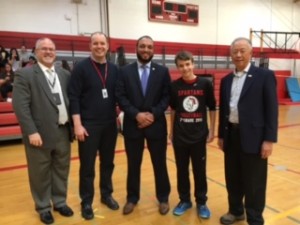
Today Mr. James Joseph, the Director of the Illinois Emergency Management Agency (IEMA) and Deputy Homeland Security Advisor came to Alan B. Shepard Middle School and visited with the student, his classmates and teachers.

In addition he made a brief presentation and answered questions from the students. In the pictures shown to the left we also show another special guest, retired Major General Robert G.F. “Bob” Lee. Gen. Lee was visiting the Governor’s office and it fit into his schedule to join Director Joseph. Gen. Lee shared information about his fascinating service to our country as well as to his home state of Hawaii. Security is a national concern and it’s nice to know we have such able, knowledgeable, talented and able leaders helping defend our nation and our state.

The power of a letter, the power of a communication, the power of an inquisitive student can lead to the highest levels of government, society, agencies, companies, etc. Our amazing teachers are taking learning to new levels with engagement, inspiring lessons and empowerment of students to reach out to “real people” in the world who do the work about which we are learning!

Check the podcast for a 5 minute excerpt of today’s visit:

In Deerfield we truly believe, and we teach our students, that, in the words of Margaret Mead:

Never doubt that a small group of thoughtful, committed citizens can change the world; indeed, it’s the only thing that ever has.

Our students, through agency and voice, are learning that they matter not only in school and at home, but as part of the larger world. It’s wonderful, especially as a public school leader, to show the power ofittakesavillage education and the value of our innovative public education in terms of meaning and relevance.

We are grateful to General Lee, Director Joseph, as well as other dignitaries who have visited our schools like Governor Bruce Rauner, U.S. Congressman Hon. Robert Dold, Illinois Senator Hon. Julie Morrison, Illinois Representative Hon. Scott Drury, Lake County Regional Superintendent of Schools Hon. Roycealee Wood, Deerfield Mayor Hon. Harriet Rosenthal, and many others who visit to engage with students, learn from our teachers, interact with our world class facilities, and in one way or another, show support for meaningful, effective public education!

March Notes – From Staff Newsletter – #Engage109

“Certain things catch your eye, but pursue only those that capture the heart. ”
– Ancient Indian Proverb


Each month we share a newsletter for staff and I open it with some news, views, and information. I’m sharing an excerpt of my portion in the blog today:

As we approach spring it’s exciting to think about how fantastic it is to work in District 109 – and I’ve recently done some really fun work that has allowed me to see, firsthand, the sharing of learning and teaching across the district. In December, I shadowed a 4th grade South-Parkstudent in Samantha Johnson’s class at Walden, and in February, I was honored to teach Emily Wallace’s first graders at South Park as my “Presence is Present” gift. I loved being a teacher again – and I think the students were happy to have me; at least their notes expressed their appreciation! Across the nation there is a movement and news called “Shadow a Student Day” – I’m thrilled to be part of this in Deerfield. I’m so proud of my administrative colleagues who are also shadowing students, substitute teaching, and walking a mile in the shoes of employees!

bad59220-e2f2-4066-93db-3ae2f394b2b6We like to share the great things that are happening in our schools with other educational professionals worldwide.
Many of you use #engage109 and your school hashtags to share your stories with the Twitter world. It’s fun to see the photos and stories scrolling on the District home page, and the school pages! Many of our administrators also write articles and present at conferences about our schools and our work.  I’m proud to share an article that Greg Himebaugh and I wrote for UPDATE magazine, a publication of the Illinois Association of School Business Officials. The article shares how we’ve managed change in District 109 for the benefit of our schools, our students, and our community. Next week, Caruso will host the Illinois Association of School Boards Lake County Division Dinner; board members, superintendents and other educational professionals from all over the county will come for tours of Caruso’s science, STEM and CMA labs, and will hear from District 109 band, orchestra and chorus students. It will be a full-STEAM evening! Thanks to the staff members who are helping us show off!

As I mention often, this is one source of what’s happening in District 109; you can get more information from Board Briefs, found on the Board of Education Meeting Information page of the website, and feel free to check my blog for periodic postings about leadership, education, and District news.

Thank you for continuing your excellence and dedication to the students in the District and for your efforts to engage, inspire, and empower students, families, the community, and each other every day.

ALL Students Every Day – #Engage109

“In teaching others, we teach ourselves.”
– Proverb 


CSWju_OUsAAJMue

 As a teacher, an advocate, and a supporter of public education, I often think about creating systems and structures that allow our students to reap the benefits of “being in the right place at the right time.” I believe the only way to do that is to ensure that the right place and time is our own classrooms. As I have written often, we educators only have a single school year to make the best possible impact on our students. Students only have one chance to be in kindergarten, first grade, second grade, etc. This means we have just 180 days per year to facilitate learning in the most meaningful way possible. We don’t get do overs – we have tremendous power over our students’ lives, and we have tremendous responsibility to ensure that they are in the right place at the right time, set up to achieve success.

Meeting individual students’ needs is an often-elusive goal for American educators. For as long as I can remember, we’ve been learning about and promoting “differentiated instruction,” or providing different students with varied approaches to learning. Certainly a lofty goal, but our industrial-era school system was designed for groups, not individuals. Consider the classroom design of the typical schoolroom: rows of desks all pointed toward the front of the room. Group instruction is based on rigid CScRi5IWsAAIIv8and fixed schedules regulated by bells, mass movement of large groups of students, standardization of assessments and “batch” organization of students. That model served us well from the 1800’s through the 1900’s.

Times are changing. Scores of research reports inform us about more effective ways to facilitate learning, and the buzz around differentiation is growing. Educators and school systems are more interested in how to incorporate differentiation into their approach. The good news is that information on how to differentiate is all around us. Studies focusing on everything from neuroscience to instructional practices inform us of the need to change and the ability to do so.

Early in my career, I published an article that touched on the subject, sharing this story:

With U.S. History Workshop, I was able to teach traditional units of instruction more effectively than before. For example, most U.S. history teachers are familiar with the Civil War and Reconstruction period (roughly 1850-1880). For this and every unit taught with the workshop, I taught the students to view social studies and history as human experiences. This unit, like the others, separates history into five core areas or themes: Civil Rights, Women in History, Science & Technology, Politics, and War & Conflict. I identified key ideas, concepts and so on for each area and allowed student teams to explore these key concepts rather than the whole concept of the Civil War and Reconstruction. Instead of teaching this unit as one big complication, I presented it as one big puzzle–each of the concepts or ideas from each of the areas was like a piece of a puzzle. The challenge for the students was to piece together the puzzle independently, cooperatively, and with direction from the teacher. (Page 11)
I share this experience to provide a conceptual background to passion for meeting students where they are. Fast forward to 2015, and in our classrooms we have differentiation, individualization, and personalization in the mix of instructional improvements.

Another good example of differentiated instruction comes from a third grade classroom I visited recently in our district. After viewing the video Caine’s Arcade, one teacher’s classroom was inspired to spend 30 minutes a day for two weeks working on their voice projects. These students experienced a combination of differentiated instruction (different project for each child/group), individualized instruction (each child’s unique voice and interest came alive in their projects) and personalized instruction (each child had full creative license to produce learning in their own ways).

In addition to this type of engaging and creative lesson planning, our school district also supports digital tools for meeting individual student needs. We have invested time, dollars, resources, planning, training, and support for this transformation of teaching.

To support teacher use of the digital resources to differentiate instruction, our district has intentionally and deliberately acquired services like Discovery Education. We use subscriptions, tools, and programs to support teachers and students. We use combinations of free, open, educational resources as well as paid resources.
images
Some of the companies with whom we partner are web-based subscriptions, which allow for 24/7 school and home access! The possibilities are endless as we truly become a COMMUNITY of learners.

As a superintendent, I see learning every day and my aim is to support every classroom’s transformation into an engaging, motivating, challenging learning space for our nation’s most precious assets – our children! It’s imperative that we act with urgency to provide the most excellent educational system for ALL children.

I originally posted this at: http://blog.discoveryeducation.com/blog/2015/12/02/defining-differentiation-in-todays-classroom/