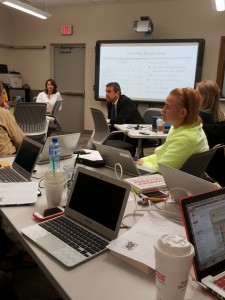
What does the superintendent do all summer? #Engage109

“Make sure that team members know they are working with you, not for you”
– John Wooden

What is going on in #Engage109 this summer?  What do we do all summer is a common question I have been asked for most of the 25 years I’ve been in education! Well it’s official – we are in school year 2017-2018! We have a guiding Strategic Plan, we have many new leaders, we will have a new board member on the way – it’s a whole new year. Aside from running summer school with more than 500 students, overseeing major summer construction projects approaching $5Million dollars, and the on-boarding of nearly 10 new leaders, we’re also making sure we have plans for meetings, workshops, professional development, curriculum development and other milestone events for all administrators.

As far as we’re concerned, it’s time for 2017-2018 to start (Ok … we’ll wait a few more weeks …).

In addition, we’re reaching end of life for hundreds of nearly 10 year old Promethean Boards, so the Technology Team is rolling out new projection and whiteboard systems to replace the Promethean boards in all six campuses.  Our Director for Innovative Learning, Marcie Faust and many of our outstanding iCoaches have trained nearly 64 teachers in summer workshops thus far and expect another 57 on the scheduled dates in July and August!  This is in addition to widespread learning sessions in the multiple classrooms at each building that we had set up last spring as a “debut”.  

We also continue to close the fiscal year that ended on June 30, and we prepare for the annual auditors who are scheduled to come spend two weeks conducting field test at the end of the month.  

In addition, the Director of Buildings & Grounds, Charlie Privett, and the B&G team are exceptionally busy working on a variety of projects throughout the district, including:  

Caruso & Shepard Locker Rooms, Security Projects (throughout the district), Casework at Kipling & South Park, Parking Lots at South Park, Walden, Shepard, & Wilmot, Roof Project at Wilmot, Flooring Projects & Painting Projects Throughout the district, and more!

In addition, I published an article in the IL ASCD Summer Journal and I’m working on a few other writing projects.

So … while the students are enjoying much needed recreation time, the leadership team is busy making sure everything will be ready for them in August!

I always smile when folks say “It’s easier in the summer, right?” – nope – but I would not want it any other way.


I Voted Today! What does this mean? Decision Making #engage109

“Teamwork is the ability to work together toward a common vision. The ability to direct individual accomplishments toward organizational objectives. It is the fuel that allows common people to attain uncommon results.”
– Andrew Carnegie

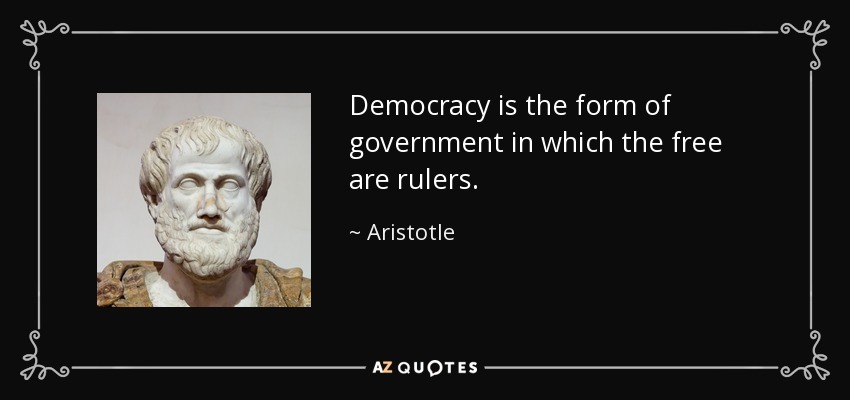
Democracy is a value ingrained in the “DNA” of Americans. Our entire education system is based upon democratic principles, our Declaration of Independence from the British Monarchy declares our rights to be independent (men and women).  “…certain unalienable Rights, that among these are Life, Liberty and the pursuit of Happiness.”

Liberty is the right most closely aligned with voting. The right to give input is a foundational right we enjoy. We apply and extend democratic principles all through the tapestry of our society.

Ten year olds “vote” for the student council (a governance model in the image of our government). Associations vote their members in for leadership positions. In the USA, we feel it is normal and just to vote for pretty much anything.

Some of you reading this will remember commercials where people voted for the better tasting soft drink on TV. Often couples will vote on which restaurant to attend. Families may vote on what colors to paint their rooms. The concept of voting, choosing, giving input is almost an assumed right as an American. The will of the majority rules so many of our institutions of government and society. The majority rule, though, is not the only rule in democratic societies. The rule of 3/5 or “super majority” as well as the rule of “plurality” (the number of votes cast for a candidate who receives more than any other but does not receive an absolute majority.)

In leadership, though, even in a democratic republic, sometimes the elected representatives vote in a different way than their constituents. This does not mean theydisregard the input, it simply means that multiple factors influence decisions.
In general, if you don’t vote can you really complain about the decisions made on your behalf? No, I don’t think so, that’s why I vote; I want to have a voice, whether it is a large voice or a small voice, whether my candidate choices win or not – at least I can say I voted! I went to the table to give my input and in some small way I contributed to our democratic way of life.

I vote for candidates who I believe will represent me, my values, my interests, and the choices I would make if I were in their shoes. I don’t expect the folks for whom I cast a ballot to always agree with me, at times, perhaps often, they will be better educated on the particular issues than I.

In the United States our government and ways of life are more Roman than Greek. That is to say we follow a republican form of government (not the political party) but it’s a representative democracy concept. We don’t employ a direct democracy where everyone gets one vote; we have a representative democracy. This means we vote for people who will represent the views of groups of people. For example, members of Congress are assigned to districts, geographic areas, representing certain numbers of people. This is why the decennial census (the population count every 10 years) is so important to political map-makers.

  • I vote in every election.
  • I vote because I can.
  • I vote because I am a free man.
  • I vote because it is my civic duty.
  • I vote because it is my responsibility as a free man to exercise this powerful right – the right to give input as to whom should represent me and my interests.
  • I vote because I hold great value in the power of representative democracy.
  • I vote because I would like to have my input considered.
  • I vote so I can share my views and values and be a responsible member of society.

One of the tenets of voting that some people overlook is that their vote is going to elect others who will represent their interests. Will those for whom I cast a ballot always vote the way I want them to? No – of course not.

Will they take my follow up input under consideration? Yes – that is the beauty of a democratic republic, the type of society in which we live. I would like everyone I vote for to become elected. But that is unlikely since there are many other voters and that is not a realistic wish. I understand this and I’m ok with this.

As a regular part of my role as the superintendent of schools, I regularly give input to our elected representatives in Washington, D.C., and in Springfield, IL. I would like them to consider my input even if they disagree with it. They may disagree in principle or they may disagree because they are better informed, or they may disagree for political reasons. They also may take my input and form, reform, or transform their beliefs!

I vote for school board members (even my own bosses!); I vote for village trustees and township trustees; I vote for friends, neighbors, colleagues, folks about whom I know a lot and at times, I vote for folks about whom I do not know a lot, but who are aligned with a political coalition I support or understand.

Many voters select based upon political party or candidate gender or candidate ethnicity. It is free choice; people can literally vote for anyone who is on the ballot (and at times they can enter a “write-in” candidate too). That is the beauty of living in a free society.

What does democracy mean in the workplace?

I consider myself to be an inclusive and collaborative leader. I seek input and views and votes from the people likely to be impacted by a decision or set of decisions. I work in an industry full of committees, viewpoints, processes, procedures, etc.

I work for an elected non-partisan school board made of seven citizens who, with me, form a governance team of 8 to manage and govern the school district. I seek input from the nearly 500 employees whom I serve and employ.

Do I always agree with every one of their votes? (no) Do I always do what the will of the majority requests? (no) The plurality (the larger number of votes when a majority is not there)? (no)

Or do I consider their input with care, concern, and respect, and make a decision based upon the combination of input, voice, votes, research, evidence, etc. YES – As a leader I truly have to balance the will of the many with the right decision – often equal or congruous with the will – but not always.

The paradox of leadership is leading with an inspired vision and per a collective plan, mission, agenda, vision, etc.

Seeking input, empowering people yet “at the end of the day” realizing that “the buck stops here” and the accountability and responsibility rests with the leader.

Not following the will of the majority is not rejecting input. Not following the will of the majority is not “not listening”. From time to time the leader must seek input, gather facts, anticipate impact and … well … lead. Sometimes leading means helping the group see a different reality than the one they think they want or the one they think is right.

Recently as part of our work, I shared committee recommendations and my administrative recommendation to the Board of Education (there were sometimes differences in the committee recommendation and my ultimate decision). These examples about which I refer are from the 2013-14 Superintendent’s Task Force for Middle Level Education. This coalition of students, parents, teachers, administrators, community leaders, and board members, a 140 member stakeholder community engagement group, made recommendations for improvement to our middle schools.

I took input from many, shared the input publicly, reviewed a number of factors, synthesized the priorities and make a recommendation. For the elective areas I took all the votes/input and I made a recommendation with some differences. The input continues to guide decision making and resource allocation. The STEM team recommendations were accepted 100%.

The challenge of a leader in a democracy is to respect input and consider the votes and then decide what is in the best interest of the many and to lead. The leader may know more and be able to see around corners the people cannot yet see. The leader often needs to have vision beyond the past experiences and limits of the group. The leader needs to lead and challenge the process and manage the change process.

Does your vote and your input guarantee that your choices will be advocated? No – just like the village trustee for whom I cast a ballot will vote his/her conscious when employees give input, or vote, if you will, they are giving input to the representatives who will ultimately decide what action to take. Your vote does guarantee that your views will be at the table and respectfully reviewed and considered!

What does a leader do when the needs of the many outweigh the needs of the few and the future for which he is leading requires systemic unlearning? Well … with compassion and conviction, he leads.


I’m proud I voted today.

I’m proud that the educators with whom I work continue to share voice, vote, values, viewpoints and vision.

I’m proud to share the Deerfield Public Schools District 109 new Strategic Plan later this month.

The mission, vision, guiding principles, portrait of a graduate, goals, objectives and action plans have been carefully prepared, reviewed, planned, and considered.

The Strategic Plan is created by reviewing input of more than 1700 stakeholders – those who voted in surveys have their voice represented. Those who participated in focus groups have their voice represented. Those who Engage, Inspire and Empower have their voice represented as we “rebrand” and “re form” our educational organization for the next several years.
Principal-Superintendent Collaborative Journal Article #Engage109

“It is not the strongest species that survive, nor the most intelligent, but the ones who are most responsive to change.”
– Unknown

In the Deerfield Public Schools we have enjoyed three full years change, growth, progress and joy. We credit our Board of Education for their effective and impactful governance and vision, teacher and student and administrator collaboration and innovation, and community support!

In this blog post I am sharing an article that two Deerfield Public Schools District 109 principals and I co-wrote and was published by a national principal organization.

Your comments are always welcome!


The following article was Published by the National Association of Secondary School Principals, NASSP, in their journal, Principal Leadership

Reinventing Science Lab Space and Curriculum

by Brian Bullis, John Filippi, and Michael Lubelfeld

How one school district used a holistic approach to produce a dozen award-winning science labs
As principals move from No Child Left Behind to the Every Student Succeeds era, the traditional school improvement model that narrowly targeted student achievement is no longer standard operating procedure. In our district, we have broadened our view of school improvement, and the results have been dramatic—we’ve redesigned middle school science, technology, engineering, and mathematics (STEM) learning spaces and curricula.

We accomplished this by using a holistic school improvement planning process that utilized the power and collective capacity of student, staff, parent, and community voice. Working under an intensive, two-year Plan-Do-Study-Act process, principal leadership transformed student learning and school facilities for decades to come. For example, we now have 12 award-winning science labs available to all students in grades 6 through 8.

Potent Process

In 2013, Deerfield Public Schools District 109 embarked on a new format for school improvement planning. Rather than form a team of staff to focus narrowly on measures of student achievement—as had been the model in Illinois and across the nation for many years—we took steps to gather a large group of constituent stakeholders. One hundred and forty staff, parents, students, and community members came together to research areas for improvement. The Superintendent’s Task Force for Middle Level Education reviewed middle school education in six broad areas: fine arts, STEM, exploratories, world languages, gifted programming, and social emotional learning.

Each subcommittee of the task force was chaired by a middle school building administrator, and subcommittee membership comprised balanced representation among constituent group members. Subcommittees were encouraged to think and dream big. The task for each group was not to focus on incremental improvement, but rather to develop audacious goals for improved student learning experiences that reflected their vision for contemporary education. One student put it best when she stated it was her opportunity to, “share my ideas in order to make things work.”

One specific goal that emerged was the redevelopment of the middle school STEM experience. Principal facilitators educated the 27-member STEM task force subcommittee on the Next Generation Science Standards (NGSS) and the Common Core State Standards. The group studied and engaged in dialogue about current realities and future projections. The national and international need for improved science education was identified, and opportunities in STEM employment fields were discussed. With the United States underperforming in STEM education, and the unfilled STEM job gap growing, the committee felt it was incumbent on the school district to act.

The subcommittee developed a shared vision statement with the help of principal leadership. The shared vision was for “District 109 to lead the state in developing innovative and inspired thinkers and problem solvers.” To achieve that vision, the group set a goal to rewrite the science curriculum and to design new science lab spaces for all middle school students.

Dramatic Design

With the goal of developing cutting-edge middle school science facilities and curriculum, a team of science teachers and principals were selected to work with the district’s architects. The design phase was unique for two reasons: First, the curriculum that would be delivered in the space was still in development; and, second, the end users were highly involved in articulating the needs of the labs to the architects.

This design approach was a significant departure for our organization; past construction had focused on architect-directed design to meet established curricular programming. Now, the voice and leadership of the principals was central during all phases of design. The Board of Education and superintendent recognized the need to empower school-based leadership to effect lasting, second-order change.

Because the NGSS-aligned curriculum was not yet complete, the design team emphasized the need for flexibility and design agility in the final layout. What seemed an impediment to effective design emerged as a strength. The completed learning spaces would need to remain pliable: They had to serve the unknown now, and ultimately in the future. Furniture could not be static, the teacher’s mobility could not be constrained to a single demonstration station, the location of wet lab and classroom space could not be restrictive. The space needed to be versatile enough to allow for innovation now and in the future.

Design highlights of the completed space include:

  • Mobile student seating and lab stations
  • Movable walls
  • Three points of projection throughout the room for students to see teacher- or student-​presented material
  • Networked monitors at each lab station for use of science-specific software, and to allow students to see teacher lab demonstrations from a demonstration camera
  • Green-energy technology (wind turbines, solar, rain collection) with real-time consumption and energy generation available to students via a web-based dashboard
  • Real-time weather monitoring
  • Birdhouses with live camera feeds into the classroom

Design continued into construction, and construction of the 12 labs was split into two phases. Phase one took part in the oldest and smallest of the four labs during the summer of 2014, and the remaining eight labs were completed in 2015. This provided an opportunity for the phase two labs to be further improved by soliciting feedback from students and staff that experienced learning in the completed phase one labs.

Rewarding Results

Every square centimeter of space in the science labs and classrooms is available for learning, as defined by our current needs, but the spaces are also available for the learning of tomorrow. The labs won the Learning by Design award for “Outstanding Project” in spring 2016, as well as an “Award of Merit” for the Exhibition of Educational Environments Awards at the Joint Annual Conference of the Illinois Association of School Boards, the Illinois Association of School Administrators, and the Illinois Association of School Business Officials in 2015. In addition, the leadership team for the task force earned a 2014 “Distinguished Service Award of Excellence” from the Illinois Chapter of the National School Public Relations Association. Students, staff, parents, and visiting dignitaries-including the governor of Illinois and Illinois state superintendent of education-have raved about the capabilities of the new labs. One parent working in a STEM field went so far as to say the labs rivaled the capabilities of his work environment.

While we have enjoyed the positive feedback, the challenge we now face is how to measure the return on investment. Our board of education authorized nearly $10 million in support of these projects, and like leaders in other districts, we’re challenged to substantiate the benefit such work yields for the students in our care. We believe the answer to this challenge is to reinvest in the process—by engaging stakeholders in the meaningful study of student outcomes associated with the labs and redesigned instruction and examining again the research on effective STEM instruction.


Brian Bullis, EdD,is the principal at Charles J. Caruso Middle School in Deerfield, IL.
John Filippi, EdD, is the principal at Alan B. Shepard Middle School in Deerfield.
Michael Lubelfeld, EdD, is the superintendent of schools for Deerfield Public Schools District 109. 

Sidebar: Make It Work

Implement a holistic, redesigned STEM program at your school:

  • Inspire. Motivate teachers, students, and community members to dream big. Lead with data, energy, emotion, and hope. Encourage teams to produce tangible results through dream/do leadership.
  • Engage. Facilitate stakeholder group planning, review, and implementation recommendations.
  • Reinvest. Lead analysis of the change process. Encourage stakeholders to benchmark results of change against growth targets, and set goals for continued growth.


ENGAGE, INSPIRE, EMPOWER

ENGAGE, INSPIRE, EMPOWER

Information from Illinois Vision 20/20 – links and video on finance

“One’s philosophy is not best expressed in words; it is expressed in the choices one makes…and the choices we make are ultimately our responsibility.”
– Eleanor Roosevelt

vision2020

I have written about the Illinois Vision 20/20 initiative over the past few years in an effort to share policy information and proposed legislation that will benefit Illinois public schools and Illinois public school children. What I like about the initiative is that it is “for” as opposed to “against”, and the issues are relevant, timely and meaningful. The vision involves support for highly effective educators, 21st Century learning, shared accountability, and equitable and adequate funding.

For links to previous blog posts, click: A little bit more about Illinois Vision 20/20, and Taking a Stand for Public Education-Illinois Vision 20/20

A hot topic is school finance and the Illinois Vision 20/20 team has produced a video about the funding model supported and proposed by the coalition.

It will take a great deal of action and effort to amend the Illinois School Funding Model. It’s essential for all of us to learn, listen, study, and get involved as appropriate to improve structures and systems in place.

The Vision 20/20 initiatives include free curriculum resources via iTunes U, click this link to visit the 21st Century Learning Center

images

Welcome Back Institute Day – 2016 – #Engage109

“Open your arms to change, but don’t let go of your values.”
– Dalai Lama

ENGAGE, INSPIRE, EMPOWER

ENGAGE, INSPIRE, EMPOWER

Today, August 18, 2016, was the first official day back for DPS109 staff. As we have done for the past four years we gathered as a whole school family at Alan B. Shepard Middle School for the opening institute day. This year our themes are Joy and Innovation.

Earlier in the week I sent out a note to the entire community, I’m sharing excerpts of that letter below:

Dear District 109 Parents, Staff and Community Members,

On Thursday, we welcome our teachers and staff back to work with a full day inservice that includes a keynote speech by Rich Sheridan, author of Joy, Inc., as well as collaborative learning time to prepare all of us to welcome our students back to school on Monday, August 22. …Nearly 50 staff members attended a three-day intensive workshop led by a faculty member of the Buck Institute to bring project-based learning to our classrooms.  In addition, teachers and staff set up classrooms, collaborated on curriculum, researched innovative methods, and mentored new teachers and staff, whom we welcomed to the District 109 family last week.

What’s New?

Click Here for a 360 degree view of a new library learning space

Click Here for a 360 degree view of a new art space

Click on image for a 360 degree view of labs in our district
…Every elementary school has reconstructed their library media space, adding PTO funded SmartLabs fulfilling a long held plan to incorporate more STEAM into the elementary schools. Click for live video of the construction progress – we’re getting close!

Both middle schools also have innovative and redesigned learning spaces; the art and music spaces have been completely transformed into areas that will inspire creativity, innovation, and future focused arts instruction.

Last year, the Department of Teaching & Learning awarded our second phase of innovation grants. Ten teachers across every building in the District won grants to have a classroom set of iPads, and two other teachers earned special grants for their exceptionally innovative projects. In addition, 100 teachers received individual iPads to begin exploring the potential of tablet technology to our already robust 1:1 transformative learning environments…


As part of my welcome remarks, I shared the following slide deck (I’ll also be sharing notes for clarity). The notes reflect my thinking and preparation and they are very close to the commentary I delivered in person at the assembly. As always, your comments are encouraged and welcomed!

Notes for slide 3: Our mission, our motto, our statements as to WHY we exist  –  Engage, Inspire, Empower our students, each other, and our community. You continue to do an amazing job of engaging, inspiring, empowering each and every day. I remain quite proud to serve you as the superintendent of schools!

Notes for slide 4: How do we engage, inspire and empower? One major way is through innovation. We innovate to increase student learning … We facilitate learning for our students as well as one another. Innovate means trying new and better ways of doing things. We started with Innovation grants three years ago and we keep on demonstrating new and better ways to inspire learning and to support a culture of excellence.

Notes for slide 5: One very public way we show innovation is through modern learning spaces. We have been designing and creating new and better learning spaces across the district for the past several years. With new lighting, better flooring, award winning classrooms and labs we demonstrate our commitment to excellent public education. We are proud to host visits from leaders all over the state and nation to our award winning middle school science labs. This year we cannot wait to open and unveil new middle school art and music spaces, PTO funded K-5 SMART labs, redesigned library spaces, student friendly furniture, and more. All of these physical changes are designed to support innovative learning and teaching practices. The spaces themselves do not reflect innovation though, it’s what you do with and in these spaces that truly creates new and better learning for ALL students. We provide the conditions for optimal learning and growing, the spaces provide opportunities for new and better experiences.

Notes for slide 6: We also innovate with new and better instructional tools and resources designed to support your work. With collaborative Google Apps for Education we have created opportunities for communication across boundaries of time and space. Other tools like the extensive suite of technology we offer support innovative learning and teaching practices. The tools themselves are not innovative; it’s what you do with these tools that creates new and better learning for our students. This year we’re proud to celebrate Innovation Grant Phase II with new and better ideas about how to leverage the power of technology. A focus area includes the 4Cs of communication, collaboration, creativity and critical thinking. These new tools allow for innovative practices supporting the 4Cs.

Notes for slide 7: We also innovate in DPS109 with professional learning opportunities. I am so proud of the hashtag #engage109 on Twitter where any day or time I can look and see what is happening in the classrooms around the district. #Engage109 is known far and wide as a space where DPS109 staff share and learn and communicate. Often our hashtag is trending due to the activity. Twitter is a space where anyone can learn and access virtually anything at any time. In addition, this year’s early release Wednesday structure is designed to create new and better ways for teacher learning. Through sustained job embedded learning opportunities we will create conditions for innovation. We are also proud of the Deerfield University an often replicated example of innovative professional learning and teacher support. The DU offers a voluntary personalized, learning platform where we can learn and grow any time any place at any speed or any pace, our motto is You can DU it! Finally, the upcoming EdCamp North Shore 16 to be held at Kipling on October 29 reflects yet another way we innovate in the professional learning space. I hope the folks from Kipling will tweet out the link to sign up via the #engage109 hashtag today!

Notes for slide 8: I consider myself to be an innovative superintendent. I learn from you and I learn with you. I truly enjoy learning alongside you and joining in classroom practices like Shark Tank shown in the photo above. I look forward to every visit to the classrooms. I learn new and better ways of doing education from you. Thank you for continuing to invite me and welcome me into your classrooms. In addition, I innovate through partnerships and professional memberships in forward thinking organizations like BrightBytes, Discovery Education, and the American Association for School Administrators, the AASA. This summer a group of 50 superintendents from around the USA came to learn our story – they came to visit our new and better learning spaces. Because of your great work I get to show off and share our stories of innovation. In addition, I learn from them and their expertise and I share that here in Deerfield. You give me great pride and so much to share! Finally I innovate by experimenting with gizmos and gadgets that support new and better learning, I am eager to see the innovative results of the 2nd phase of the Innovation Grant process.

Notes for slide 9: I seek out innovation in my personal life too. For the past 11 years my family has gone to the same resort in Elkhart Lake, Wisconsin. We love the vacation and the kids look forward to it each year. This summer we innovated – we experienced tubing for the first time. While it may seem simple or even silly for me to share this personal example, I wanted to share how we took an awesome family experience, our annual trip to Wisconsin – perfectly fine for 11 years; and with an innovation, the tubing, our first time as a family doing so, we innovated our vacation! We tried something new and better and created a new learning experience.

Notes for slide 10: I highly value being a connected educator and leader, I learn from others, I share our stories of innovation, and I become a better leader through collaboration. Please continue to reach out to me and welcome me into your learning spaces. You can contact me, and I encourage you to do so, through any number of addresses and social networks. Welcome back to another fantastic school year! Please give a warm welcome to Dr. Jeff Zoul who will continue our program this morning. Thank you.

CSWju_OUsAAJMue

Reimagine Education – Superintendent Leadership Meeting

“If we don’t stand for something, we may fall for anything.”
– Unknown

AASA

I have often written about the power and value of professional associations. I am grateful to the coaching, guidance, mentorship, feedback, and opportunities that these associations afford me and other leaders in the field. As a member of the AASA Digital Consortium Advisory Board, I had the meaningful opportunity to co-host a recent gathering of this group in the Chicago area.

My friend and colleague Nick Polyak from the Leyden Township High Schools in Franklin Park and Northlake, IL and I engaged with a team of superintendents and school leaders from around the United States for two days of intense leading, learning, fellowship, and calls to action. Essential to school and community leadership, partnerships with business leaders, service providers, thought leaders, and coalitions serve to strengthen and amplify the value and reach of the leadership experiences. Key to the influence and success of the Digital Consortium are friends like Horace Mann, Discovery Education, Google, Google Chicago, Education Reimagined, and others.

Click on image for a 360 degree view of labs in our district

Click on image for a 360 degree view of labs in our district

During part of our learning experiences we visited incredible spaces for learning (also known as classrooms) at Leyden and in Deerfield. From modern advanced manufacturing programming at Leyden to modern Next Generation Science labs in Deerfield, we shared with the group HOPE and POSSIBILITY in progressive, future focused school systems.

googlechicago

We engaged with the Leyden Summer Symposium (a gathering of hundreds of teachers, administrators and students) from around the country. We engaged with Google Chicago – seriously the coolest work environment in which I have ever worked!

We worked through design thinking exercises and planning under the powerful new framework found in Education Reimagined.

View from Roof of Google ChicagoLike the amazing view of Chicago (and beyond) from the rooftop of Google Chicago (seen in the image) our view for the future is endless. The framework described in Education Reimagined (I encourage you to read the 12 page document) is organized into five parts (see image below):Edreimframework

As leaders, our work at this summit involved diving deeply into the meaning and possibility within each of the parts (competency-based, learner agency, etc.). We leaders worked in groups with one another, student representatives and our partners. Through Google led design thinking exercises and deep thinking, we ultimately produced IGNITE style presentations as part of our call to action and commitment to doing and leading with this information and guidance.

For a image and text view of our experiences, learning, and feelings, I encourage you to peruse the  tweets we shared under the #AASA_DigitalConsortium. Our challenge and charge as a group is to continue to lead with passion, energy, focus, and partnership. As critical friends we affirm that which is good and best and we constructively critique that which can be made better.

Together with our local Boards of Education, staff and communities, we commit to follow the North Star set forth in the framework for leadership as we reimagine education!

ENGAGE, INSPIRE, EMPOWER

ENGAGE, INSPIRE, EMPOWER


A superintendent summer experience – #Engage109

“I believe that our background and circumstances may have influenced who we are, but we are responsible for who we become.”
– Anonymous

ENGAGE, INSPIRE, EMPOWER

ENGAGE, INSPIRE, EMPOWER


As the summer hits its midpoint for we “school folks” many of us get excited and anxious to start the next year. We in education get “do overs” every year – a gift most other professions do not enjoy. We in education get to create conditions for learning and growth for fresh smiling faces of eager learners every year. As I’ve written before, we only have ONE chance to make the students’ learning the best it can be. So we in education take the summer months to learn more, train harder, prepare more, and plan for the best year ever each year we’re in the profession. Our motto is Engage, Inspire, Empower – each student, each other, each teacher and staff member – everyone in our community. 

There is a myth that teachers “get the summer off” – while it’s true that we don’t necessarily teach students every day as we do in the regular school year, the vast majority of us hardly get the summer “off”! Most administrators are contracted for 12 months like “regular executives and workers” and most teachers are working on professional development, coursework, collaboration, summer school teaching, and overall improvement.

images (1)

Our aim is to create and sustain communities of growth, learning and excellence. Our aim is to provide a world class education with world class educators. We are blessed with a forward thinking Board of Education that maintains an eagle eye focus on improvement. We have made physical improvements to our schools over the past few years that allow for modern educational opportunities and learning. If you have not seen our award winning, world class science labs, please take a moment to see this 360 degree photo linked here.

sharpenthesaw

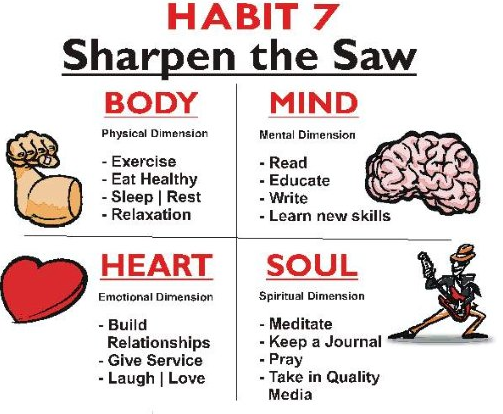
One of the ways I sharpen the saw (Covey) is through leading, participating in, attending, and organizing professional development workshops. This summer has been typically  busy for me with a week-long aspiring superintendent boot camp, regular work in the district, co-hosting of a digital consortium gathering of superintendents from 20 US states, and a recent attendance and presentation at a global educators forum in Chicago.

By keeping my skills sharp I can support our leaders who can support our teachers who can support our students. We in DPS109 are inter-related. All of our efforts integrate in our continual quest for improvement and excellence.

ittakesavillage


Some highlights of my recent engagement with leaders from the US Department of Education, Antigua, Egypt, Mexico, MO, WI, and IL, are shared below … it’s an example of what I do and learn during the summer!
 download (1)
Our keynote speaker was Julie Ewart – US Department of Education in Chicago -Director of Communication & Outreach, she commented on the big picture initiatives of the Department and she shared research evidence in support of early childhood education, and full day kindergarten: Every $1 invested in high quality public pre school has value of $7. She also discussed research efforts by and from the Department including the OERI, a semi independent research entity. She also shared  the President’s goal that all school districts have access to high speed internet – this is a huge equity issue in the US. For example in 2013 only 30 % of schools in the US had high speed internet access, and now in 2016 we’re at 77%!
 download
One of our international experts, Dr. Tarik Shaki – Secretary General, Presidents Specialized Councils – Egyptian Presidency shared how Egypt is impacting the international education scene. Specifically this world renowned expert educated us on bringing digital change to scale. Shaki is a former professor at University of Illinois at Champaign-Urbana. In addition, he has worked in UNESCO (he helped develop framework with UNESCO), he is also a professor at AUC – American University of Cairo – #1 private University in Egypt.
Dr. Shaki has an impressive history in digital education as well. In the 1990’s he was friends and colleagues with the founder of Netscape and it’s possible that he taught the first ever online course from Egypt to the U of I in 1996! He led us in discussions about how to properly integrate technology education, we discussed both successes and failures. One of the most interesting take-aways was the information about the EKB, the Egyptian Knowledge Bank. Briefly this allows every IP (computer) address in Egypt access to the vast collections included in resources like Britannica, Discovery, and National Geographic.
 download (1)
We also engaged with Daniel Hernandez, Development Upper Secondary Secretariat of Public Education Mexico, Stacey Payne-Mascall – Information, Communication, Technology (ICT) officer from the Ministry of Education for the government of Antigua-Barbuda, we also learned from Canadian expert Denise Andre, Director of Education and Secretary-Treasurer, Ottawa Catholic School Board.
e9ee7249de68872ff17a6304e34ca8ac
Our US experts included Dr. Dennis Carpenter – Hickman-Mills, MO (south of Kansas City, MO) , Dr. Kristine Gllmore from the DC Everest Schools in Wisconsin, and I also shared examples of digital communication in our own Deerfield Public Schools.
This summer I am proud to preside over additional summer construction projects, additional teacher and administrator training, additional work in the district in support of learning for our 3000 PK-8 students, and I’m proud to share how I sharpen my saw in support of these noble endeavors!

The roles of a Superintendent include local, statewide, regional, national, and international learning! It’s an honor to lead the Deerfield efforts to Engage, Inspire, and Empower!

future

Summer – Same Focus on Excellence – #ENGAGE109

“As you walk down the fairway of life you must smell the roses, for you only get to play one round.”
– Ben Hogan

Photo of Music and Art classroom/learning space redesign 2016

Photo of Music and Art classroom/learning space redesign 2016

It’s Summer and that means construction, re-design, and recharging in the Deerfield Public Schools District 109! For the past three years we have re-designed and re-imagined learning spaces in kindergarten, middle school STEM/STEAM/Science and hallways, and this summer we are embarking on a major set of projects to continue our transformation.

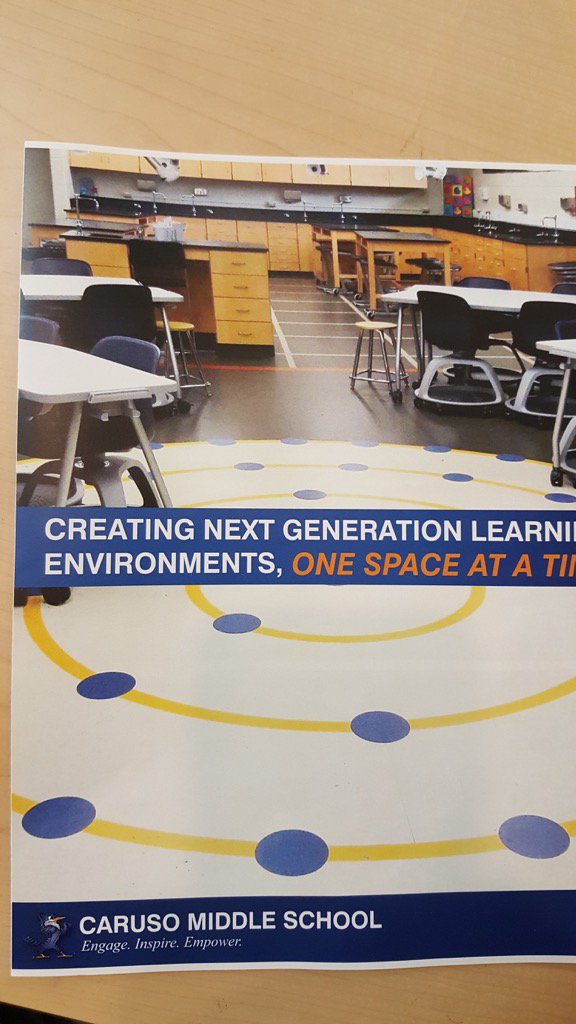
This year the middle school art and music wings will be re-designed and upgraded, taking us from 1960’s era learning spaces to the present and future. And each of the four elementary school library learning spaces is undergoing a complete “face lift” and redesign process as well. A major highlight of this work is the renewed focus on STEAM – Science, Technology, Engineering, the Arts, and Mathematics K-8. Each elementary school library learning space will get a PTO (Parent-Teacher-Organization) funded SMART lab!

In addition to summer construction we have many teacher learning and professional development sessions underwIMG_20150421_093844ay. From our focus on problem based learning with a cohort of 35 teachers and administrators and iCoaches from around the district’s six schools to math curriculum mapping, to data assessment review, our teachers hardly get the “summer off”. On the contrary, our educators spend the summer recharging for the next school year! As we review the data from the past three years we focus on far more than simply student test performance. Of course, as responsible educators and leaders we do focus on student learning and test performance, that is part of our 360 degree view of success and growth in our district.

 

As we have shared in various formats, including the 2016 State of the District video, the District takes great pride in measuring and reporting to the community. We look at multiple measures to inform our decisions in support of educational excellence and student learning, growth, success, and safety.

  • Organizational Culture (part of the Big 5 started in 2013)
  • Student Engagement (new for students in grades 3-8 started in 2015)
  • Climate (started in 2013)
  • Impact of 1:1 Transformation of Learning Environments (BrightBytes started in 2014, students in grades 4-8, parents, all staff)
  • “Pulse” surveys (ongoing at various grade levels across the district)
  • Illinois Youth Survey (students in grades 6 and 8 every other year)
  • PARCC – mandated by law since 2014
  • Measures of Academic Progress (MAP tests in reading and math, three times per year K-8 since 2013)
  • Coming in the Fall – STRATEGIC PLANNING input surveys and focus groups (ECRA group)

In addition, a new feature to find out the PULSE of the district is live via this blog (top right) and via the Superintendent’s Web Page via our District website – please take a moment to rate the quality of our district!

As a public school district it’s imperative we measure and report on the

Return on Investment!

This past year I was fortunate to share the DPS109 story of excellence and share the leadership impact of the Board, the Leroiadership Team, the Teachers, the Staff, the Students, the Parents, and the entire community across the county, state, nation, and world!

 

Throughout the summer months we will continue to share updates, photos, information about the Deerfield Public Schools Journey on the road of excellence and innovation! During the summer our District Center and each of the two middle school offices are open and ready to serve every day (the hours are different but our commitment to excellent customer service is a 12 month, 24/7 commitment!).

Please remember that the Text-a-Tip hotline is open 24/7 as well! If anyone needs confidential help from a trained counselor, remember that they can text a message to 224HELP (2244357).

Text a Tip to 224HELP


ENGAGE, INSPIRE, EMPOWER

ENGAGE, INSPIRE, EMPOWER

Our Leadership Journey in DPS109 – #engage109

“Things turn out best for the people who make the best of the way things turn out.”
– John Wooden

ENGAGE, INSPIRE, EMPOWER

ENGAGE, INSPIRE, EMPOWER

For the past three years we have moved from the past to the present in support of the future! Guided by our Big 5, the Board, leadership team, teachers, staff, parents, community, and students have worked collaboratively to create engaging, inspiring, and empowering learning opportunities! The short slide show below depicts in graphics, images, and text a look at our last three years and a look into the next 100 years!

In May we’ll report our State of the District to the Board of Education and Community, we’ll also post here on the blog! Comments are always welcome.

Garbage Trucks and Innovation

“Interdependent people combine their own efforts with the efforts of others to achieve their greatest success.”
– Stephen Covey

images

Today when I was walking my dog in the neighborhood I stopped and took a few minutes to watch the waste management truck pick up the garbage and recycling. I watched the driver of the truck pull up to the recycling bin at the curb. He did not get out of the truck to empty the contents into the receptacle in the truck. He had a robotic arm attached to the truck pick up the recycling bin and empty the contents into a dumpster connected to the truck. This process was repeated at every house. This automation fascinated me as I contemplated garbage truck crews of my youth and how different they were. When I was a boy the garbage truck had a crew of three men, a driver, and two people who rode on the back of the truck and who emptied the trash into the truck and who operated the trash compactor.

My elementary school in Des Plaines, IL where I spent K-6 grades.

My elementary school in Des Plaines, IL where I spent K-6 grades.


When I was in 2nd and 3rd grade and there were three employees per garbage truck I wonder if my teachers were charged with the task of preparing me for the jobs of tomorrow. I wonder if my teachers in 2nd or 3rd grade thought about the depth of knowledge of my learning experiences or activities. I wonder if my teachers four decades ago would have, could have, or did, contemplate a future where garbage trucks today do not have three humans, they have one human and a truck with the sophistication of the space shuttle. I wonder if STEM or STEAM concepts were driving instructional decisions in the 1970s when I was in grade school.

In considering what happened in forty years to the waste management industry, one could draw a conclusion that technology has cost two jobs per truck. While that’s one way to look at this situation; forty years ago there were three people per truck, today there is one person per truck. Another way to look at this is that education forty years ago (or over the past forty years) has changed to allow people to learn new ways to implement waste management. Perhaps the new ways the trucks operate have added two or more jobs. While the people are no longer garbage truck operators, they are now trained to use robotics, natural gas engines, etc. Jobs created by and for engineering people, other jobs – not yet imagined forty years ago – are filled with people skilled and prepared for jobs of our present.

As a superintendent am I supporting and leading an organization preparing students for jobs of the future not yet imagined? I hope so!

So as I’m putting the final touches on the slides I’m using with a presentation at a local conference this Friday at the Argonne National Laboratory in Lemont, IL I am thinking about my experiences today with the garbage truck processes.

In the short video clip below the creator of the Rubik’s Cube offers thoughts on our mission in education and life:

Rubik’s Cube: A question, waiting to be answered