Radio Interview – Leadership and Cultural Competency in Education: Dr. Sonya Whitaker and Dr. Michael Lubelfeld

In North Shore School District 112, we’re proud of our Journey of Continuous Improvement and Growth! In all areas, we remain “unfinished,” and we constantly seek to become better tomorrow than we are today!

In this blog post, I’m sharing a 49-minute audio from a recent July 3 on WVON with Rufus Williams interviewing me and Dr. Sonya Whitaker following a two-day Culturally Responsive Boot Camp professional development in Highland Park, attended by more than 90 staff members!

In addition to the audio file, I had Gen AI (generative artificial intelligence) summarize the audio into text for the blog post (below the audio you will see the Gen AI generated summary).

Comments are always welcome!

Learn more about our evolving journey at our website!

Summary of the audio interview from Generative AI

Continuing the Journey: Cultural Competency and Leadership in Education

#### Dr. Whitaker’s Approach

Dr. Whitaker reflected on the boot camp’s success, attributing it to the elimination of distractions and the focus on intentional, uninterrupted work. The boot camp raised consciousness among educators by addressing biases head-on. A key message that resonated with participants was, “If we have a brain, you have a bias.” This simple yet powerful statement helped level the playing field, allowing educators to acknowledge their biases and work through them collaboratively.

#### Culturally Responsive Teaching

One of the most significant outcomes of the boot camp was the movement toward culturally responsive teaching. Dr. Whitaker emphasized that understanding student culture is crucial for effective instruction and assessment. The training encouraged educators to reject negative societal narratives about the students they serve and to transform their teaching practices to be more inclusive and supportive.

## Embracing Equity and Cultural Competency in Education: Insights from Dr. Sonya Whitaker and Dr. Michael Lubelfeld

In a recent conversation on WVON, we had the pleasure of hosting two esteemed education leaders: Dr. Sonya Whitaker and Dr. Michael Lubelfeld. Dr. Whitaker, the Deputy Superintendent of Schools in a southern Chicago district, is also the National Policy Director for PUSH-Excel and an expert in cultural competency. Dr. Lubelfeld has served as a public school superintendent in Illinois since 2010 and currently leads the North Shore School District 112, which includes Highland Park and Highwood. Both guests shared their insights on the importance of cultural competency and equity in education, particularly in the context of recent events in Highland Park.

### Reflections on Tragedy and Community Resilience

#### Dr. Michael Lubelfeld’s Perspective

Dr. Lubelfeld began by reflecting on the tragic shooting that occurred during the 4th of July parade in Highland Park two years ago. He described the event as a shattering of the community’s innocence, resulting in widespread emotion, anger, fear, anxiety, and confusion. In response, the school system, alongside city and county leadership, focused on trauma-informed healing, counseling, and fostering a celebration of compassion and love. Recognizing that members of their student body and staff were victims, they committed to taking care of their youth and supporting the community through this difficult time.

#### Community Mobilization

Dr. Lubelfeld acknowledged the efforts of the Highland Park community to organize, mobilize, and address the issues that arose from the tragedy. This collective response showcased the community’s resilience and ability to come together in the face of adversity. Despite the unplanned timing of the interview, he emphasized the importance of recognizing the anniversary of the event and the ongoing healing process.

Understanding Highland Park’s Demographics and Challenges

### A Diverse Community

Dr. Lubelfeld provided an overview of Highland Park, highlighting its demographic diversity. He explained that the district serves a varied population, with 66% of students being white, 25% Hispanic, 4% Asian, and a mix of other races. Notably, 20% of the students come from families who qualify for free or reduced lunch, indicating that one in five children in the district lives in poverty.

#### The Importance of Equity

The district’s focus on equity stems from its history of three school districts merging in 1993. Since then, the issue of ensuring equal educational opportunities for all students, regardless of their background, has been a priority. Dr. Lubelfeld emphasized that equity means providing every child with the same educational opportunities, which has been a driving force in the district’s initiatives.

### Cultural Competency: A Crucial Element in Education

#### Dr. Sonya Whitaker’s Insights

Dr. Whitaker shared her extensive experience in leadership roles across various districts, serving diverse student populations. She highlighted a significant challenge in the education profession: the majority of teachers are white females, which often leads to a lack of exposure to diverse perspectives. This homogeneity can result in educators isolating themselves and missing opportunities to counter negative societal narratives about black and brown people.

#### Raising Cultural Competencies

To address this issue, Dr. Whitaker emphasized the importance of raising cultural competencies among educators. She noted that leaders like Dr. Lubelfeld and supportive boards of education play a crucial role in this process. By increasing cultural competencies, educators can reject negative narratives and ensure that all students, including those experiencing poverty, receive the best possible education.

Implementing Cultural Competency in North Shore School District 112

#### Realizing the Board’s Vision

Dr. Lubelfeld expressed confidence that the boot camp would lead to significant improvements in student engagement, satisfaction, and equity. He highlighted the concept of collective efficacy, where educators believe in their abilities and in their students’ potential. The goal is to create a more equitable and effective educational experience for every child in the district.

#### The Decision to Bring in Dr. Whitaker

Dr. Lubelfeld recounted the steps taken by the North Shore School District 112 to address cultural competency. After becoming superintendent in 2018, one of the top priorities identified by the board and community was equity. The district conducted an equity audit in 2020 and, recognizing the need for expert guidance, hired a national consultant to train the board.

#### Accelerating the Work

In early 2024, the district faced several incidents of anti-Black racism against students, which prompted urgent action. Dr. Lubelfeld took the unprecedented step of sending a letter to the entire community and met with concerned parents who demanded more substantial efforts. This led to an accelerated, intensive plan involving immediate staff and administrator training, community meetings, and the development of a comprehensive approach to cultural competency.

#### The Boot Camp

One of the key initiatives was a boot camp led by Dr. Whitaker, which provided training to approximately 90 staff members. This program aimed to equip educators with the skills and knowledge needed to handle cultural competencies, address incidents of racism, and foster an inclusive and supportive environment for all students.

### Personal Reflections and Authentic Leadership

Dr. Whitaker’s approach to the boot camp involved sharing personal experiences that many white educators might not have been aware of. She discussed issues like colorism and the impact of these experiences on students. By revealing her own vulnerabilities and challenges, she fostered a safe environment where educators could learn and grow together.

#### Safe and Supportive Environment

Dr. Whitaker felt safe and supported by Dr. Lubelfeld and the staff at North Shore School District 112. This sense of safety allowed her to share candidly and authentically, which in turn encouraged educators to reflect on their own biases and assumptions. The presence of leaders, including the board president, reinforced the importance of this work and the district’s commitment to continuous improvement.

### Cultural Competency and Pedagogy: Moving to the Classroom Level

#### Recognizing Individual Experiences

Dr. Whitaker explained that the first step in achieving high rigor and high achievement in instruction is for teachers and administrators to understand their own cultural identities. During the training, many educators realized that while they may share the same skin color, their experiences were vastly different. This understanding is crucial for translating cultural knowledge into effective teaching practices.

#### The Legacy of Brown v. Board of Education

Dr. Whitaker highlighted the 70th anniversary of the Brown v. Board of Education ruling, which declared segregation in public schools unconstitutional. Despite this landmark decision, schools remain as segregated as ever, making the need for cultural competency training even more critical. She stressed the importance of acknowledging and addressing institutional racism within the education system.

### Culturally Responsive Pedagogy: The Next Step

#### From Knowledge to Action

Dr. Whitaker emphasized that cultural competency is about understanding different cultures, while culturally responsive pedagogy involves applying that knowledge in the classroom. Educators must learn to recognize the unique cultural strengths of their students and use those strengths to enhance learning. This approach helps achieve the board’s vision of high rigor and high expectations for every student.

#### Building a National Model

Dr. Whitaker expressed confidence that the teachers and staff at North Shore School District 112 have the potential to serve as a national model in cultural competency. The feedback from the boot camp participants indicates a readiness to transform teaching and learning practices. The next focus is on how to implement these changes in the classroom, ensuring that educators can effectively support and engage all students.

### Conclusion: The Path Forward

As Dr. Whitaker and Dr. Lubelfeld continue their efforts to enhance cultural competency in education, their work serves as a model for other districts facing similar challenges. The boot camp experience at North Shore School District 112 demonstrates the power of intentional, focused efforts to create a more inclusive and equitable educational environment for all students.
Snapshots of Success in District 112 – #112Leads

“We rise by lifting others.”– Robert Ingersol 


I recently posted a podcast episode with the information contained in this blog post, if you’re interested, you can listen:

In North Shore School District 112, I’m proud to report that our present is bright and our future will be brighter! We use various metrics to measure and gauge our success. For reference, check an earlier blog post: Measurement of Success – Blog Post

In today’s blog post, I’m sharing two slide presentations and a few extra slides that highlight some recent and current success in the District. The first presentation below was shared with the District’s PTO President’s Council (PTO refers to the Parent Teacher Organization). This is the formal leadership group representing the parents in the District’s 10 schools. In this report, the results of the Family Engagement Survey reveal significant growth in the areas of the school (& District) satisfaction/pride / and perception of our services.

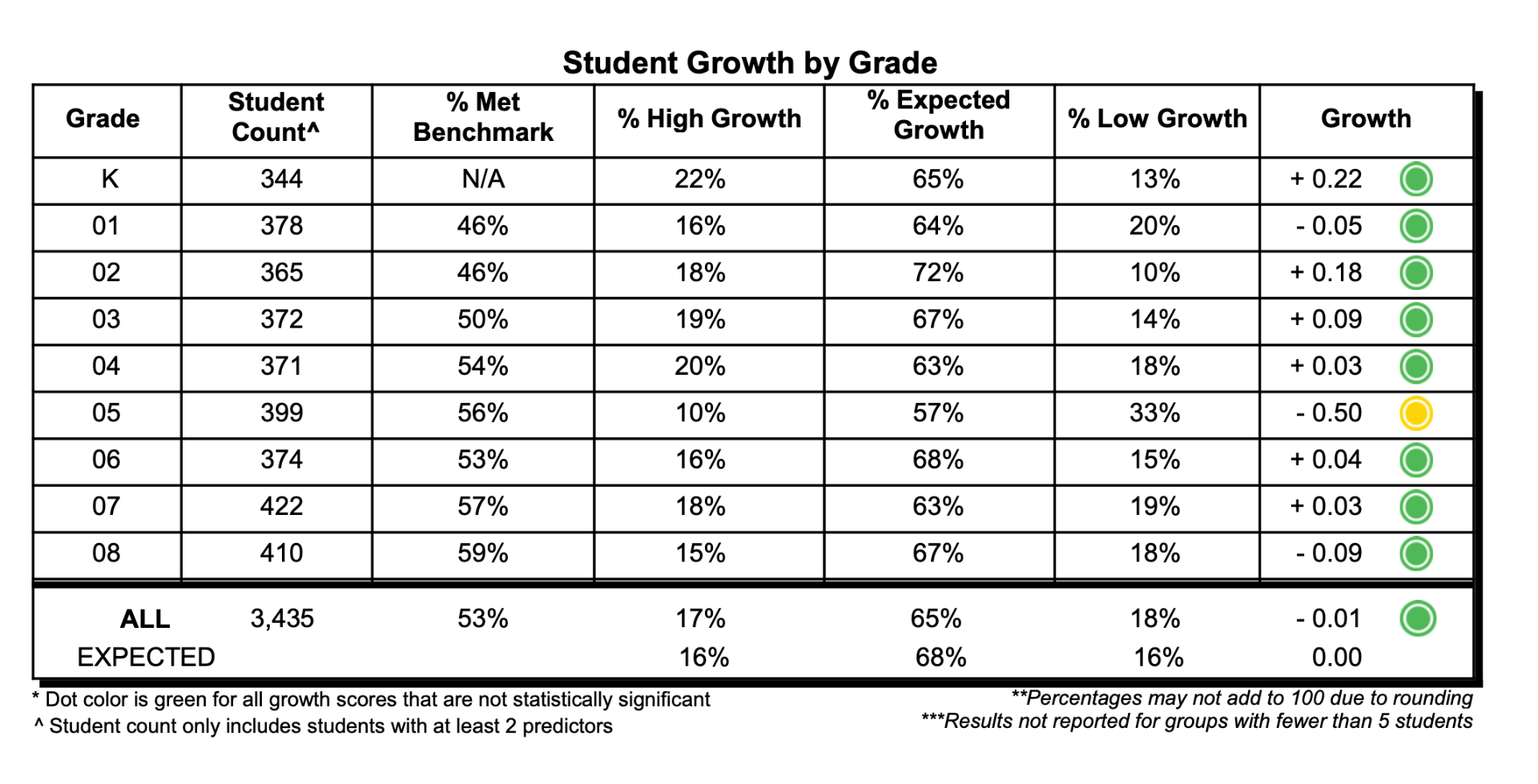
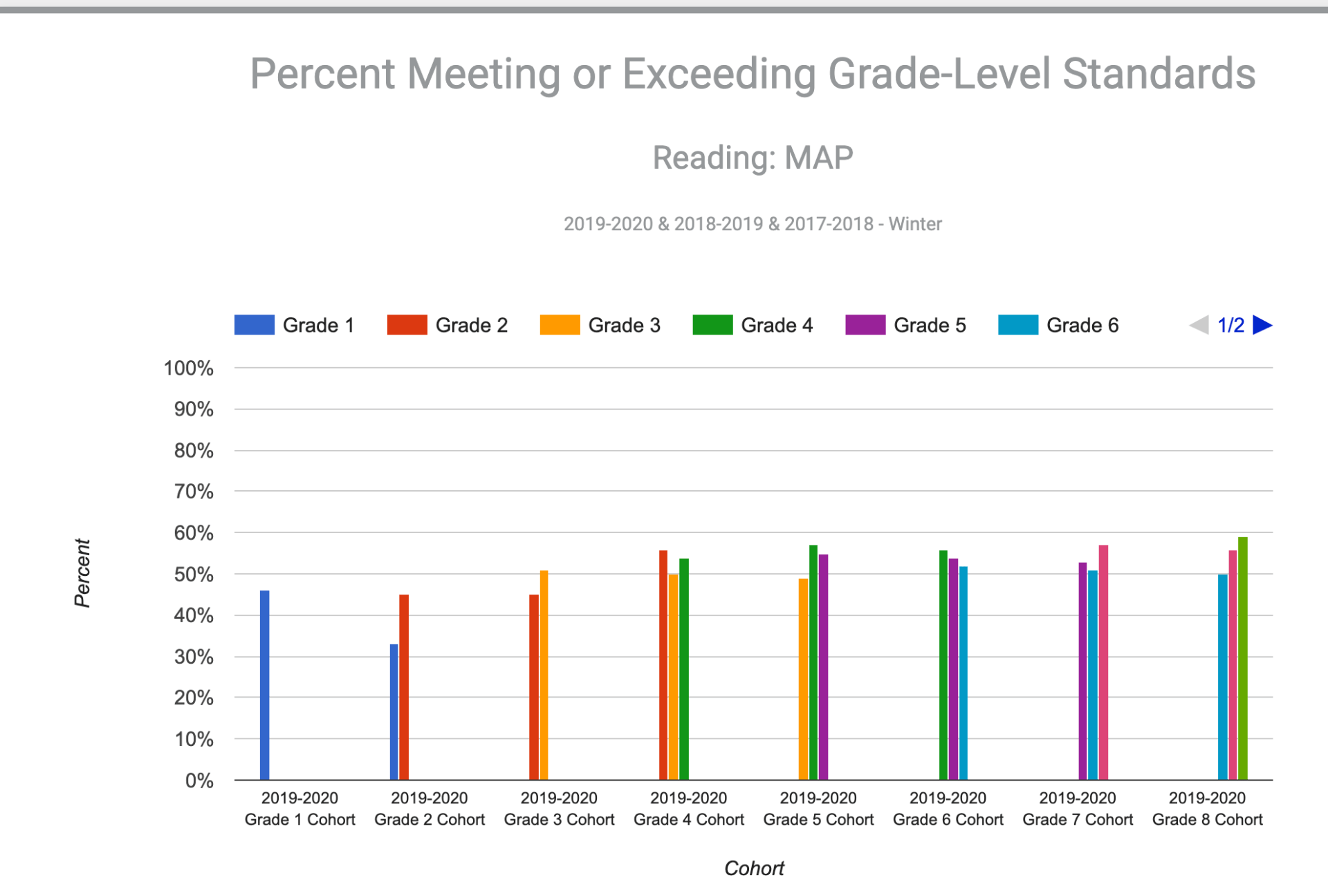
My report from the January 21, 2020, Board Meeting focused on the District’s “Big Three” areas of focus for the 2019-2020 school year, which are Closing Achievement Gaps, Facility Upgrades and Modernization, and Portrait of a Graduate. The report began with student success data from the winter Measures of Academic Progress (MAP) test.

Data shows students in 1st grade are showing the highest achievement out of all grades at 66% projected to meeting or exceeding state standards. I also highlighted additional strong growth in multiple grade levels over the past three years, particularly in mathematics. These trends point to the success of the Full Day Kindergarten program, multiple curricular implementations K-8, professional development, implementation of instructional coaches, and the hard work of our teaching staff and students. 

The report went on to cover the Northwood Modernization Project, which is on time and is within 1% of its budget. I mentioned multiple ways for the public to engage with the process including the Long Range Plan webpage, drone footage and a live feed of the construction site. It was also mentioned that in July of 2020 Phase 2 of the Long-Range Plan will commence with a Thought Exchange community engagement process that will be used to help form a recommendation that will be presented in April 2021.

The report concluded with information regarding several highlights including the Portrait of a Graduate, the 5Essentials Parent Survey, the Innovation Learning Parent Survey, and other ways to engage with the district. These communications tools include the Lighthouse 112 podcast, the district mobile application, e-newsletters, #112Leads, Facebook, and Twitter.

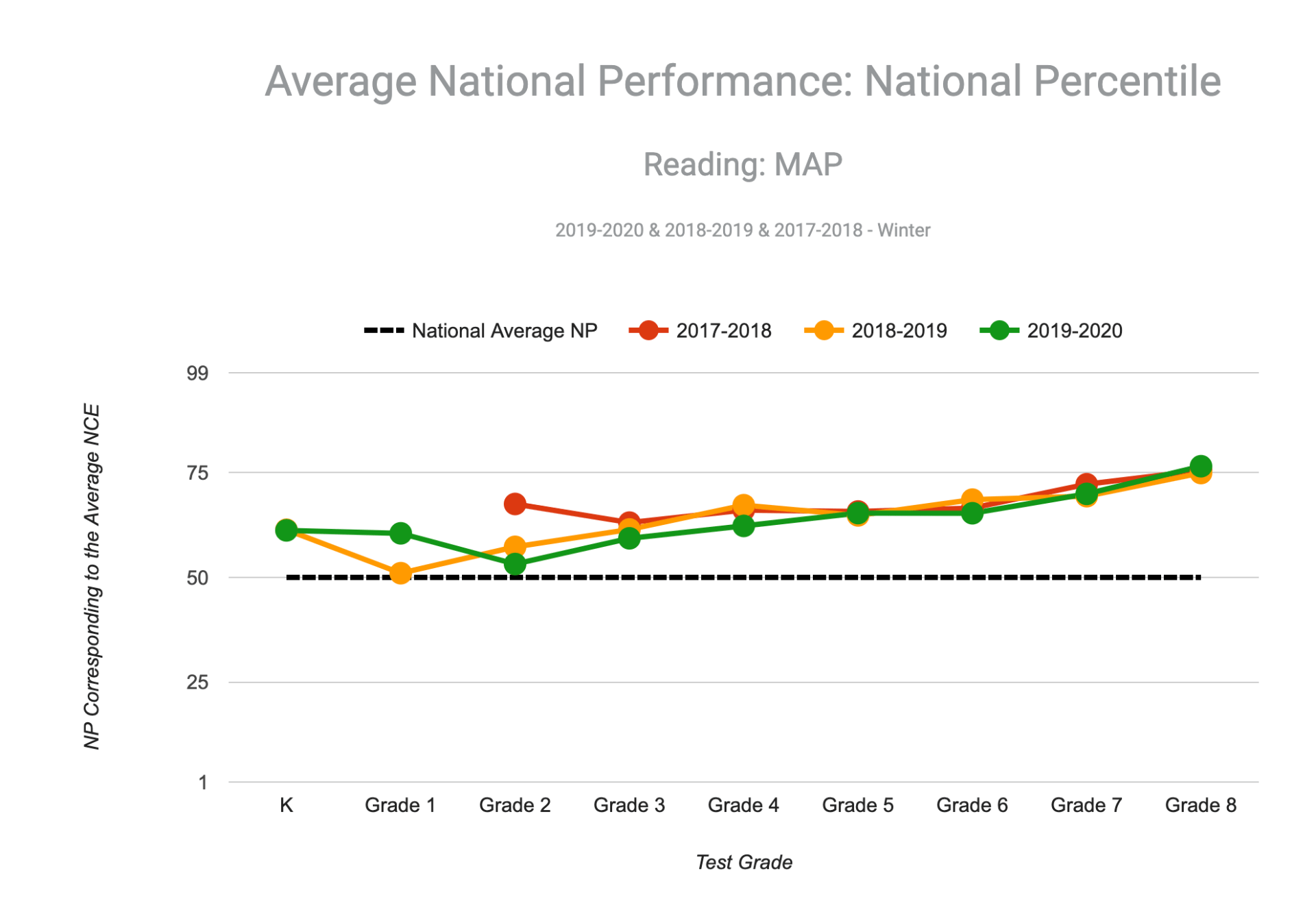
At the Board meeting I did not present the Reading MAP data for time/efficiency, but, in this blog post, I’m sharing the comparable Winter MAP Reading data below (see images).

All in all our District work is showing progress and upward trends!

What does the superintendent do all summer? #Engage109

“Make sure that team members know they are working with you, not for you”
– John Wooden

What is going on in #Engage109 this summer?  What do we do all summer is a common question I have been asked for most of the 25 years I’ve been in education! Well it’s official – we are in school year 2017-2018! We have a guiding Strategic Plan, we have many new leaders, we will have a new board member on the way – it’s a whole new year. Aside from running summer school with more than 500 students, overseeing major summer construction projects approaching $5Million dollars, and the on-boarding of nearly 10 new leaders, we’re also making sure we have plans for meetings, workshops, professional development, curriculum development and other milestone events for all administrators.

As far as we’re concerned, it’s time for 2017-2018 to start (Ok … we’ll wait a few more weeks …).

In addition, we’re reaching end of life for hundreds of nearly 10 year old Promethean Boards, so the Technology Team is rolling out new projection and whiteboard systems to replace the Promethean boards in all six campuses.  Our Director for Innovative Learning, Marcie Faust and many of our outstanding iCoaches have trained nearly 64 teachers in summer workshops thus far and expect another 57 on the scheduled dates in July and August!  This is in addition to widespread learning sessions in the multiple classrooms at each building that we had set up last spring as a “debut”.  

We also continue to close the fiscal year that ended on June 30, and we prepare for the annual auditors who are scheduled to come spend two weeks conducting field test at the end of the month.  

In addition, the Director of Buildings & Grounds, Charlie Privett, and the B&G team are exceptionally busy working on a variety of projects throughout the district, including:  

Caruso & Shepard Locker Rooms, Security Projects (throughout the district), Casework at Kipling & South Park, Parking Lots at South Park, Walden, Shepard, & Wilmot, Roof Project at Wilmot, Flooring Projects & Painting Projects Throughout the district, and more!

In addition, I published an article in the IL ASCD Summer Journal and I’m working on a few other writing projects.

So … while the students are enjoying much needed recreation time, the leadership team is busy making sure everything will be ready for them in August!

I always smile when folks say “It’s easier in the summer, right?” – nope – but I would not want it any other way.


Teacher & Edu Staff Appreciation Day/Week – Thank You #Engage109

This is teacher, nurse, educational support staff (and administrator) appreciation week! We can never say thank you enough to our educators!! THANK YOU!

I’m sharing a quote I have held closely for many years and I’m sharing two notes I recently sent the DPS109 community.

“How important it is for us to recognize and celebrate our heroes and she-roes.”
Maya Angelou


Dear District 109 Families and Community Members,

At its last meeting, the Board of Education declared Tuesday, May 9, 2017 as Teacher Appreciation Day in District 109. Please join the Board of Education and the District administration team in applauding our teachers and all of the educators and support staff throughout District 109 who work so hard each day. We have high-achieving, nationally recognized, innovative, warm and welcoming schools because amazing teachers engage, inspire and empower our students – your children, grandchildren, and the children of your friends and neighbors!

I encourage you to find a way to show your support to your favorite teacher, or any school staff member who makes a difference in the lives of the children in our community. Whether you write a heartfelt, handwritten note, have your child create a work of art, or just go out of your way to say a personal “Thank you,” you are giving a great gift. They deserve all the thanks that we can shower upon them!

Sincerely,
Mike


“If we neglect our gifts and talents, they, like an unused muscle, will atrophy and waste away.”  Stephen Covey

Dear District 109 Teachers and Staff,

The Board of Education recently approved our 2017 Strategic Plan. The planning process was both reflective and forward thinking, and very eye-opening to me. I realized how much we have accomplished in four short years.  I also acknowledge and thank you for being open to change. I know that’s not easy. Your leaps of faith and constant hard work have allowed our students to thrive, and schools to achieve local, regional and national recognition. In the strategic planning process we should all be proud of the input and impact of that input. Your voices and your input helped shape the goals, objectives and plans. I look forward to working with you and for you to achieve our goals in the coming years.

On April 24, the Board of Education declared Tuesday, May 9, 2017 Teacher Appreciation Day in District 109. The community will celebrate you throughout the week. To show our thanks, the District administration and Board will provide a gift and special treat at some point during the week. They are small tokens of our boundless appreciation of you and your continual work to engage, inspire and empower our students, their parents, your colleagues, and our community.

So THANK YOU, from me personally, and from the Board of Education and District leaders, for allowing us to work with the best team of educators in the nation.

Sincerely,
Mike

I Voted Today! What does this mean? Decision Making #engage109

“Teamwork is the ability to work together toward a common vision. The ability to direct individual accomplishments toward organizational objectives. It is the fuel that allows common people to attain uncommon results.”
– Andrew Carnegie

Democracy is a value ingrained in the “DNA” of Americans. Our entire education system is based upon democratic principles, our Declaration of Independence from the British Monarchy declares our rights to be independent (men and women).  “…certain unalienable Rights, that among these are Life, Liberty and the pursuit of Happiness.”

Liberty is the right most closely aligned with voting. The right to give input is a foundational right we enjoy. We apply and extend democratic principles all through the tapestry of our society.

Ten year olds “vote” for the student council (a governance model in the image of our government). Associations vote their members in for leadership positions. In the USA, we feel it is normal and just to vote for pretty much anything.

Some of you reading this will remember commercials where people voted for the better tasting soft drink on TV. Often couples will vote on which restaurant to attend. Families may vote on what colors to paint their rooms. The concept of voting, choosing, giving input is almost an assumed right as an American. The will of the majority rules so many of our institutions of government and society. The majority rule, though, is not the only rule in democratic societies. The rule of 3/5 or “super majority” as well as the rule of “plurality” (the number of votes cast for a candidate who receives more than any other but does not receive an absolute majority.)

In leadership, though, even in a democratic republic, sometimes the elected representatives vote in a different way than their constituents. This does not mean theydisregard the input, it simply means that multiple factors influence decisions.

In general, if you don’t vote can you really complain about the decisions made on your behalf? No, I don’t think so, that’s why I vote; I want to have a voice, whether it is a large voice or a small voice, whether my candidate choices win or not – at least I can say I voted! I went to the table to give my input and in some small way I contributed to our democratic way of life.

I vote for candidates who I believe will represent me, my values, my interests, and the choices I would make if I were in their shoes. I don’t expect the folks for whom I cast a ballot to always agree with me, at times, perhaps often, they will be better educated on the particular issues than I.

In the United States our government and ways of life are more Roman than Greek. That is to say we follow a republican form of government (not the political party) but it’s a representative democracy concept. We don’t employ a direct democracy where everyone gets one vote; we have a representative democracy. This means we vote for people who will represent the views of groups of people. For example, members of Congress are assigned to districts, geographic areas, representing certain numbers of people. This is why the decennial census (the population count every 10 years) is so important to political map-makers.

  • I vote in every election.
  • I vote because I can.
  • I vote because I am a free man.
  • I vote because it is my civic duty.
  • I vote because it is my responsibility as a free man to exercise this powerful right – the right to give input as to whom should represent me and my interests.
  • I vote because I hold great value in the power of representative democracy.
  • I vote because I would like to have my input considered.
  • I vote so I can share my views and values and be a responsible member of society.

One of the tenets of voting that some people overlook is that their vote is going to elect others who will represent their interests. Will those for whom I cast a ballot always vote the way I want them to? No – of course not.

Will they take my follow up input under consideration? Yes – that is the beauty of a democratic republic, the type of society in which we live. I would like everyone I vote for to become elected. But that is unlikely since there are many other voters and that is not a realistic wish. I understand this and I’m ok with this.

As a regular part of my role as the superintendent of schools, I regularly give input to our elected representatives in Washington, D.C., and in Springfield, IL. I would like them to consider my input even if they disagree with it. They may disagree in principle or they may disagree because they are better informed, or they may disagree for political reasons. They also may take my input and form, reform, or transform their beliefs!

I vote for school board members (even my own bosses!); I vote for village trustees and township trustees; I vote for friends, neighbors, colleagues, folks about whom I know a lot and at times, I vote for folks about whom I do not know a lot, but who are aligned with a political coalition I support or understand.

Many voters select based upon political party or candidate gender or candidate ethnicity. It is free choice; people can literally vote for anyone who is on the ballot (and at times they can enter a “write-in” candidate too). That is the beauty of living in a free society.

What does democracy mean in the workplace?

I consider myself to be an inclusive and collaborative leader. I seek input and views and votes from the people likely to be impacted by a decision or set of decisions. I work in an industry full of committees, viewpoints, processes, procedures, etc.

I work for an elected non-partisan school board made of seven citizens who, with me, form a governance team of 8 to manage and govern the school district. I seek input from the nearly 500 employees whom I serve and employ.

Do I always agree with every one of their votes? (no) Do I always do what the will of the majority requests? (no) The plurality (the larger number of votes when a majority is not there)? (no)

Or do I consider their input with care, concern, and respect, and make a decision based upon the combination of input, voice, votes, research, evidence, etc. YES – As a leader I truly have to balance the will of the many with the right decision – often equal or congruous with the will – but not always.

The paradox of leadership is leading with an inspired vision and per a collective plan, mission, agenda, vision, etc.

Seeking input, empowering people yet “at the end of the day” realizing that “the buck stops here” and the accountability and responsibility rests with the leader.

Not following the will of the majority is not rejecting input. Not following the will of the majority is not “not listening”. From time to time the leader must seek input, gather facts, anticipate impact and … well … lead. Sometimes leading means helping the group see a different reality than the one they think they want or the one they think is right.

Recently as part of our work, I shared committee recommendations and my administrative recommendation to the Board of Education (there were sometimes differences in the committee recommendation and my ultimate decision). These examples about which I refer are from the 2013-14 Superintendent’s Task Force for Middle Level Education. This coalition of students, parents, teachers, administrators, community leaders, and board members, a 140 member stakeholder community engagement group, made recommendations for improvement to our middle schools.

I took input from many, shared the input publicly, reviewed a number of factors, synthesized the priorities and make a recommendation. For the elective areas I took all the votes/input and I made a recommendation with some differences. The input continues to guide decision making and resource allocation. The STEM team recommendations were accepted 100%.

The challenge of a leader in a democracy is to respect input and consider the votes and then decide what is in the best interest of the many and to lead. The leader may know more and be able to see around corners the people cannot yet see. The leader often needs to have vision beyond the past experiences and limits of the group. The leader needs to lead and challenge the process and manage the change process.

Does your vote and your input guarantee that your choices will be advocated? No – just like the village trustee for whom I cast a ballot will vote his/her conscious when employees give input, or vote, if you will, they are giving input to the representatives who will ultimately decide what action to take. Your vote does guarantee that your views will be at the table and respectfully reviewed and considered!

What does a leader do when the needs of the many outweigh the needs of the few and the future for which he is leading requires systemic unlearning? Well … with compassion and conviction, he leads.


I’m proud I voted today.

I’m proud that the educators with whom I work continue to share voice, vote, values, viewpoints and vision.

I’m proud to share the Deerfield Public Schools District 109 new Strategic Plan later this month.

The mission, vision, guiding principles, portrait of a graduate, goals, objectives and action plans have been carefully prepared, reviewed, planned, and considered.

The Strategic Plan is created by reviewing input of more than 1700 stakeholders – those who voted in surveys have their voice represented. Those who participated in focus groups have their voice represented. Those who Engage, Inspire and Empower have their voice represented as we “rebrand” and “re form” our educational organization for the next several years.

Khan Academy Leader on Mastery Learning – #Engage109


“Before you are a leader, success is all about growing yourself. When you become a leader, success is all about growing others.”

– Jack Welch

I’m a longtime fan and supporter of Sal Khan and his Khan Academy. Khan started his “education empire” by helping a cousin overseas with math instruction. Then the world changed, the desire for his expertise changed, and pretty much anyone at anytime can learn – for FREE. All you need is drive, desire, and the internet connection. The subjects and topics have grown from math to pretty much everything (see image below). FREE – access for all – 24/7. This is our world today – anyone, anytime, anything at our fingertips. 

A few years ago when I was the superintendent of schools at a small school district near Chicago’s O’Hare Airport (Pennoyer School District 79 in Norridge), we experimented with the Khan Academy in 2nd grade math. It was our first foray into “1:2 computing” – we did not have the funds for one device per student, but we had the funds for one device for two students and we made it work! The courageous teachers, Melissa and Samantha did a fabulous job of demonstrating grit, perseverance, and growth mindset by shifting their construct and concept of math and by changing their instruction to meet the needs of modern 21st Century learners.

In many ways Khan and his modern work have revolutionized access, digital power, transformation, and an entire mindset shift of what education is and can be – and should become. A lot of the work I have been writing about lately is stated far more eloquently and articulately by Sal Khan!

Earlier this year I participated in a book study with Kipling School and their faculty where we took a chapter, topic, concept, and wrote reflections. The other day I was reading Pioneering from the Education Reimagined group, and I came across a 2016 video from Khan that relates to recent posts as well as current events in the Deerfield Public Schools District 109. Our journey is powerful and we have written a number of articles about successful change management and growth for staff and students. Our journey continues – the road from good to great does not end at great – it only continues to stay great.

His messages are powerful, his approaches make sense, Khan is the present and the future! Please check out his video and share any comments.

We have the research! Let’s update our practices! #Engage109

“Many people die with their music still in them.”
– Oliver Wendell Holmes


As educators, it’s our job to help them find their music!

I think that the superintendent of schools should ensure that all children have access to educational opportunities despite decades of segregation and practices that have overtly and covertly separated children who learn differently.

Segregation due to race ended by law in 1954, but there have been other ‘segregationary’ practices – some well intentioned as well – like special education, exclusionary tracking, etc..

Often districts and schools practice “sifting” and “sorting” of students, these are practices that have, in general, led to disparate equity of educational opportunity across the schools, districts, states, and nation.

Regardless of evidence and research findings, many educational programs and practices still exist because school systems and leaders don’t understand how to manage change or because they are afraid to change.

When Public Law 94-142 (the special education law) was enacted in 1975, four main purposes were:

  • “to assure that all children with disabilities have available to them … a free appropriate public education which emphasizes special education and related services designed to meet their unique needs
  • to assure that the rights of children with disabilities and their parents … are protected
  • to assist States and localities to provide for the education of all children with disabilities
  • to assess and assure the effectiveness of efforts to educate all children with disabilities”

Source: Education for All Handicapped Children Act, 1975

The reality is that since 1975, many well intentioned educational programs for diverse learners ended up creating separate (but equal) “programs” and “service delivery models” for various learners.


I also think that it’s incumbent upon a superintendent to share the latest evidence, research, information, studies, etc. with his/her community to inform and improve practices.

I believe in the concept of innovation (changing for improvement).

You have probably heard about John Hattie. Specifically, you may have heard about his research on the factors that affect student achievement. Hattie uses effect sizes to show the relative impact of each factor. An effect size of 0.4 is regarded as average or typical. His work is ongoing. To my knowledge, his results were 1st published in 1999. They became well-known after he published a book in 2008 called Visible Learning. His results were last updated in late 2016. This Hattie effect size 2016 update summarizes these new findings in the context of what went before.

Despite overwhelming evidence to the contrary, see Hattie, et. al, for example, updated in 2016, many “mythological” and ineffective educational practices are still in place all over the school systems because “that’s the way it’s always been done“. Doing what’s right is not always popular – but we have no excuses for not doing what’s right.

The figures below show the latest findings from Hattie’s meta-analyses about the most effective instructional practices.  (I have written about Hattie‘s findings from time to time): (from the figures below, the concept of teacher credibility has an effect size of 0.90 and feedback has an effect size of 0.73, acceleration has an effect size of 0.68, for example).


Hattie’s studies have found that an effect size of 0.40 reflects the average impact of an intervention; those above 0.40 are more impactful. (click on the images below to go to the source)

Teacher Credibility Defined:

According to Hattie teacher credibility is vital to learning, and students are very perceptive about knowing which teachers can make a difference. There are four key factors of credibility: trust, competence, dynamism and immediacy. In an interview Hattie puts it like that: “If a teacher is not perceived as credible, the students just turn off.”

Examples for teacher credibility: Earn trust by showing trust towards pupils. Appear highly organised in the presentation of the subject matter. Develop a powerful style of speaking that uses few verbal hesitancies such as “OK” or “you know”. Reduce distance between teachers and students by moving or moving away from barriers (e.g., desk, podiums). Source: cie.asu.edu

The impact of a teacher on a student’s learning is so important that it’s arguably the most important duty of an administrator to select teachers who are predictive of excellence.


Goals to mathematics are 0.40-0.49 effect size
Play programs to preterm birth weight are 0.50-0.59 effect size
Teaching strategies to acceleration are 0.60-0.69 effect size
Feedback (0.73) to Teacher credibility (0.90) complete the list


The role of superintendent of schools is often a mysterious role. I have found that many people don’t really know what a superintendent actually does on a daily basis. Some think it’s like an “uber” principalship, others think it’s like a “CEO” of a corporation, and still others really have no idea. From time to time I write about what a superintendent does.

From my employment contract it states my responsibilities and duties as superintendent:

The Superintendent shall have charge of the administration of the schools under the direction of the Board; he shall be the chief executive officer for the Board; he shall recommend the selection, retention and dismissal of, and direct and assign, teachers and other employees of the School District under his supervision; he shall organize and direct the administrative and supervisory staff; he shall make recommendations to the Board concerning the budget, building plans, location of sites, and the selection of textbooks, instructional material, and courses of study; he shall direct the keeping of all records and accounts, and aid in the making of all reports, as required by the Board; he shall recommend rules, regulations, and procedures deemed necessary for the welfare of the School District; and, in general, he shall perform all other duties incident to the office of the Superintendent as the Board may delegate to him or as required by law.


Subsequent blog posts will reflect on the duties of a superintendent who must lead to ensure that ALL students receive high quality education with structures and systems supported by evidence. It’s time to stop doing what is easy and wrong! It’s time to do what is right – even when it makes people change.


Just because our school system was designed in 1893 does not mean that we should still act like it’s 1893!

Vision – Change – Growth #Engage109

“Great organizations demand a high level of commitment by the people involved.”
– Bill Gates

Vision (eyesight) is one of our five senses, eyesight is how ‘sighted’ people get input from the world around us. Eyesight is something that I do NOT take for granted, especially due to personal circumstances over the past six months. In this blog post I am going to draw parallels to my personal experiences with my vision and the concept of Vision in terms of organizational growth and change.

For 35 years I wore eyeglasses to correct my vision – correct as in meaning to improve sight. Sight in terms of what I could see with focus, distance, depth, perception, etc. I could still “see” without glasses, but my “vision” was distorted. With a distorted vision, I was not able to fully “see” or take in the world. The change I needed to make in my life was the change to wear glasses to “correct” my vision.

Often our vision needs to be corrected so that change and new methods can be embraced for improvement

Last year I started to lose my clear vision in my left eye (even with the change I had made 35 years prior) – even with glasses, the vision in my left eye was deteriorating. Again, I had to make choices: 1. let my vision deteriorate and accept a new limited reality; or 2. embrace change again to “correct” my sight.

During the period last year when my vision was departing from my left eye  I discovered I was developing cataracts. A cataract “grows” on the lens of the eye and impedes sight. During this experience the first change method I used to correct my vision, eyeglasses, was no longer sufficient.

For 35 years one method of correction worked and I was able to “see”. All of a sudden, out of nowhere I had two options: 1. live with limited vision or 2. have cataract surgery. Cataract surgery is not Lasik surgery; lasik works on the cornea (see the image at the left). Cataract surgery requires the removal and replacement of the lens in the eye. I also discovered during this process of stress, uneasiness, chaos, dissonance, “cheese moving” so to speak – that I needed to replace the lens in both eyes not just in my left eye. So … for a guy who is queasy with “health” stuff … I had to make a choice to confront my fears, confront risk and uncertainty and depart with the habits I had developed over a 35 year glasses wearing period.

So, after two surgeries – successful thankfully – my vision had not only been improved, but I did not need glasses anymore. My brilliant opthamologist inserted a distance lens in my right eye (still 20/20) and a reading/mid range lens in my left eye (20/20 reading and mid range). Wow – change was awesome! Wow – surgery and recovery was not so bad after all.

A change model I use in graphic form is the Virginia Satir change model (depicted in the image to the left). Applying this model to my personal health changes, the discovery of cataracts equate to the foreign element (by red triangle) introduced in my life.

Initially there was resistance (step 2). I was scared, angry, resentful, concerned, confused, and uncomfortable. The chaos, step 3, was the surgery, recovery and my experiences in those settings.

The Transforming Idea (red triangle at the bottom of the image) was the fact that after two surgeries I had better eyesight  than I had ever had. NO more glasses! NO reading glasses! The ability to wear sunglasses! No limited night vision. This all led to “integration”, step 4, and a new status quo. The change was fantastic and the new status quo was far better than the old one!

Change is a process, change is part of life, change is inevitable. Few of us seek change but in the end, many changes are far better than “that’s the way we have always done it” mentality.


ENGAGE, INSPIRE, EMPOWER

In the Deerfield Public Schools, District 109, we are engaged in a Strategic Planning process. Strategic means change, improvement, new, different. Strategic Planning means that the Satir Model of Change will now be applied to our organization.

In strategic planning organizations (in our case as a public school district) the Board of Education sets the mission, vision, values, and goals, and the superintendent and leadership team works to develop objectives for each of the goals. Each objective aligns to a goal.

Each goal is also aligned with the values or guiding principles. Those principles are aligned to the portrait of a graduate (beginning with the end in mind).

The portrait of a graduate is aligned to the vision and mission. I’m deliberately stating all of this to set the stage for how vision and change are coming to the Deerfield Public Schools! Our past 3.5 years have been filled with completing plans made by previous boards and leaders – we are proud of these plan completions and I have penned a number of blog posts about the impact of these changes. Now, the stage is set for the next few years to be guided and directed by and grounded in the new Strategic Plan.


In terms of strategic planning, setting the stage for what we hope to become, or setting the vision, is a complex process of input, review, soul searching, input searching, and hope.

Vision on in an organization refers to an aspiration   — or hope about the future.The vision describes what the future will become. It describes how the organization will lookin its future. The visions that get actualized are those that are based upon shared values and ideals.


A shared vision is powerful because members of the organization synthesize their hopes and aspirations in support of the common cause – or SHARED VISION. As a leader my aim is to inspire a shared vision. My aim is to generate ideas and synthesize multiple points of input into coherent action plans. My aim is to plan for change that is powerful, meaningful, and that becomes all hands on deck change.

Kouzes & Posner, authors of the Leadership Challenge, have found through extensive research across industry, that the 5 Exemplary Characteristics of leaders are:

Model the Way/Inspire a Shared Vision/Challenge The Process/Enable Others to Act/Encourage the Heart

Over the past few years our leadership team has spent significant time engaged in book review, 360 degree assessments based upon the Leadership Challenge LPI 360, and as a team we have strived to embody all five of these characteristics in all that we do as we lead and serve. The leadership framework upon which Nick Polyak and I frame in our upcoming book, The Unlearning Leader, is based on the 5 exemplary practices of a leader! These practices resonate with me and my leadership team.

By Inspiring a Shared Vision, when the “foreign” element is added into the mix, and the old status quo is challenged (challenge the process is another of the exemplary practices of a leader) the resistance is lessened and the pain is diminished when large numbers of stakeholders are engaged in the planning, vision creation, and planning!

In the Deerfield Public Schools we received more than 1,700 people’s input into our Strategic Plan – our district has 3000 students from 1,850 families, so the 1,700 voices helping guide our work give me great comfort that all voices are on the table as we prepare to make our system better – and as we prepare to make changes in our system.

Just like my personal experiences with change have had painful and uncomfortable moments, and just as I did not control elements of what happened to me, our organization is on the path toward meaningful change!


For another post at another time, I’ll explain how my perfect vision and my revised status quo was once again challenged as a torn retina became yet another foreign element in my life creating chaos, and change. As I march towards my new status quo I’m proud that my medical team, family, friends, co-workers, and employer have all helped inspire a shared vision in me — quite literally and figuratively!

To the future ….

As always comments are welcomed and encouraged!

How school superintendents explored the future of learning together

“When a gifted team dedicates itself to unselfish trust and combines instinct with boldness and effort, it is ready to climb.”
– Patanjali

google-a51985becaa6

This following is from a blog post I co-authored with Nick Polyak, and it is originally published on the Google EDU blog

How school superintendents explored the future of learning together

As education leaders, we’re expected to have all the answers. When we don’t, we solve problems by talking to our peers. The School Superintendents Association (AASA) invites administrators and educators to come together and talk about the challenges superintendents face, like how best to integrate technology in the classroom. This is a focus of the AASA’s digital consortium leadership cohort, which recently reached out to Google to see how they could further the AASA’s goal of leading new ways to use digital media in classrooms. We also reached out to Education Reimagined, an organization that advocates a paradigm shift to learner-centered education.

Google hosted a meeting of the AASA’s digital consortium with Education Reimagined at Google’s Chicago office in July 2016. Our discussion led us to realize we were thinking about the problem we wanted to solve in the wrong way. We had been making plans for how technology would transform our schools without considering one of the most important voices — our students! “The group’s discussion was a powerful reminder that we don’t make decisions in a vacuum,” said Mort Sherman, Associate Executive Director of the AASA. Putting student voices at the center of everything we do will help us design the future with them and for them. This will be a long journey for all of us, but one we are thrilled to embark on.

Putting student voices at the center of everything we do will help us design the future with them and for them.

Discovering student voices

At the Google office in Chicago, Education Reimagined Director Kelly Young kicked off the day by emphasizing the need to put students at the center. She advocated for a student-centered approach, where learning revolves around the needs of individual students instead of traditional classroom structures. She also encouraged us to bring students to the event to make sure that student input informed all of our discussions.

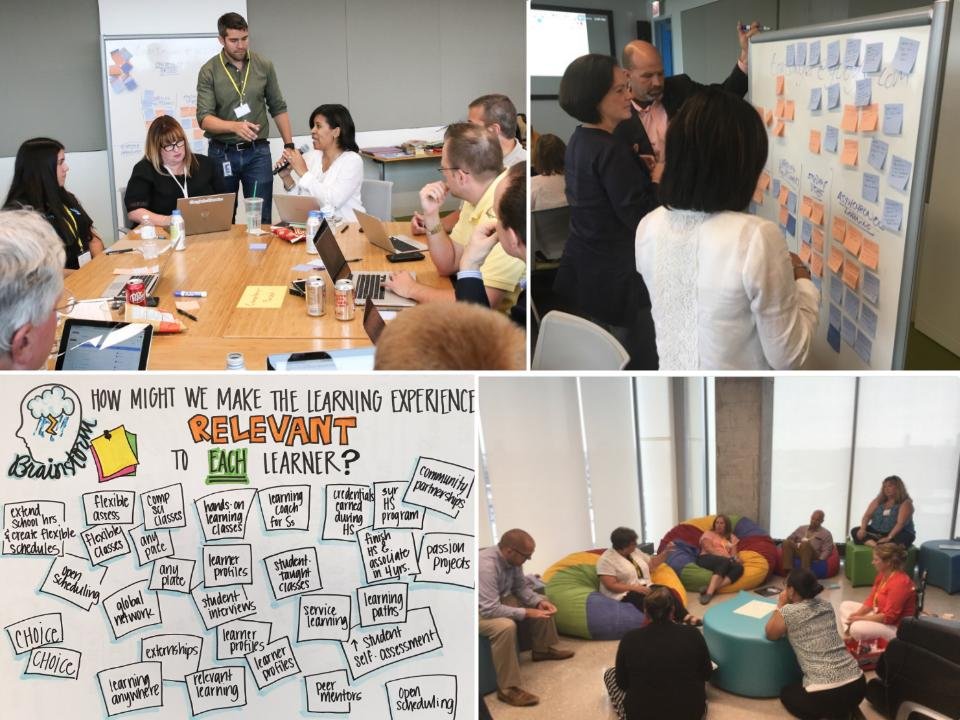
Google then worked with us to leverage their innovation methodology, informally known as “10x thinking” or “moonshot thinking” to help solve the challenges we were facing. It’s a version of “human-centered design thinking” that helps participants develop solutions while keeping the end-user at the center of the process.

GEDU_AASA.jpg
Superintendents used a design thinking process to explore learner-centered education
GEDU_AASA_students1.jpg
In the STAT program at Deerfield Public School District 109, students facilitate a technology review committee meeting.

As we began, it occurred to us all that students are our users, and our users weren’t part of our conversation as much as they should be. Without their input, we wouldn’t be poised for success, because we weren’t empathizing with their daily experience. By going through the 10x process with the students present, we gave them a voice in a way we rarely do. As the realization of user-centric education sunk in, we were excited to share our takeaways with our schools.

After meeting in Chicago, we returned to our districts to put this learner-centric approach into action. Leyden High School District 212, for example, created two student advisory board member posts, giving students the opportunity to weigh in on meaningful decisions. Another, Deerfield Public School District 109, set up the STAT program (Student Technology Advisory Team), in which students provide their input on how technology in the classroom impacts them and what tools, devices, or practices are relevant and effective from their perspective. These are just two examples of the learner-centric transformation happening across the country.

Cementing our progress

More recently the AASA’s digital consortium re-convened in California to discuss, among other things, how we could turn this “aha” moment into action. A huge barrier to action is getting buy-in from teachers and parents, most of whom grew up in a classroom-centric education system.

Consider this: each of us spends over 16,000 hours in the classroom — that’s a lot of experience to work against. So together, we’re working to develop ways for schools to pilot learner-centric education without abruptly abandoning the classroom model. Google’s approach to innovation had us work through six questions in groups. We asked questions such as “If I look back in 12 months, how will I know I succeeded?” We ended the session with answers to some of the questions we had posed, bearing in mind our work isn’t finished.

We’re still working to implement learner-centered education in schools. And it’s not easy. When we meet next spring, our superintendents will report on progress made in individual schools and districts.

It took combining Google’s approach to problem solving, the philosophy from Education Reimagined and the amazing network of superintendents brought together by the AASA to help us think differently about the role of technology in learning. Now that we’ve identified the paradigm shift that needs to happen, we’re excited to share our moment of realization with districts, schools, and classrooms across the country.

GEDU_AASA_students2.jpg
Vanessa Gallegos, left, of East Leyden and Noelle Lowther of West Leyden were introduced as student representatives for the school board during a meeting on May 12 at East Leyden High School.

Illinois 5Essentials PARENT Survey – a letter to my community #Engage109

“Determine never to be idle. No person will have occasion to complain of the want of time, who never loses any. It is wonderful how much may be done, if we are always doing.” – Thomas Jefferson


Every other year the state of Illinois asks school districts to survey students, teachers, and parents to complete a statewide climate survey called the 5Essentials from the University of Chicago. As part of our continuing efforts to get input and learn in what areas we succeed and in what areas we need improvement, we ask every member of our school community to complete the surveys.

From a letter I sent:

“Beginning November 16, students, teachers and parents across Illinois will have an opportunity to participate in the fourth annual statewide Illinois 5Essentials Survey. …This year, District 109 is participating, and asking parents to share their thoughts on the important elements of school effectiveness.

Please click here to take the survey.

If you have children in more than one school, please take the survey for each school. The survey will take less than 10 minutes to complete. Your participation will help the District understand the conditions at your child’s school and guide improvement. Your identity and survey responses will be kept completely confidential and will never be connected to you or your child.

On behalf of the Illinois State Board of Education, the Illinois 5Essentials Survey is administered by UChicago Impact at the University of Chicago. The survey gathers data related to five indicators that can predict important student outcomes, including improved attendance and larger test score gains.

  • Effective Leaders
  • Collaborative Teachers
  • Involved Families
  • Supportive Environments
  • Ambitious Instruction

Prior research in more than 400 schools has shown that schools that were strong on at least three of these “5Essential” indicators were 10 times more likely to improve student learning gains in math and reading than those that were weak on three or more Essentials.

All teachers and 6th through 12th grade students will be responding to this survey. 5Essentials Reports will be generated for schools if their teachers and/or students meet the response rate threshold of 50 percent. These reports will be sent to schools and districts in March 2017 and will also be included in the State School Report Card. If at least 20 percent of parents complete this survey, a parent supplement will also be generated. The parent data will not be reported on the State Report Card.

The Illinois 5Essentials Survey for parents will be conducted November 16 through January 16, 2017. Thank you so much for giving your valuable time and input. We are listening!

Sincerely,

Mike

Michael Lubelfeld, Ed.D.
Superintendent of Schools
Deerfield Public Schools District 109
517 Deerfield Road  |  Deerfield, IL 60015
(847) 945-1844 x7231
http://www.dps109.org | http://dps109supt.edublogs.org/


Text-a-Tip: 24/7 anonymous support for students who need help for themselves or a friend. Text 224HELP to 274637 to connect with a trained counselor.