From Urgency to Agency: What I Learned at ASU-GSV 2026

From Urgency to Agency:

What I Learned at ASU-GSV 2026

By Dr. Michael Lubelfeld | April 2026

Sign at confThere’s a moment at every major conference when the noise quiets and the signal emerges. For me, at the 2026 ASU-GSV Summit in San Diego, it came in an unlikely form: a luggage tag.

Three simple words — “Educators Are Magic.”

After three days of AI announcements, governance debates, and capstone presentations, that tag captured what the entire week was really about.

The Fellowship That Framed the Year

I arrived in San Diego, wrapping up my year as a Google-GSV Ed Leader Fellow — part displayof Cohort 3, a nationally selected group of 32 superintendents and system leaders. Over the course of the year, we wrestled with the same question every educator faces: How do we lead schools through the AI transformation without losing what makes schools worth leading?

I used Genspark AI to take notes throughout my sessions at ASU-GSV. Many of the meeting notes helped me synthesize my “main points” for this blog post.

panel sessionIn addition, a cool feature of Genspark is a “podcast” feature – and I used many photographs I took with my iPhone, and I asked “Genspark – to ‘tell a story’ about my experiences from the images” – here is a link to that podcast, AI – generated: PODCAST AUDIO from Pictures

Moderating “The Intentional Leader’s Playbook”

On April 13, I had the privilege of moderating a panel on behalf of Magic School AI with five leaders whose districts reflect the diversity of American public education: Dr. Barbara Mullen (Rush-Henrietta, NY), Dr. Sherri Wilson (Broward County, FL), Dr. Tamara Collins (NYC District 19), Lauren Wolf (Gem Prep, ID), and Julie Garcia (San Diego Unified, CA).

Five lessons emerged that I’m still carrying home:

“Start with friction.” Lauren Wolf’s formulation is deceptively simple. Look for the places where staff are building inefficient workarounds or where communication is breaking down — that’s where AI belongs. Not as an extra initiative. As an integrated solution.

Engage labor unions early. Julie Garcia’s district built a beautiful 70-person task force — and then ran into a wall when seven labor unions wanted language about AI as a “contractor” in their contracts. Her takeaway: governance includes all stakeholders from the first meeting.

Parents are the most under-invested audience. Every panelist said something along these lines. Dr. Sherri Wilson put parents on the task force. Dr. Tamara Collins “took the show on the road” after parents voiced cheating fears. Dr. Barbara built a “digital fluency toolkit for families” in partnership with a former Biden-administration cybersecurity director — giving parents prompts they can use at the dinner table to talk to their kids about AI.

“We’re building the plane while flying it.” Dr. Sherri Wilson’s metaphor is honest and freeing. The biggest disservice, she said, is not trying.

Library media is an equity superpower. Broward County’s “AI tinkeries” — built on a Stanford model — create non-threatening exploration spaces in library media centers, ensuring students in double reading classes still get access to AI literacy.

The Three-Act Play Every District Is Living

Alongside my colleague James Driscoll (Tempe Elementary, AZ), I presented our capstone: “AI Literacy to Creation: From Urgency to Agency.”

  • Act One — Urgency: The panic that “we’re behind.”
  • Act Two — Literacy: The rush to teach everyone the basics.
  • Act Three — Agency: The real finish line — getting students and staff from consuming the technology to creating with it.

session roundtablesJames and I came at it from two angles. His Tempe district faced systemic challenges: issues with standardized assessments, and a massive in-house “Blueprint” curriculum that was overwhelming teachers. His solution: partner with Playlab to build AI bots that generate lesson plans in under two minutes and form data-driven small groups using district-approved resources. AI as a teacher cognitive offload.

My D112 work came from the student agency. A 4th-grade dual-language MagicSchool project that let 10 English learners write, speak, or type in either language. An 8th-grade class that demystified AI as “mathematical pattern-matching” — producing our Illinois State Champion, Luc Sever, who won the Presidential AI Challenge with a personalized news app. And a 5-month co-created AI policy that included students on the committee.

Link to my research from the “LOOK BOOK.”

QR code to look bookTwo districts. Two lenses. One belief: AI must be done with people, not to them.

Scaling What Was Impossible: Bloom’s Two Sigma

Western Governors University’s vision session made a claim I’m still thinking about: for the first time in history, AI makes one-on-one tutoring economically feasible at scale. Benjamin Bloom’s famous “Two Sigma Problem” — that individually tutored students outperform classroom peers by two standard deviations — has haunted educators for 40 years because the solution was always impossibly expensive.

AI changes that math. And when you add continuous mastery assessment (replacing high-stakes finals and producing 10+ percentage-point gains in first-attempt pass rates) and portable Digital Learning and Employment Records, you start to see a post-institution future where education follows the learner, not the other way around.

Contextual Software: The Playlab Lesson

One of the most consequential conversations of the week happened in a Playlab workshop led by Hilah and co-founder Yusuf Ahmad. Their argument: generic chatbots won’t serve schools. What schools need is contextual software grounded in their specific curriculum, pedagogy, and community values.

The proof point? Their “Knowledge Graph” can ingest an entire curriculum — such as Illustrative Mathematics — so teachers never have to upload a file. Vernon Davis’s “Cooldown Buddy” runs across 174 NYC schools. And in Ghana, 70,000 teachers use a Playlab app tied to the national curriculum every day.

You cannot build that with a generic tool.

The Unexpected Keynote That Mattered Most

Then came Goldie Hawn.

GoldieIn a room obsessed with artificial intelligence, she delivered the most profound conversation about the human brain. She spoke about her MindUP Foundation, the neuroscience of mindfulness, and why a child’s ability to self-regulate is the foundation for everything else.

The technology is the accelerator. Our humanity is the steering wheel.

The Real Algorithm

Under the stars on the deck of the USS Midway, surrounded by fellow educators, businessUSS Midway people, founders, funders, and superintendents, I kept coming back to that luggage tag.

Educators are magic.

After a week spent dissecting the future, debating billion-dollar platforms, hearing from White House officials, and sitting in on conversations that included potential multi-million-dollar ed tech/business/education partnership investments in open AI infrastructure, the most powerful truth is the one we’ve always known.

luggage tagThe magic isn’t in the code. It’s in the classroom.

That’s the algorithm that can’t be replicated.

The Charge

So here’s the question I’m carrying home — and the one I’ll leave with you:

What is the one small, concrete step you can take this week to move your school or community from a place of urgency about AI to one of genuine student and teacher agency?

Culture of “Nice” vs Culture of “Honesty” #suptchat

“Make the most of yourself, for that is all there is for you”
– Ralph Waldo Emerson

In terms of organizational culture, many (Drucker & others) are clear that culture “eats strategy for breakfast”. Meaning – focus on culture or you’ll have nothing on which to focus! Culture is not just important – it’s everything! I write about culture a lot, folks a lot smarter than I (Fullan, Marzano, and others) write and research a lot about culture too! So … if we know how important it is to create it, measure it, build it and sustain it (in education especially) … why are we so “nice” instead of “honest” in the context of leading and managing change?

So this year in the Deerfield Public Schools District 109, two more of our six schools earned the highest education award in our nation – the National Blue Ribbon Award. They join two other of our six schools who earned this distinction last year.

In two years four out of our six schools earned the highest honors. Leadership, Culture, Focus, Excellence, and Joy define the experiences for children and adults at these schools. What are the leaders doing with respect to culture at these schools that it making the difference?

Are these leaders confronting brutal questions? Are these leaders acknowledging when good is good and when good is not enough? Are these leaders honestly and respectfully addressing that which needs to be addressed even when it ruffles feathers? “You bet they are!”

In education many of us have been faced with “niceness” and an aversion to “critical review” for whatever reason – we don’t know why – “that’s the way we have always done it” (TWADDI). In conversations, training workshops, conversations, discussions etc. with school leaders, I have discovered many report that the toughest part of supervision/evaluation/coaching is giving honest, direct feedback. 

Often the “culture of nice” supersedes the “culture of honest”. With this post I’m hoping to highlight how the culture of honest impacts the organization in measureable and powerful ways. The culture of honest is pervasive in the Deerfield Public Schools!

If you’re reading this blog and you are wondering why your particular organization is not changing or is not making progress – perhaps you should check your culture and communication.

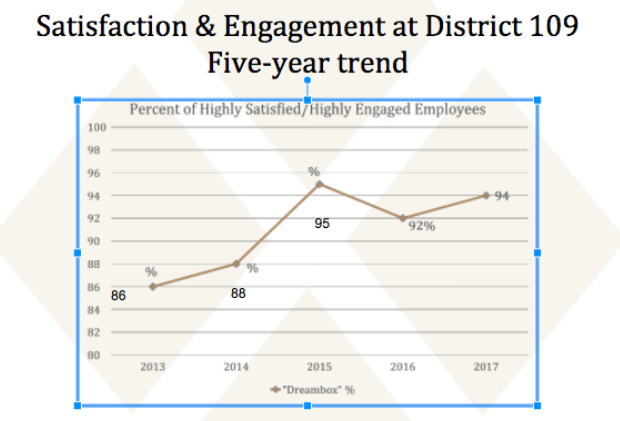
Is everything in our district’s culture perfect? – NO – of course not; but we as a matter of leadership assess, measure, and lead with respect to culture and dimensions of culture every year. Our school principals are held accountable for their school’s culture. We expect increases in dimensions especially when action plans are centered around growth, acknowledgement and honesty. This year 93.81% of all employees report that they are highly engaged and highly satisfied with their work in our district!

2017 Organizational Culture Results – DPS109


In In 2013 the average “dream box” (top right) score was 61.90% from a database of more than 10,000 education employees in the USA. Our district’s “dream box” score in 2013 was 85.75%. See below for a look at the past five years’ worth of dream box organizational culture for the Deerfield Public Schools:


In our district we are far from perfect – highly successful but never satisfied!

We are on a journey toward excellence with a focus on continuous improvement. Over the past two years we have had a failure in the execution of middle school standards based learning. There are a number of reasons for this. One of the reasons was the “culture of nice” superseding the culture of honesty; and our deliberate decisions to “compromise” in the spirit of cooperation (compromise with the best of intentions – but it was really appeasement).

Students of history remember what happened when Neville Chamberlain appeased Adolph Hitler … well – appeasement doesn’t work so well in leadership

honesty and courage work. Granted I’m oversimplifying a really complex and life and death time in history with the day to day leadership of a school system … you get the point.

Strong, direct, honest, dignified, respectful conversations and coaching are required – are imperative – are expected – are to become the norm when success is desired. With honest, direct, clear communication people know what the shared vision is – what the direction is and to what they’ll be held accountable. The three goals shown above reflect the current strategic goals in our district; clear, concise, coherent.

Five years ago the principals in our district began a process of becoming honest and clear culture leaders. They started to address student growth, teacher performance, stretch goals, limitless opportunities for ALL as well as innovative, future focused leadership. As a result, we have four of our six schools honored with the nation’s highest educational honor, we have administrators with regional honors, and we have shared the DPS109 story around the USA. Is it easy to lead in a culture of honesty? No – but I don’t go to work for an easy time … I go to work for a meaningful, impactful time!


I would love to hear your thoughts about culture – “nice vs honest” and leadership overall! If your leaders are too focused on management and not on leadership – excellence will be out of reach! Those who can manage and lead with courage, power, honesty, and in line with the shared vision – those leaders will be successful!

Leadership! Episode 3 of 3 – Perspectives in Education Podcast

“Without excellence, we have lost our honor. Without honor, we have lost our integrity. And without integrity, we are all lost.”
– Anonymous

Nick and I wrote the following as the first two paragraphs of the conclusion of our book (p.95): “The premise of this book is that we all need to unlearn because old conventions stymie meaningful change. In addition, learning is very difficult to unlearn. The “wiring” in our brains is hard to alter. Once we learn what is right, it’s often almost impossible to unlearn and accept a new right. As we stated in the beginning of the book, our landscape as leaders is applied to school leadership, classrooms, pedagogy and educational systems in general.In order to change course and effectively prepare today’s youth for tomorrow, we submit that much of what we have learned in general over the course of our lives, education, and professional careers must be unlearned in order to provide a new tomorrow for our nation’s children. It’s urgent to reimagine education. It’s urgent to pack up the 19th Century and move it into a museum. It’s urgent to unlearn so we can create a modern educational system for our nation’s youth.”

The process of writing a book, going through editing, copy-editing, revisions, rewrites, and peer review was energizing and humbling at the same time. Nick and I are really proud of The Unlearning Leader: Leading for Tomorrow’s Schools Today (2017-Rowman & Littlefield). The three podcast series from Perspectives in Education allows the reader and the prospective reader a chance to get to know us, our perspectives, and the value of the book! Please reach out with any questions – share comments to this post – and if you like the book, please consider sharing a review on Amazon!


 S01 Episode 6 Part 3: Mike Lubelfeld and Nick Poylak: Superintendents, #suptchat hosts, and authors.

Episode 6 Part 3: Superintendents, #suptchat hosts, and authors.

Our guests for our 3 part mini series of episode 6 are Mike Lubelfeld and Nick Polyak.

Michael Lubelfeld, Ed.D. currently serves as the superintendent of schools in the Deerfield, IL Public Schools (District 109). He is the co-moderator of #suptchat – the superintendent educational chat on Twitter.

Nick Polyak, Ed.D. is the proud superintendent of the award-winning Leyden Community High School District 212. He is the co-moderator of #suptchat – the superintendent educational chat on Twitter.

Both are co-authors of a book called The Unlearning Leader: Leading for Tomorrow’s School Today

In this episode we discuss:

  • Characteristics of good leaders
  • How to unlearn things of the past
  • Preparing students for college, workforce, and how to be good citizens
  • Their Perspectives on Education

Please share and comment!  Would love to get feedback and suggestions.  If you are interested in sharing your story, please reach out to us!

Thi

What does the superintendent do all summer? #Engage109

“Make sure that team members know they are working with you, not for you”
– John Wooden

What is going on in #Engage109 this summer?  What do we do all summer is a common question I have been asked for most of the 25 years I’ve been in education! Well it’s official – we are in school year 2017-2018! We have a guiding Strategic Plan, we have many new leaders, we will have a new board member on the way – it’s a whole new year. Aside from running summer school with more than 500 students, overseeing major summer construction projects approaching $5Million dollars, and the on-boarding of nearly 10 new leaders, we’re also making sure we have plans for meetings, workshops, professional development, curriculum development and other milestone events for all administrators.

As far as we’re concerned, it’s time for 2017-2018 to start (Ok … we’ll wait a few more weeks …).

In addition, we’re reaching end of life for hundreds of nearly 10 year old Promethean Boards, so the Technology Team is rolling out new projection and whiteboard systems to replace the Promethean boards in all six campuses.  Our Director for Innovative Learning, Marcie Faust and many of our outstanding iCoaches have trained nearly 64 teachers in summer workshops thus far and expect another 57 on the scheduled dates in July and August!  This is in addition to widespread learning sessions in the multiple classrooms at each building that we had set up last spring as a “debut”.  

We also continue to close the fiscal year that ended on June 30, and we prepare for the annual auditors who are scheduled to come spend two weeks conducting field test at the end of the month.  

In addition, the Director of Buildings & Grounds, Charlie Privett, and the B&G team are exceptionally busy working on a variety of projects throughout the district, including:  

Caruso & Shepard Locker Rooms, Security Projects (throughout the district), Casework at Kipling & South Park, Parking Lots at South Park, Walden, Shepard, & Wilmot, Roof Project at Wilmot, Flooring Projects & Painting Projects Throughout the district, and more!

In addition, I published an article in the IL ASCD Summer Journal and I’m working on a few other writing projects.

So … while the students are enjoying much needed recreation time, the leadership team is busy making sure everything will be ready for them in August!

I always smile when folks say “It’s easier in the summer, right?” – nope – but I would not want it any other way.


Our New Strategic Plan – #engage109

“If you want extraordinary results you must put in extraordinary effort.”
– Cory Booker

On Monday, April 24, 2017, the Board of Education of the Deerfield (IL) Public Schools District 109 approved the 2017 Strategic Plan! This new plan is the outgrowth of focus groups, interviews, surveys, studies, analysis, and leadership. More than 1700 voices have been heard as part of this process.

We have a Portrait of a Graduate, a mission, vision, guiding principles, goals and objectives.

This is the District’s Guiding Document! All actions, plans, initiatives, plans, programs and reviews will be aligned with and measured against this plan and its components.


From my letter to the community in the Plan:

On behalf of the Board of Education, I am proud to present the 2017 Strategic Plan. We developed this plan with input from more than 1,700 people in our community through interviews, focus groups, surveys, data analysis and student performance.

Those 1,700 people included representatives from the following stakeholder groups: teachers, parents, students, support staff, community members, business leaders, government leaders, administrators and members of the Board of Education.  The plan lays out the mission, vision, portrait of a graduate, guiding principles goals and objectives. This plan will guide our work on behalf of the children we serve. The three broad goals to which the objectives are aligned clearly share that which we value: Limitless learning experiences for ALL children.

The 2017-18 school year will mark the first year of implementation of this plan.  I look forward to working with our entire community as we embark on shaping the future of education in the Deerfield Public Schools. Thank you for your continued support as we continue to Engage, Inspire, Empower our students, each other, and our entire community.

We take the concept of limitless learning experiences for ALL children very seriously. We do believe that the current, 19th Century structures serve many of our students and families (it’s familiar and it’s a system that is not completely broken). But, there are more and more students for whom the current system simply does not work. There are more and more students for whom the current structures block their growth and potential. Just because the systems have worked for more than a century does not believe we have to continue them blindly with no options.

This current Strategic Plan allows us to move beyond the 19th Century structures. We can move beyond our 20th Century accomplishments and struggles. We can move forward in this current 21st Century with vision, mission, “the end in mind” and options!

The three goals form the umbrella of the driving forces toward our future – a future where we design, create, implement, and evaluate Limitless learning experiences for ALL children.

Tied to these goals we have six objectives each for a total of eighteen objectives. The objectives were vetted by members of the Board of Education, our research partners ECRA Group, and the Leadership Team (assistant superintendents, principals, associate/assistant principals, executive directors, directors coordinators, etc).

Tied to these eighteen objectives we have formulated eighteen action plans! We’ll tie our work to this plan. We’ll align our work to these objectives. We’ll report more throughout the next few years. In three years we’ll review the entire plan to see what is still relevant. Annually we’ll report on progress, planning, and evaluation. This will be a LIVE plan – not a plan that sits on a binder.


Addressing Equity -Opportunity- Acceleration for All #Engage109

“Continuous effort, not strength or intelligence is the key to unlocking our potential.” – Winston Churchill
 

In the Deerfield Public Schools, District 109, we have decided to make a change to mathematics program delivery models starting in

ENGAGE, INSPIRE, EMPOWER

the 2017-18 school year in the 6th grade. We are going to eliminate “regular math” and offer “accelerated math” for all.

We engaged in a comprehensive review of our own student performance (status, growth, standardized test results) data and decision making processes. We also consulted with our research analytics partners, the ECRA team, as well as board members, we are confident that the right steps moving forward involve changing the math delivery model in 6th grade. We also made this decision after speaking with district and building administrators and a comprehensive review of research and data.

This equitable math curriculum delivery model change is based upon a substantial body of educational research, two years of our student performance data analyzed by professional psychometricians, and our unified, ongoing desire to create and sustain the most effective and proven structures for student learning possible. 
This decision is also supported by emerging themes of needed differentiation stemming from the input and analysis of the strategic plan information (from more than 1700 people’s input).
  • Strategic Planning Update: Board of Education President Nick Begley commended his fellow Board members and the administrators for a productive strategic planning meeting on Saturday, January 21. Dr. Lubelfeld reported that the District gathered input from more than 1,700 people as part of the process. He explained that the strategic planning process is an opportunity for stakeholders provide guidance to the Board to set the path of the District. The District 109 Board reviewed all the input and worked with ECRA in a half-day workshop to develop a draft plan that  includes the mission, vision, portrait of a graduate, guiding principles, goals and objectives. The administrative team will meet on January 31 to review the objective statements as they begin to plan the action plans to meet the objectives and goals. At the February 13 Committee of the Whole meeting, the Board and administrative team will meet to bring together their work. The final plan will be presented to the Board for action at the March 20, 2017 meeting.


As district and building and community leaders,we feel it’s incumbent upon us to design instructional structures that meet the needs of all children and provide equitable educational opportunities for all students. The current delivery model is providing barriers to access for some students, denying them the best opportunity to successfully master grade level standards.
The fact that less than 27% of 6th grade students enrolled in regular math for the past two years met minimum standards is simply unacceptable. We are not assigning blame to any teachers, of course, yet we are also not willing to make excuses for these results or overlook these results.
In our local situation, we discovered that sixty two students were enrolled in regular math (over the past few years) yet they had similar historical achievement levels to 32 students in accelerated math.  The 32 students in accelerated math grew at higher rates than the 62 students in regular math.
 
The issues surrounding how to best meet the needs of students is part of a broader look at education in general. Over the years, most recently through John Hattie’s meta-analysis of school studies, researchers have “proven”/found” that various instructional methods and organizational approaches have differing effects on student learning. Hattie’s findings relating to ability-based grouping are simply not encouraging.
 
In considering changing the model of 6th grade math offerings, members of the administration have reviewed and studied an abundance of research related to tracking, ability grouping, and instruction. In addition, the partnership with ECRA Group has allowed us to review and analyze multiple points of local student performance data over the past few years in each “program.”
 
Sharing one of many videos about ability grouping – causing us to pause, think, and “unlearn” for children – ALL children!

Our 6th grade math model moving forward calls for four sections of accelerated math on each middle school team with TAP (our gifted ed and high achieving track) still remaining separate. We understand that this will be a change for our current sixth grade math teachers.
However, it is worth noting what will not change: 6th grade teachers will move from teaching 4 sections of 6th grade math to 4 sections of 6th grade math with the curriculum map standards (as the “floor” for all students, but the “ceiling” for none) remaining identical to what they are now. The expectation for differentiation is not new, it’s done every day in every K-5 classroom across the district, and it has been happening in our middle school classrooms as well for decades.
 
We believe children must be allowed to show competence and mastery of their grade level standards, and when they do, the teacher must allow them to move beyond in an effort to remove the limits on our students.
 
Finally, this entire change process directly relates to the PLC (professional learning communities) work in which we have been involved. There are four basic questions we all must continuously ask and reflect upon every day:
 
  1. What do we expect our children to know and be able to do? (As mentioned before, with this change the answer will be the same: the 6th grade CCSS for mathematics will be the floor for all students and the ceiling for none).
  2. How will we know if they learned it? (Again, largely nothing will change; we will continue to use MAP, PARCC, DCA, and ongoing daily formative assessment data to monitor our results)
  3. How will we respond when some children do not learn? (Our answer to this question, based on all available data the past two years, is the “why” of this whole movement. This is something we’ve examined extensively and–having done so–determined we must now respond systemically; something must change to determine if we can get better results moving forward)
  4. How will we respond when some students already know/can do? (We want to spend more time on answering this question next year with the acceleration for all model, in which we insist on 6th standards as floor for all, yet the ceiling for none. How can we individualize/personalize 6th grade math instruction to make sure the ceiling is limitless for kids)
 

Internally we shared some of the following background information and resource collection:

There has been a lot of discussion, thinking, review and reflection about the administration’s goal to reduce tracking at the sixth grade math level next year. Our aim is to raise expectations and remove limits to student growth by making all or just about all math (except TAP/gifted) accelerated. Our “acceleration for all” philosophy is driven by research, best practices, literature, experience, professional judgement, resources available to us, and the performance on the achievement test of children in the “regular” class for the past two years. One hypothesis for the poor performance is the ill effects of ability grouping/tracking as has been in place. In addition, the past few years offers us incredible gains and growth – never before seen or experienced in the district. Our student performance K-5 is impacting needed changes in models at grades 6-8.

Please see these videos for perspectives from experts on tracking and ability grouping:

This is a complex and multifaceted issue that tracking alone does not explain. We believe that raising expectations for all students in the current “regular track” will improve student performance.


Additional literature/research information on this well researched topic:

According to Mary Fletcher, there are many benefits to expect when instructional staff are conversant with and dedicated to differentiated instruction and detracking:

  • Differentiation allows more students to feel invested in the lesson, thereby decreasing behavioral problems. Students who previously opted to be viewed as “bad” rather than “stupid” will have their learning needs met and other talents explored, allowing them to drop the “bad” act and become instead a valuable member of the class.

  • Students who might have been considered less intelligent because they learn in a nontraditional way become invaluable contributors to the heterogeneous classroom.

  • Differentiated instruction encourages flexibility. Teachers thus become adept at adapting lessons to fulfill each student’s individual needs.

  • Detracking removes the limits that come with rigid thinking about how learning should and does occur. Fair does not always mean “the same.” For example, allowing a student who struggles with the physical act of writing to type his notes can benefit that student and the rest of the class. Not only does the student get access to the material, but the entire class has a reliable set of notes that can be used for those who were absent. This student now becomes an expert—and essential—note-taker who takes pride in his responsibility and sees himself as a member of the class.

Eliminate the Lowest Track First

There is little doubt that tracking does the most harm to students who are consigned to the lowest track. According to the National Research Council (NRC), low-track classes have an especially deleterious effect on learning, since such classes are “typically characterized by an exclusive focus on basic skills, low expectations, and the least qualified teachers” (Heubert & Hauser, 1999, p. 282).

The preponderance of research regarding low-track classes was so overwhelmingly negative that the NRC concluded that students should not be educated in low-track classes as they are currently designed (Heubert & Hauser, 1999). It makes sense, therefore, to begin by eliminating the classes that do the most harm to students.

Why Ability Grouping Doesn’t Work by Shirley Clarke

Detracking for Excellence and Equity compilation of research findings from several sources

Moving Beyond Tracking by Wm Mathis

From: The Mathematics of Hope: Moving from Performance to Learning in Mathematics Classrooms– Jo Boaler:

Other changes need to happen as well. Mathematics teachers need to stop frequent, timed testing; replace grades with diagnostic feedback (Black et al. 2002; Boaler & Foster 2014); and deemphasize speed, so that the students who think slowly and deeply are not led to believe they are not capable (Boaler, 2014). Perhaps most significantly and most radically, schools should also remove fixed student groupings that transmit fixed mindset messages and replace them with flexible groupings that recognize that students have different strengths at different times (Boaler 2009; Boaler & Foster 2014).

Keeping Track: The Policy and Practice of Curriculum Inequality (Oakes)

Current DPS 109 5th Grade Data to review for Placement Discussions

Potential Resources for teachers:

Jo Boaler’s Online course for Teachers

Why Do Americans Stink at Math by Elizabeth Green

The American Math Crisis– Forthcoming Math Documentary

The Stereotypes that Distort How Americans Teach and Learn Math by Jo Boaler

How Math Should Be Taught – Jo Boaler

When You Believe In Your Students They Do Better -Jo Boaler


As always we welcome comments, thoughts, challenges, examples, etc!

How school superintendents explored the future of learning together

“When a gifted team dedicates itself to unselfish trust and combines instinct with boldness and effort, it is ready to climb.”
– Patanjali

google-a51985becaa6

This following is from a blog post I co-authored with Nick Polyak, and it is originally published on the Google EDU blog

How school superintendents explored the future of learning together

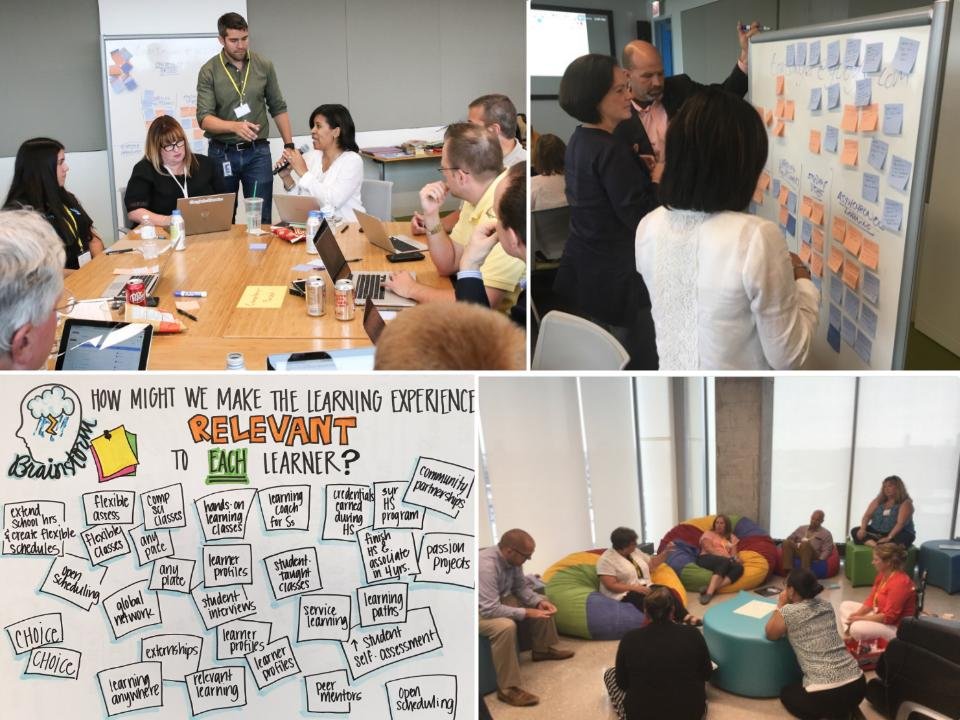
As education leaders, we’re expected to have all the answers. When we don’t, we solve problems by talking to our peers. The School Superintendents Association (AASA) invites administrators and educators to come together and talk about the challenges superintendents face, like how best to integrate technology in the classroom. This is a focus of the AASA’s digital consortium leadership cohort, which recently reached out to Google to see how they could further the AASA’s goal of leading new ways to use digital media in classrooms. We also reached out to Education Reimagined, an organization that advocates a paradigm shift to learner-centered education.

Google hosted a meeting of the AASA’s digital consortium with Education Reimagined at Google’s Chicago office in July 2016. Our discussion led us to realize we were thinking about the problem we wanted to solve in the wrong way. We had been making plans for how technology would transform our schools without considering one of the most important voices — our students! “The group’s discussion was a powerful reminder that we don’t make decisions in a vacuum,” said Mort Sherman, Associate Executive Director of the AASA. Putting student voices at the center of everything we do will help us design the future with them and for them. This will be a long journey for all of us, but one we are thrilled to embark on.

Putting student voices at the center of everything we do will help us design the future with them and for them.

Discovering student voices

At the Google office in Chicago, Education Reimagined Director Kelly Young kicked off the day by emphasizing the need to put students at the center. She advocated for a student-centered approach, where learning revolves around the needs of individual students instead of traditional classroom structures. She also encouraged us to bring students to the event to make sure that student input informed all of our discussions.

Google then worked with us to leverage their innovation methodology, informally known as “10x thinking” or “moonshot thinking” to help solve the challenges we were facing. It’s a version of “human-centered design thinking” that helps participants develop solutions while keeping the end-user at the center of the process.

GEDU_AASA.jpg
Superintendents used a design thinking process to explore learner-centered education
GEDU_AASA_students1.jpg
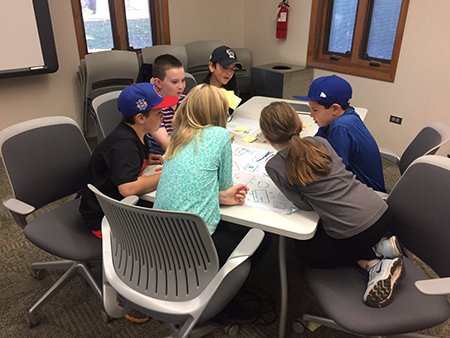
In the STAT program at Deerfield Public School District 109, students facilitate a technology review committee meeting.

As we began, it occurred to us all that students are our users, and our users weren’t part of our conversation as much as they should be. Without their input, we wouldn’t be poised for success, because we weren’t empathizing with their daily experience. By going through the 10x process with the students present, we gave them a voice in a way we rarely do. As the realization of user-centric education sunk in, we were excited to share our takeaways with our schools.

After meeting in Chicago, we returned to our districts to put this learner-centric approach into action. Leyden High School District 212, for example, created two student advisory board member posts, giving students the opportunity to weigh in on meaningful decisions. Another, Deerfield Public School District 109, set up the STAT program (Student Technology Advisory Team), in which students provide their input on how technology in the classroom impacts them and what tools, devices, or practices are relevant and effective from their perspective. These are just two examples of the learner-centric transformation happening across the country.

Cementing our progress

More recently the AASA’s digital consortium re-convened in California to discuss, among other things, how we could turn this “aha” moment into action. A huge barrier to action is getting buy-in from teachers and parents, most of whom grew up in a classroom-centric education system.

Consider this: each of us spends over 16,000 hours in the classroom — that’s a lot of experience to work against. So together, we’re working to develop ways for schools to pilot learner-centric education without abruptly abandoning the classroom model. Google’s approach to innovation had us work through six questions in groups. We asked questions such as “If I look back in 12 months, how will I know I succeeded?” We ended the session with answers to some of the questions we had posed, bearing in mind our work isn’t finished.

We’re still working to implement learner-centered education in schools. And it’s not easy. When we meet next spring, our superintendents will report on progress made in individual schools and districts.

It took combining Google’s approach to problem solving, the philosophy from Education Reimagined and the amazing network of superintendents brought together by the AASA to help us think differently about the role of technology in learning. Now that we’ve identified the paradigm shift that needs to happen, we’re excited to share our moment of realization with districts, schools, and classrooms across the country.

GEDU_AASA_students2.jpg
Vanessa Gallegos, left, of East Leyden and Noelle Lowther of West Leyden were introduced as student representatives for the school board during a meeting on May 12 at East Leyden High School.

#ASuperDay – Sharing the story of education through the superintendent lens


“One of the marks of successful people is that they are action-oriented. One of the marks of average people is that they are talk-oriented.”
– Brian Tracy


asuperday-1

From time to time I share “tweets” from superintendents and school leaders around the world on “ASuperDay” – a super day is designed to give school leaders the chance to tell the stories of what education is … using pictures, audio, video, and text superintendents share “real life” views of meetings, classroom visits, etc. The superintendent position is no longer lonely – or at least it should not be lonely – when we band together as a “PLN” (Personal/Professional learning network) and we take a few minutes to share what it is that we do and what it is that we share.

In the Deerfield Public Schools District 109 our motto is Engage, Inspire, Empower,

ENGAGE, INSPIRE, EMPOWER

ENGAGE, INSPIRE, EMPOWER

through venues like #ASuperDay on Twitter, we’re able to join so many others in so many places doing just that – engaging, inspiring and empowering.

The narrative of education is in the hands of the leaders … please take some time to check out #ASuperDay on Twitter – November 16, 2016
 

Celebrating Education – #AEW2016 – American Education Week

“I swing big, with everything I’ve got, I hit big or I miss big. I like to live as big as I can.”
– Babe Ruth

Celebrating American Education Week!

November 14-18, 2016

download

What is American Education Week?

American Education Week—November 14-18, 2016—will present all Americans with a wonderful opportunity to celebrate public education and honor individuals who are making a difference in ensuring that every child receives a quality education.

2016’s theme, “Great Public Schools: A Basic Right and Our Responsibility,” was reflected in special observances each day of the 2016 weeklong celebration:

  • Monday, November 14, 2016: Kickoff Day
  • Tuesday, November 15, 2016: Parents Day
  • Wednesday, November 16, 2016: Education Support Professionals Day
  • Thursday, November 17, 2016: Educator for a Day
  • Friday, November 18, 2016: Substitute Educators Day

Read more about the history of American Education Week.


In the Deerfield Public Schools District 109 we like to honor, celebrate, and encourage all members of the district, teachers, support staff, administrators, board members, students, parents, business partners, etc. It’s nice to have formal days/weeks like the American Education Week because we also get an additional excuse to say Thank you!

ENGAGE, INSPIRE, EMPOWER

ENGAGE, INSPIRE, EMPOWER

We are proud to “brand” and “tell our stories” every day through multiple media sources including Facebook, Twitter, LinkedIN; we are especially proud to share via the district hashtag: #Engage109 The stories of excellence are found in the classrooms, training rooms, boar rooms, and all over our community.

We have been in “business” since 1847 and we have no plans to stop providing world class educational opportunities for all children. Our award winning schools, teachers, administrators, learning spaces, and district continue to inspire us to work harder, lead stronger, and excel in every way possible.

download-1

This week we will give each and every employee a “high five” as a thank you and as our continued gratitude and appreciation for the selfless, innovative, and engaging work they provide for children every day! Horace Mann is credited with stating:

Education then, beyond all other devices of human origin, is the great equalizer of the conditions of men, the balance-wheel of the social machinery.

In our school system we are focused on meeting the needs of all children and making certain that all children deserve and are capable of an education that is meaningful, engaging, relevant, and purposeful.

Please join us in saying THANK YOU to our educators during

American Education Week.

Engage, Inspire, Empower

Also this week:

From a good friend and co-worker:

“Ironically, while we celebrate another year of life for [my husband], the world prepares to celebrate World Pancreatic Cancer Day, which will take place next week on November 17th. In celebration of [his] inspiring battle with cancer, please consider supporting an organization that funds research for Pancreatic Cancer. Contributions from these organizations played a major role in funding research that led to [his] treatment. Imagine a day when pancreatic cancer is detected early enough that survival rates improve dramatically.” 

5 Minutes in 5th Grade – Podcast of Student Voice – #Engage109

“Without continual growth and progress, such words as improvement, achievement, and success have no meaning.”
– Benjamin Franklin

Many years ago when I taught 8th grade students U.S. history and reading at Blackhawk Middle School in Bensenville, Illinois, the team of teachers with whom I worked grappled with the home/school communication conundrum. We did not have ready access to email or blackhawkmiddleschoolwebsites back then, and we did not always have the most compelling “packets” and paper reminders going home.

So we set up a weekly communication for the parents called “Behind the Nothing”. This was a letter which was a letter written by each student each week for their parents to see and learn what the students learned that week.

You see for most of our students, back then, when their parents would ask, “What did you learn today at school?”, the student would almost always reply, “nothing”. So we decided to create a communication from the student voice and from the student perspectives as a new way to inform their parents what they were learning! Well . . . a lot has happened in education, communication, and technology since 1993 when I first started teaching! Of course students were learning then and they are learning now!

In today’s blog post I’m sharing 5 minutes in 5th grade, a five minute podcast withwhatdidyoulearn students telling the listener what they learned at a recent outdoor education experience. Today’s teacher is equipped with far more tools for communication than the teacher of 1993. Using the application AudioBoom, I recorded the student’s voices on my iPhone. Click the link below to spend 5 minutes in 5th grade!

Special thank you to Dr. Dave Sherman, Ms. Megan Chin, Ms. Keidan, Ms. Kramer, and Mr. Templer and their awesome South Park School 5th grade students!

ENGAGE, INSPIRE, EMPOWER

ENGAGE, INSPIRE, EMPOWER