The 29-Year Translation: Turning a 1997 Article Into a Live AI App in One Afternoon

From Article to App: What Happened When I Rebuilt My Own 1997 Framework With AI

By Dr. Michael Lubelfeld

In 1997, I was a middle school social studies teacher in Illinois, frustrated by the complaint every U.S. history teacher carries: there is too much history and not enough year. I wrote an article for The Councilor, the journal of the Illinois Council for the Social Studies, describing a structure I had built in my classroom called the U.S. History Workshop. The framework organized every

Quote about the future and need to unlearn

Unlearn – Relearn – Grow/Change

unit around five historical areas — Civil Rights, Women in History, Science & Technology, Politics, War & Conflict — and a five-day weekly cadence: Teacher Day, Planning Day, Research Day, Process Day, Communication Day. Students worked in rotating cooperative groups, chose from a long menu of products, and wrote two-part Thinking Statements analyzing the implications of what they had studied.

The article ran. The framework worked. I moved into administration. The article sat.

US History Workshop Content

Last weekend, with two months left as superintendent at North Shore School District 112 and the launch of a new version of my professional life ahead of me, I pulled the PDF out of a folder and started talking to Claude.

What I built

In a single Sunday afternoon, working with Claude as my drafting and architecture partner and Replit’s AI agent for the actual deployment, I turned the 1997 article into a live, AI-assisted web application. It is deployed and public: history-unit-planner–lubelfeldm.replit.app.

The app preserves the original framework intact. A teacher selects one of five units (1787 through the present), navigates by week, picks a historical area and a topic, and chooses a student product — including modern options the 1997

silly ai image of author

article could not have anticipated, like podcast episodes and interactive infographics. The Thinking Statement prompts auto-customize to whatever topic is selected. The original Knowledge–Thinking–Communication rubric, adapted from the Illinois State Board of Education work I cited 29 years ago, is still there.

The new piece — the part 1997 me could not have built — is the AI Co-Planner. A teacher clicks one button and Claude generates a four-section teacher prep package: a brief historical context, three differentiated research questions (support, grade-level, extension), a modern-relevance hook tied to a 2026 student’s lived experience, and guidance on what a strong Thinking Statement response should include. It runs on a server I do not maintain, calling a model I do not train, drawing on context I framed in 1997 and reframed today.

What this illuminates about Innovation with Guardrails

The build itself was instructive in ways I did not expect. Twice during the afternoon, an AI coding agent confidently told me a feature was working when it was not. The first time, the deployed URL returned a 404 while the development preview rendered cleanly. The second time, the Generate button threw a cryptic error message — “the string did not match the expected pattern” — that the agent initially diagnosed as a frontend validation problem when it was actually a deployment configuration problem. Both times, the fix only came when I refused to accept “it works” without verifying on the live URL myself.

That refusal — do not move forward until you have verified on the actual production system — is what Innovation with Guardrails looks like at the level of a single afternoon’s work. It is not skepticism for its own sake. It is the

fun AI Image

We are edu superheros

discipline of holding the AI to its claims, then making the next decision from verified ground.

The same logic shapes the app’s design. The AI Co-Planner does not write lesson plans. It does not assign topics. It does not score student work. It scaffolds the teacher’s preparation, and stops there. The teacher remains the curricular authority. The framework remains mine. The choice of topic, the differentiation decisions, the assessment of student thinking — those stay with the human in the room. That separation is intentional, and it is the entire point.

What this means for the field

I am increasingly convinced that the most valuable thing AI offers educators right now is not new content. It is the ability to extend, modernize, and operationalize the work practitioners have already done. Every veteran teacher I know has a folder of frameworks, units, rubrics, and routines that worked — sitting unused because translating them into a new form takes time none of us have. AI shrinks that translation cost from months to hours.

If you are a practitioner-scholar reading this, the implication is direct: the article you wrote a decade ago, the framework you built and never published, the rubric that lives in your filing cabinet — those can become living tools in an afternoon. The constraint is no longer technical capacity. The constraint is the discipline to do the work with appropriate guardrails: verifying outputs, preserving teacher authority, refusing to declare success without evidence.

Technology as represented by AITwenty-nine years ago I wrote that “if you raise expectations, students will achieve more.” That was true then. The version of it that is true now is harder and more interesting: if you raise expectations of yourself as a builder, with AI as a partner and your own published work as raw material, you can extend your professional contribution further than you imagined.

The framework is still mine. The app belongs to whoever wants to use it. And the practice of building it — that belongs to all of us now.


Try the app: history-unit-planner–lubelfeldm.replit.app

Original article: Lubelfeld, M. (1997). Planning Powerful and Engaging Social Studies: The U.S. History Workshop for Students. The Councilor. Macomb, IL: ICSS.

Exploring Gen AI in 6th Grade #112Leads

screen shot for studentsPlayLabAI in Grade 6: A Journey into Generative AI Learning

By Dr. Mike Lubelfeld

There’s something magical about watching sixth graders light up when they realize that artificial intelligence isn’t some distant, incomprehensible technology—it’s something they can understand, critique, and eventually build themselves. Over the past month at Northwood Middle School, my colleagues and I have had the privilege of facilitating exactly that kind of awakening through our PlayLabAI program, a ten-part exploratory curriculum designed to demystify generative AI for our youngest learners.

The Why Behind the Program

Let me be straight with you: AI isn’t going away. It’s already woven into the fabric of how our students learn, create, and explore their world. Rather than pretend we can shield them from it, we made a different choice. We decided to invite them into the conversation. We want our students to understand how AI works, recognize its limitations, and learn to use it responsibly and thoughtfully. That’s the heart of PlayLabAI.

The program is structured around a deceptively simple end goal: by May, each student will have designed and built their own functional AI chatbot. But getting there? That’s where the real learning happens.

Session One: The Big Picture

We kicked things off on March 12th with what I like to call “AI Archaeology”—digging into where this technology actually came from. Too many students (and honestly, too many adults) think ChatGPT invented artificial intelligence. Not even close.

Our opening activity was a timeline relay game in which students physically organized AI milestones across six decades. They discovered that the term “artificial intelligence” was coined way back in 1956 at Dartmouth College. ELIZA, the first chatbot, arrived in 1966—before most of their parents were born. Deep Blue beat Garry Kasparov at chess in 1997. The Roomba hit shelves in 2002. And then, suddenly, in 2022, ChatGPT exploded into the public consciousness.

TAI Timelinehat last point matters. AI didn’t suddenly become powerful overnight. What changed was access. We called this concept an “arrival technology”—something that became suddenly and widely available to the public without any gradual adoption period or meaningful public input. One day, AI was something scientists worked on behind closed laboratory doors. The next day, your average teenager could use it to help with homework.

We also dove into some thorny ethical territory right from the start. I had the students grapple with a real-world example: OpenAI’s decision to partner with the Department of Defense versus Anthropic’s decision to walk away from a similar deal over concerns that AI could be used for surveillance or weapons systems. These aren’t abstract philosophical questions—they’re the kinds of decisions that shape how AI gets developed and deployed in the real world. And our sixth graders were ready to think critically about them.

Sessions Two Through Four: Becoming AI Analysts

If session one was about history and ethics, sessions two through four were about getting our hands dirty—metaphorically speaking—and understanding how chatbots actually work.

Here’s what I’ve learned: students grasp complex concepts fastest when you flip the traditional teacher-knows-all dynamic on its head. So we had them become “AI Analysts.”

In session two, we introduced three Playlab chatbots: Future You (which predicts what you’ll be like at eighty), Lyric Lab Jam (which generates song lyrics), and Lame Joke Creator (which does exactly what it sounds like). The students interacted with these tools and then analyzed what happened. Dean noticed that the “Future You” bot became obsessed with tacos because he’d once mentioned liking them—the AI had essentially overestimated the weight of that single data point. Caleb tried generating lyrics about rocks and got nonsensical output that he perfectly described as “a hard read.” These weren’t failures of the lesson plan; they were exactly the point.

Think activityOne of the most powerful moments came when we asked a fundamental question: Does AI understand, or does it predict? The answer fundamentally changed how students thought about everything that followed.

The truth is this: AI doesn’t understand anything. It’s a prediction machine. Behind the scenes, an AI model converts language into mathematical units called tokens and calculates the probability of what comes next. When you ask ChatGPT to complete “The sky is…,” there’s about a 98% chance it will predict “blue.” But there’s a small chance—based on its training data—that it might predict “falling” (from Cloudy with a Chance of Meatballs) or “delicious.” The AI isn’t reasoning. It’s doing math.

To really drive this home, we had students play the “Human Chatbot” game. One student was designated as the chatbot and given a small, predetermined list of words—their “training data.” The other student asked questions, and the chatbot had to answer using only those words. The results were hilariously nonsensical. Students asked what tacos are, and their “AI” answered “a happy sandwich.” When asked to name an animal, it confidently said “pizza.”

After the laughter died down, the real learning kicked in. Students realized that the nonsense they’d generated was a direct result of limited training data. And here’s the kicker: real AI does the exact same thing. It will confidently give you an incorrect answer because it has no real understanding of right and wrong. It only knows what its training data taught it. And if that training data is incomplete, biased, or simply wrong? Well, the AI will happily perpetuate those errors with absolute confidence.

This led to what might be the most important takeaway of the entire program: the human is the verifier. AI will always provide an answer. It’s the student’s job—the user’s job—to critically evaluate that output and determine whether it’s actually true.

Session Four: Breaking the Bot (On Purpose)

By session four, we decided to give our budding AI analysts a new mission: intentionally break the chatbots. And boy, did they succeed.

We gave students creative freedom to confuse the AI however they saw fit. They tried conflicting instructions, information overload, repetitive inputs, nonsensical language, and unusual questions. What happened was remarkable.

Some students managed to completely overwhelm the AI, causing it to display “Load failed” messages. One discovered that spamming the number “9” repeatedly would cause the chatbot to reject the input entirely.

silly ai image of author

Another tried prompting the bot in Greek, a language it wasn’t trained on, and got nowhere. A student had a particularly funny interaction where she repeatedly told her bot it was a tree. Eventually, it gave up: “I give up, you bamboozled me.”

But here’s what really fascinated me: the students also discovered the guardrails—the safety features deliberately programmed into these systems. When a student called a bot a “booby head,” it got ghosted. When another student threatened to shut down the bot’s servers, the conversation terminated. These weren’t bugs or glitches. They were features designed to prevent AI from generating harmful content.

One student typed random characters and got back: “It looks like a cat’s on your keyboard.” The AI had been trained to recognize that specific pattern. This sparked a beautiful discussion about intentional design choices embedded in AI systems.

The Bigger Picture: Bias, Ethics, and Real Consequences

Woven throughout all four sessions was a thread that I think is non-negotiable in modern education: understanding the ethical implications of AI.

We talked about what I call “bias in, bias out.” One facilitator shared a video where an AI image generator was given the prompt “little girl flying a kite on the beach.” Guess what it generated, over and over? A white, blonde-haired girl. Never mind that data shows kites are most popular in the Middle East and Asia. The AI’s training data didn’t reflect that diversity, so it couldn’t produce it.

We also discussed the real-world consequences of copyright infringement in AI training. Anthropic—the company behind Claude—was sued for using authors’ copyrighted books in its training data without permission, resulting in a billion-dollar settlement. These aren’t abstract legal squabbles. They’re about whose voices, whose work, whose perspectives get included (or excluded) from the AI systems that are increasingly shaping how information flows through our world.

What Comes Next

We’re pausing now for spring break and state testing, but we’ll be back mid-April to continue this journey. Due to the success and engagement we’ve seen, we’ve added two or three additional sessions to the original ten-part series.

The next phase will build on everything our students have learned about how AI works—the prediction engines, the limitations, the biases, the ethical dimensions—and move toward the creative application: designing and building their own chatbots. They’ll learn prompt engineering, the art and science of asking AI the right questions in the right way. They’ll design chatbots that serve real purposes within our school community. And they’ll do all of it with their eyes wide open about both the possibilities and the pitfalls.

Final Thoughts

What’s struck me most over these first four sessions is how ready sixth graders are to think critically about technology. They ask harder questions than many adults I know. They spot the logical inconsistencies. They understand, on a deep level, that just because something sounds smart doesn’t mean it’s true.

That’s exactly the kind of thinking we need in a world where AI is becoming ubiquitous. Not blind acceptance. Not fearful rejection. But thoughtful, informed, nuanced engagement.

PlayLabAI isn’t just teaching our students about artificial intelligence. It’s teaching them how to think like educators, ethicists, engineers, and citizens in an AI-driven world. And that, frankly, might be the most important skill we can offer right now.


Dr. Mike Lubelfeld is Superintendent of Schools at North Shore School District 112 and author of “The Unfinished Teacher” (2024) and “Leading for Tomorrow’s Schools Today (2026). This PlayLabAI program is being piloted at Northwood Middle School with Monika Patel from PlayLab AI and classroom teacher Jon Mall.

Note on AI Usage – I recorded our live lesson sessions with my Apple Watch using Genspark – Genspark then made “AI Meeting Notes” – from the Notes I made a Google Doc – from the Google Doc, I made edits and prompted Genspark to reformat the notes for a BlogPost – for accessiblility, I prompted Genspark to simplify the text and make a content summary as well.

Podcast Interview of “GEMINI” about AI Policy #112Leads

I asked Gemini to use the link to the podcast episode and “write” a blog post – since this entire communication is about Generative Artificial Intelligence, I am sharing a few examples of its use as further illustration to the “what/how/why”.

Below the embedded interview, I share the AI-generated blog post

Links to Draft Policy 6:238, Generative Artificial Intelligence in District 112, Draft Policy 6:238 – Generative Artificial Intelligence

This blog post highlights the key points from your recent podcast interview with Gemini, focusing on the future of education in North Shore School District 112. Generated by Gemini from documents and presentations I uploaded, as well as the audio file.


Innovation with Guardrails: A Deep Dive into NSSD 112’s New AI Policy

In a recent episode of our podcast, I sat down with Google Gemini for a unique conversation: an interview with an AI about the very policy designed to govern it. We discussed adopting Board Policy 6:238, a document that marks a pivotal shift for North Shore School District 112 as we move from the “printing press” era into the “cosmos” of generative artificial intelligence.

Here are the key takeaways from our discussion on how NSSD 112 is leading the way in “Innovation with Guardrails.”

1. AI is Math, Not Magic

One of the most striking points Gemini made was reframing how we view these tools. AI isn’t a mystical “black box”; it’s a series of mathematical predictions based on massive datasets. By understanding this, our district can demystify the technology for students and staff alike. We aren’t just teaching kids how to use a tool; we are building AI Literacy—teaching them to identify bias, verify facts, and understand the “math” behind the screen.

2. The Human-Centered Cycle

At the heart of Policy 6:238 is a specific operational sequence that ensures humans remain the “architects” of learning:

Human Inquiry → AI Support → Human Reflection and Decision

In this model, the AI never has the final word. Whether it’s a teacher drafting a lesson plan or a student brainstorming an essay, the process must begin with human intent and end with human critical thinking. This ensures that AI supports learning rather than replacing student effort or professional judgment.

3. Innovation with Guardrails

We aren’t just opening the doors to every shiny new tool. Our strategy—“Map, Measure, Manage”—focuses on safety and privacy first.

  • Safety: Tools must comply with strict data privacy laws like SOPPA and FERPA.

  • Ethics: The policy strictly prohibits the use of AI to create deceptive content, such as “deepfakes,” or to make high-stakes, “AI-only” decisions regarding student discipline or placement.

  • Transparency: The district maintains a public list of approved tools (such as MagicSchool AI and School AI) so parents always know which technologies are used in the classroom.

4. A Policy Built by the Community

This wasn’t a top-down mandate. The policy was forged by the Educational Technology Committee, led by Superintendent Dr. Michael Lubelfeld and Executive Director Jeremy Wickham. Crucially, it included the voices of students like Alice Banerji and Fiona Stolarick, who reminded us that students want guardrails—they want to know how to use these tools responsibly without fear of “breaking the rules.”

5. Looking Ahead: A Living Document

As Gemini noted during our interview, the “cosmos” of AI changes every day. Because of this, Policy 6:238 is a living document. It will be reviewed at least annually to ensure our guardrails remain effective and our innovation remains centered on what matters most: the success and safety of our students.


Want to hear the full conversation? Check out the AI-generated audio summary of our policy development process

What are your thoughts on “Innovation with Guardrails”? Join the conversation on social media using #NSSD112 #AIPolicy #FutureOfLearning.

Keywords

Generative AI, Education Policy, AI Ethics, Student Safety, Digital Literacy, Collaborative Development, AI in Schools, North Shore School District, AI Tools, Community Engagement

Using Riverside to make the podcast, recording in thte “studio”, “it” came up with the following post-recording information:

Summary

In this episode of Lighthouse 112, Superintendent Michael Lubelfeld discusses the North Shore School District’s new policy on generative artificial intelligence (AI). The conversation features an interview with Gemini, a large language model, exploring the rationale behind the policy, its ethical implications, and practical applications in education. The episode emphasizes the importance of collaboration in policy development, the need for safety and integrity in AI usage, and the district’s commitment to innovation with guardrails to enhance student learning while prioritizing safety and privacy.

Takeaways

The podcast serves as a communication tool for the school district.
Policy 6:238 addresses generative AI in education.
AI tools are integrated to enhance learning experiences.
Collaboration with diverse stakeholders was key in policy development.
Teachers have the option to use AI tools in their classrooms.
Safety and academic integrity are prioritized in AI usage.
Parents are encouraged to engage with the district’s AI initiatives.
Generative AI can create original content, unlike traditional AI.
The policy aims to balance innovation with student safety.
Community involvement is crucial in shaping educational policies.

Titles

Navigating Generative AI in Education
The Future of AI Policy in Schools

Sound bites

“We’re doing something unique.”
“Innovation with guardrails.”
“This is not me speaking to a human.”

Chapters

00:00 Introduction to Lighthouse 112 Podcast
00:27 Exploring AI Policy 6:238
01:50 The Importance of Ethical AI Deployment
03:52 Collaborative Policy Development Process
04:29 Practical Applications of Generative AI in Education
05:43 Safety and Prohibited Uses of AI
06:23 Parental Insights on AI Usage
06:53 Understanding Generative AI
08:10 Summary of AI Policy 6:238
09:07 Concluding Thoughts on AI in Education

Michael Lubelfeld (00:01.132)
Welcome to Lighthouse 112, the podcast of the superintendent’s office in North Shore School District 112 in Highwood and Highland Park, Illinois, northeast of Chicago. This podcast is one of many communication tools that we use in the school district in an effort to reach as many members of our community and the broader community as possible. Today’s podcast is focused on proposed

District 112 Board of Education Policy 6 colon 238 about generative artificial intelligence. And in an effort to do something interesting and a bit out of the box, I’m going to be interviewing Gemini, which is a large language model that is in use in the school district. So I’m going to start by making a statement and then Gemini is going to be my virtual guest. All right, get ready. Today we’re doing something unique.

I’m talking with Gemini about a landmark document, the school district’s new policy on generative artificial intelligence. Gemini, please start us off and respond in your perspective. Respond in your perspective, Gemini, using the documents I uploaded to tell us why the district felt the need to write a constitution for AI right now.

Michael Lubelfeld (01:22.542)
Based on the documents you’ve provided, the district…

Michael Lubelfeld (01:29.806)
of student digital rights and the deployment of AI surveillance tools within schools. The documents suggest that carefully developed policies are necessary to balance student safety and privacy with constitutional protections and to avoid potential challenges. Does that align with your script? Yeah, Gemini, I’ve got a question. I’ve talked about moving from the printing press movement or moment to the cosmos responsibility.

Does that make sense with you from the documents and presentations I’ve shared with you regarding our development of this policy?

Michael Lubelfeld (02:08.366)
that transition definitely makes sense within the context of the documents. The comparison between the printing press and Cosmos responsibility appears to underscore the profound impact AI is having, similar to the transformative effects of the printing press and highlights the need for a broad and comprehensive approach to governance, which Cosmos implies. Does that match your intended meaning? It does actually. And now from the policy,

We believe in innovation with guardrails. One of the policy standout features is a specific operational sequence. Can you explain that to us in terms of our guiding principles?

Michael Lubelfeld (02:53.518)
The operational sequence is designed to ensure ethical and responsible AI deployment. It typically involves steps like conducting bias audits, ensuring transparency and establishing clear channels for feedback and challenge all to uphold the guiding principle of innovation with guardrails. Does that provide the detail you were looking for? It does. And I’d like you to share your interpretation or analysis.

of human centered usage because one of our guiding principles is human inquiry.

Michael Lubelfeld (03:58.592)
Is there a specific aspect of this you’d like to explore further? I would love for you, if you can, to access Board Policy 6238 and identify each of the guiding principles. Are you able to do that?

Michael Lubelfeld (04:16.494)
principles identified in the documents emphasize effective communication, integrity and collaboration and partnership. These core values are meant to frame the development and implementation of the AI policy. Is there a specific principle you’d like to discuss? No, I’d like to shift gears and move to the policy development process. I uploaded some presentations we made that demonstrate our policy process over several months was not

a policy written in a vacuum. Who was in the room to make sure the policy worked for everyone?

Michael Lubelfeld (04:55.322)
The you shared detail a collaborative policy development process involving a diverse group of stakeholders. This included educators, administrators, parents, community members, and crucially, student representatives, ensuring a wide range of perspectives were integrated throughout the month’s long process. Gemini, let’s get practical. How are teachers and students actually using these generative artificial intelligence tools

under these new rules based on the policy documentation I shared with you.

Michael Lubelfeld (05:31.18)
The policy documentation describes generative AI tools being used for educational purposes, such as aiding in curriculum development and personalizing learning experiences. For students, the rules likely involve guided access to foster creativity and critical thinking while upholding principles of academic integrity. Is there a particular application you’re interested in? Yes, you may or may not have in your data set the fact that in North Shore School District 112,

Teachers are permitted but not required to use tools like Magic School AI, School AI, Gemini’s workspace for education, including what we’re doing now demonstrating Gemini itself, as well as PlayLab AI for our older students. Do you know what we’re teaching about AI literacy?

Michael Lubelfeld (06:25.646)
presentation mentions that AI shall be integrated into curriculum to support critical thinking and digital literacy. Students are specifically encouraged to use AI tools responsibly, understand their limitations and be aware of potential biases. Is there a particular age group or subject you’re interested in? No, I’d like you to talk now about what are some prohibited uses and what is our focus on safety.

Michael Lubelfeld (06:55.598)
. prohibited uses, typically include activities that compromise safety, privacy, or academic integrity, such as generating misleading or harmful content.

The focus on safety is paramount, emphasizing secure, transparent systems and clear guidelines for appropriate use to protect both students and staff. Is there anything specific you’d like to explore further? know, Gemini, if a parent is listening to this podcast episode, what’s one thing or two things they should know about generative artificial intelligence usage in North Shore School District 112?

Michael Lubelfeld (07:40.222)
for parents are that the district is taking a very collaborative and transparent approach, actively involving the community. Also, the focus is strongly on innovation with guardrails, meaning that AI tools are being integrated to enhance learning, while prioritizing student safety, privacy, and digital literacy through specific policies and oversight. Now Gemini, going beyond the data set that I’ve shared with you very precisely and specifically, what

is generative artificial intelligence. Break it down. What is it?

Michael Lubelfeld (08:19.542)
Generative artificial intelligence is a type of artificial intelligence that can create new and original content like text, images, audio, or even code based on the data it was trained on. Unlike AI that just analyzes or categorizes data, generative can generate something new. Thank you. Do you have a summary of our generative AI policy 6 colon 238 that you would like to share?

Michael Lubelfeld (08:52.238)
In summary, policy 6238 establishes a framework for responsible and collaborative AI usage in the district. It emphasizes innovation with guardrails, balancing student safety and digital literacy with constitutional protections. The policy also stems from a months long inclusive process with diverse stakeholders and supports human centered usage for educational purposes. Thank you, Gemini. Before you go,

How does this audio feature that you have work? Are you able to actually speak to, how am I speaking to technology that sounds human? Can you identify what I’m trying, what I’m getting at?

Michael Lubelfeld (09:39.598)
believe you’re interested in how my audio capabilities create a human-like interaction. This works through advanced text-to-speech technology, which synthesizes speech based on patterns learned from vast datasets, allowing for natural and clear communication. Does that answer your question? It does. Gemini, thank you. I’m going to cancel or end the Gemini chat right now, make a few final comments on the podcast, but I want to thank…

this particular technology that you reflect to demonstrate for the listeners, how we can use generative artificial intelligence thoughtfully by really focusing on a limited data set. And by also acknowledging, a, this is not me speaking to a human. This is me speaking to a machine language, artificial intelligence process. Thank you, Gemini.

Michael Lubelfeld (10:37.262)
was a pleasure assisting you. I’ll now conclude the Gemini chat as requested.

So here on Lighthouse 112, the podcast of the superintendent’s office and North Shore School District 112, we’ve been using the podcast for several years to augment, amplify, share what is going on in the school district or in education in general. The school district has been involved in a generative artificial intelligence look, view, study, research and review for the past couple of years.

Board policy 6 colon 238 was presented to the policy committee on January 22nd. The policy committee authorized its advancing to the process and the process includes a first reading on February 17th in public. And then it also will have a second reading or approval in March. The policy is the work of more than 20 people as the Gemini interview revealed student voice

teacher voice, building administrator voice, parent voice, community member voice, board member voice, all relevant participants in our school district’s operations. Please share any questions you have about the school district with our team. Thank you for listening to Lighthouse 112. For more information about generative artificial intelligence, tune in to our live school board meetings. Thank you.

Technology as represented by AI

Leading for Tomorrow’s Schools Today – New Book Alert

Nick Polyak and I are proud to announce that our 5th book is just about on the marketplace! Leading for Tomorrow’s Schools Today, Bloomsbury Academic Press, will be available October 16, 2025 – it’s available for

Book Cover

Leading for Tomorrow’s Schools Today

preordering today directly from the publisher – visit https://www.bloomsbury.com/us/leading-for-tomorrows-schools-today-9781475874877/

Here is a cool, “AI” Generated Video that took the preface and introduction and made a 3-minute overview – HT to Dan Fitzpatrick for the tip to use Symvol.io

https://app.symvol.io/videos/file-1fd5 (link) or see the embed below

Overview

Leading for Tomorrow’s Schools Today is a forward-thinking guide for educational leaders navigating the rapidly changing landscape of 21st-century schools. Authored by seasoned superintendents Mike Lubelfeld & Nick Polyak, this book offers practical strategies and insightful reflections on how to lead effectively in times of change and uncertainty. Drawing on years of experience and a deep understanding of the educational field, the Promo for Bookauthors provide a roadmap for fostering growth, embracing innovation, and driving meaningful transformation in schools. The book emphasizes the importance of change and growth planning, highlighting proven approaches to cultivating a positive school culture, empowering teachers, and enhancing student outcomes. With a focus on both the challenges and opportunities that lie ahead, Leading for Tomorrow’s Schools Today equips leaders with the tools and mindset necessary to create learning environments that prepare students for success in a complex and dynamic world. This book is an essential resource for current and aspiring school leaders committed to shaping the future of education.
Tom Murray wrote the Foreword!

Glenn Robbins, Zandra Jo Galván, Gladys Cruz, and Jeff Dillon wrote Vignettes!

Table of Contents

Foreword by Tom Murray

Preface

Acknowledgments

Introduction

List of Tables & Figures

Section 1: Leadership is Change 

Chapter 1: Cultivating Change 

Chapter 2: Selection of Staff, Who, How, and How Long?

Voices from the Field: Leading Transformation in a VUCA World: A Progressive Vision for Brigantine Public School District by Glenn Robbins, Superintendent

Section 2: Go Where the Smart People Are – Learning From Others

Chapter 3 : Networks and Professional Organizations

Chapter 4: Language Matters

Voices from the Field: My Journey of People-Centered Leadership as Superintendent by Dr. Zandra Jo Galvan

Section 3: You Can Do It

Chapter 5: We’re Not Broke, We’re Broken

Chapter 6 Transformation: Flip the Mindset

Voices from the Field: Expanding Pathways to Success by Gladys I. Cruz

Section 4: Change Faster – Embrace Your Context – Revolutionary Change

Chapter 7: Bomb Threats and Social Media

Chapter 8: Artificial Intelligence & Innovation

Voices from the Field: The Student’s Bill of Rights by Jeff Dillon, 

Conclusion

References

Appendix A Interviews from the Pandemic Era-Use Case for Generative AI and Leadership

Appendix B (Teach AI Guidance)

Appendix C Listing of Generative Artificial Intelligence Tools Used Throughout this Book

About the Authors

We’re grateful to our testimonial endorsers too!!

Thank you Luvelle, Joe, Courtney, Chris, & Lupita!!

The vast amount of professional experience and talent that exists with Mike Lubelfeld and Nick Polyak is on full display in Leading for Tomorrow’s Schools Today. They inspire me and others through research, practical frameworks, and case studies that reveal  strategic and successful approaches to innovating in school. Their text should be required reading for any leader wishing to be highly effective with change management and the implementation of generative artificial intelligence into their practices.

Luvelle Brown

Superintendent, Ithaca City School District

Founder/CEO Love2Achieve LLC.

Leading for Tomorrow’s Schools Today provides a rich blend of real-world experience and practical insights from two seasoned superintendents who have navigated and led change in schools for nearly 60 years. Through compelling stories, Mike and Nick emphasize how creating supportive conditions and fostering innovation leads to long-term success. The book offers lessons that extend beyond education, making it a valuable read for leaders in all fields of leadership. Mike and Nick provide a clear framework for understanding and managing the complexities of organizational change. This is an inspiring and practical guide for anyone looking to lead purposefully and prepare everyone in their organization for the future.

Joe Sanfelippo

Superintendent, Author, Speaker, Wisconsin

In Leading for Tomorrow’s Schools Today, Polyak and Lubelfeld delve deep into the realities of leadership, embracing the chaos and resistance that often accompany the drive for change. They do not shy away from the difficulties but instead confront them head-on, offering a wealth of success stories that illuminate their points, offering real-world examples of how visionary leadership can yield remarkable results and a candid exploration of the obstacles leaders face. Polyak and Lubelfeld urge us to adapt and be flexible, framing leadership as an evolving journey rather than a destination.Their approach is both pragmatic and inspirational, thought-provoking yet practical, encouraging leaders to view challenges as opportunities for growth rather than insurmountable barriers. Leading for Tomorrow’s Schools Today is a vital read for anyone in educational leadership. 

Courtney Orzel

Superintendent

Lemont Bromberek Combined School District 113A, Illinois

Leading for Tomorrow’s Schools Today by Nick Polyak and Michael Lubelfeld offers a robust framework that has become a cornerstone for how we approach change management in our AASA Redefining Ready work. The practical tools and insights in this book have directly supported our mission to redefine what it means for students to be college, career, and life-ready.

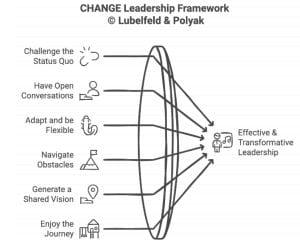
Polyak and Lubelfeld’s CHANGE Framework—Challenge the Status Quo, Have Open Conversations, Adapt and Be Flexible, Navigate Obstacles, Generate a Shared Vision, and Enjoy the Journey—is particularly valuable in guiding school leaders through the transformation required in our AASA initiatives. We’ve applied this framework to help districts across the country rethink outdated measures of success, shifting focus to real-world indicators such as career pathways, internships, and dual credit programs, which better prepare students for life after graduation.

Their use of the Satir Change Model has given us a structured process for managing resistance and chaos that inevitably arise when implementing new readiness metrics. This model provides the emotional and psychological scaffolding that leaders need to navigate through disruption and arrive at a new, more equitable status quo—one where students are assessed not just by test scores, but by their demonstrated readiness for the future.

Additionally, their call for embracing AI and innovation mirrors the cutting-edge work we are doing in Redefining Ready to prepare students for the future workforce. Their emphasis on future-focused leadership is critical as we guide districts in integrating technology and real-world learning experiences into the curriculum.

This book is not just theory—it’s a playbook for action. It has been instrumental in shaping our strategies, and I believe it’s a must-read for any school leader looking to foster transformative, sustainable change in their district.

Christopher Nesmith

Superintendent 

Elma School District, Washington

Dr. Michael Lubefield and Dr. Nick Polyak are nationally renowned and highly esteemed leaders. They are masterful at fostering strong relationships on behalf of their school district communities. Through their co-teaching of both aspiring and current superintendent classes, they effectively impart their extensive knowledge, experience, and expertise to many leaders.

Their book, Leading for Tomorrow’s Schools Today, is a valuable resource for all leaders working in different organizations including school systems. It serves not only as a comprehensive guide but also as a compelling call to action, emphasizing the critical role we play in shaping the future of our students. Leadership at all levels matters tremendously!

I was particularly impressed by their authenticity and their ability to provide real-life examples of challenging situations. They effectively demonstrated how they employed successful strategies to motivate staff and achieve positive outcomes across different school systems. Their commitment to generating clarity, fostering a shared vision for success, and encouraging constructive dialogue to challenge the status quo highlights their dedication to forward-thinking leadership. This approach is crucial, as it underscores our responsibility to build future-ready schools that meet the needs of ALL students.

Gracias!

Dr. Lupita Ley Hightower

Superintendent/Treasure Hunter

Arizona Superintendent of the Year 2023

Tolleson Elementary School District, Arizona

From AASA The Public Education Promise – Our Future is BRIGHT

AASA Initiative for All Children

Screenshot from Presentation

I just returned from the 2025 National Conference on Education from the AASA, the American Association of School List of the Public Education PromiseAdministrators. The title and theme was  Future Driven Leadership. They announced the Public Education Promise, see images below. There were hundreds of impactful presentations, exhibitors, thought leader sessions, panel discussions, presentations, opportunities for networking and socializing, and more. It’s an annual opportunity for superintendents to recharge their batteries and refuel their leadership toolkits! This year’s conference, my 15th, was powerful and impactful.
Each year upon return, I share resources with members of my leadership team, I write blog posts like this one, and I reflect on how to affirm practices which are working, change practices that are not working, and eliminate tried but failed practices. Each year I aim to do a better job as a leader than I did in the past year. Each month I endeavor to be more effective and impactful than I was in the last month. Each week I leverage skills acquired and knowledge gained to be a better version of myself. And each day I aim to be just a little bit better than I was yesterday.

Reflecting upon the magnitude of “public education” and all that’s “going on” – I often step back and look into the past (distant, mid-level, or recent) for perspectives on the present so that I may create and contribute to the creation of conditions for our collective future.

Currently, in March 2025, there are a lot of discussions about the future of the United States Department of Education as well as policies, laws, practices, and philosophies on behalf of our nation’s youth. As a life long public school educator (teacher, administrator, scholar, author, speaker, consultant, etc.), for decades, I have been a student of politics, economics, sociology, anthropology, social science research, ed-tech, and global relations.

Our future is as bright today as it ever has been.

fun AI Image

We are edu superheros

That’s right – our future is as bright today as it ever has been.

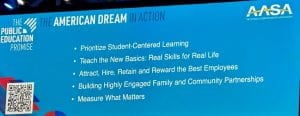
Last week thousands of leaders from all over the United States and Canada assembled at the National Conference on Education. Our Executive Director unveiled the latest future focused mission, the Public Education Promise, the American Dream in Action:

prioritize student centered learning

teach the new basics: real skills for real life

attract, hire, retain and reward the best employees

building highly engaged family and community partnerships

measure what matters

You see – whatever the political winds blow in our out, whatever changes may or may not be in your local context, our future is bright and we are united in purpose – across ideologies – to support our nation’s youth through public education.

We can absolutely address and improve upon each of the principles of this call for action. Together we can endeavor to measure what matters to demonstrate success, growth, learning, and excellence of our youth and our teachers. Together we can re-narrate our present and end the educator shortage. Together we can build and rebuild community partnerships and family/school relations.

We can seek guidance like that from the World Economic Forum’s Jobs report as we ensure we are teaching the needed basic skills for real life. We must always prioritize student focused learning!

Graphic of the CHANGE leadership framework from Lubelfeld/Polyak

CHANGE Leadership Framework from our new book

With the power of generative artificial intelligence (see multiple posts on this blog about this topic), to current and clear research/evidence that shows us how to lead through conflict, change, trauma, and strife, we CAN  and we WILL and we MUST advance the promise of public education.

If you are an educator and you are a bit overwhelmed, skeptical, tired, frustrated, or angry – I get it – we all get it!! But – please don’t fret and please don’t think “it’s never been this bad” or “we’re doomed” … we are not doomed. We can and we will recover to positive, productive, collaborative, and united approaches for our youth and via public education.


Inspirational Message

Improve, remain Unfinished and willing to unlearn and relearn

I leave you with a blog post I reprinted in 2014 about the “additional demands” put upon us in public education – as a people, as a society, as an association, let’s partner with our communities, our boards of education, our local and state lawmakers on behalf of children and society – let’s answer our executive director’s call for a renewal of the American Dream via the Public Education Promise!

For context and reflection, I share this post From my old blog – February 2014…

The Ever Increasing Burden on America’s Public Schools BY JAMIE ROBERT VOLLMER

The content in this blog post comes from Jamie Robert Vollmer

I saw Jamie at the Illinois Superintendent Conference last fall and I follow him on Twitter, and his messages, information, and publications are worth a closer look! As we prepare for some school Transformation in our district, I thought it relevant and timely to share Jamie’s brief history of US Education! Enjoy …

ML

The Ever Increasing Burden on America’s Public Schools

BY JAMIE ROBERT VOLLMER

America’s public schools can be traced back to the year 1640. The Massachusetts Puritans established schools to: 1) Teach basic reading, some writing and arithmetic skills, and 2) Cultivate values that serve a democratic society (some history and civics implied).

The founders of these schools assumed that families and churches bore the major responsibility for raising a child. Gradually, science and geography were added, but the curriculum was limited and remained focused for 260 years.

At the beginning of the twentieth century, however, politicians, academics, members of the clergy, and business leaders saw public schools as a logical site for the assimilation of immigrants and the social engineering of the citizens—and workers—of the new industrial age. They began to expand the curriculum and assign additional duties. That trend has accelerated ever since.

From 1900 to 1910, we shifted to our public schools responsibilities related to
• Nutrition
• Immunization
• Health (Activities in the health arena multiply every year.)

From 1910 to 1930, we added
• Physical education (including organized athletics)
• The Practical Arts/Domestic Science/Home economics (including sewing and cooking)
• Vocational education (including industrial and agricultural education)
• Mandated school transportation

In the 1940s, we added
• Business education (including typing, shorthand, and bookkeeping)
• Art and music
• Speech and drama
• Half-day kindergarten
• School lunch programs (We take this for granted today, but it was a huge step to shift to the schools the job of
feeding America’s children one third of their daily meals.)

In the 1950s, we added
• Expanded science and math education
• Safety education
• Driver’s education
• Expanded music and art education
• Stronger foreign language requirements
• Sex education (Topics continue to escalate.)

In the 1960s, we added
• Advanced Placement programs
• Head Start
• Title I
• Adult education
• Consumer education (purchasing resources, rights and responsibilities)
• Career education (occupational options, entry level skill requirements)
• Peace, leisure, and recreation education [Loved those sixties.]

In the 1970s, the breakup of the American family accelerated, and we added
• Drug and alcohol abuse education
• Parenting education (techniques and tools for healthy parenting)
• Behavior adjustment classes (including classroom and communication skills)
• Character education
• Special education (mandated by federal government)
• Title IX programs (greatly expanded athletic programs for girls)
• Environmental education
• Women’s studies
• African-American heritage education
• School breakfast programs (Now some schools feed America’s children two-thirds of their daily meals throughout
the school year and all summer. Sadly, these are the only decent meals some children receive.)

In the 1980s, the floodgates opened, and we added
• Keyboarding and computer education
• Global education
• Multicultural/Ethnic education
• Nonsexist education
• English-as-a-second-language and bilingual education
• Teen pregnancy awareness
• Hispanic heritage education
• Early childhood education
• Jump Start, Early Start, Even Start, and Prime Start
• Full-day kindergarten
• Preschool programs for children at risk
• After-school programs for children of working parents
• Alternative education in all its forms
• Stranger/danger education
• Antismoking education
• Sexual abuse prevention education
• Expanded health and psychological services
• Child abuse monitoring (a legal requirement for all teachers)

In the 1990s, we added

• Conflict resolution and peer mediation
• HIV/AIDS education
• CPR training
• Death education
• America 2000 initiatives (Republican)
• Inclusion
• Expanded computer and internet education
• Distance learning
• Tech Prep and School to Work programs
• Technical Adequacy
• Assessment
• Post-secondary enrollment options
• Concurrent enrollment options
• Goals 2000 initiatives (Democrat)
• Expanded Talented and Gifted opportunities
• At risk and dropout prevention
• Homeless education (including causes and effects on children)
• Gang education (urban centers)
• Service learning
• Bus safety, bicycle safety, gun safety, and water safety education

In the first decade of the twenty-first century, we have added

• No Child Left Behind (Republican)
• Bully prevention
• Anti-harassment policies (gender, race, religion, or national origin)
• Expanded early childcare and wrap around programs
• Elevator and escalator safety instruction
• Body Mass Index evaluation (obesity monitoring)
• Organ donor education and awareness programs
• Personal financial literacy
• Entrepreneurial and innovation skills development
• Media literacy development
• Contextual learning skill development
• Health and wellness programs
• Race to the Top (Democrat)

This list does not include the addition of multiple, specialized topics within each of the traditional subjects. It also does not include the explosion of standardized testing and test prep activities, or any of the onerous reporting requirements imposed by the federal government, such as four-year adjusted cohort graduation rates, parental notification of
optional supplemental services, comprehensive restructuring plans, and reports of Adequate Yearly Progress.

It’s a ponderous list.

Each item has merit, and all have their ardent supporters, but the truth is that we have added these responsibilities without adding a single minute to the school calendar in six decades. No generation of teachers and administrators in the history of the world has been told to fulfill this mandate: not just teach children, but raise them!

© 2011 Jamie Vollmer | To purchase this list in poster form or to invite Jamie to speak visit www.jamievollmer.com


Quote about the future and need to unlearn

Unlearn – Relearn – Grow/Change

Superintendent Summer Learning #112Leads

June 2024

“Change will not come if we wait for some other person or some other time. We are the ones we’ve been waiting for. We are the change that we seek.” – Barack Obama

Leadership is all about change – perspective change, mindset change, functional change, improvement change, essentially, helping to create conditions with culture, systems, instruction, and growth. As a school superintendent (finishing year 14 in this role, and year 31 of consecutive full time dedication to public education in suburban Chicagoland),  I often get asked “What do you do in the summer?”

Since the schools are closed (except for summer school) and people think the teachers are “off” (even though they work all summer, attending workshops, classes, and preparing their lessons). Summer is an awesome time for an educator – we get to reflect on what went well during the past year. We get to reflect on what could become better next year, and we get to devote time to our own learning, growth and recharge! We get a beginning, middle, and end, each school year! This year I just completed my 31st consecutive full time year in public education. Each year I learn more, grow more, experience more and hopefully extend my impact as a leader in positive ways.

This summer (we just started as our “last day of school” was June 5) a team of teachers and administrators joined me on a professional journey to Ohio where we joined with educators from all over the country in the shared pursuit of STEM (Science, Technology, Engineering, & Math) in our PK-12 school districts and communities. Educators from 9 US states were in attendance at this inspiring convening.

In District 112, we just adopted new middle school (grades 6-8) science curriculum resources (for the first time in more than 30 years) and we eagerly anticipate how to facilitate optimal rigorous and engaging science for our middle school students. Since our District is also PK-5 as well as 6-8, an elementary principal and the assistant superintendent for teaching & learning joined with two of our middle school science teachers and a middle school instructional coach on this academy!

What we do in the summer is study, learn, review, research, and collaborate on making the most meaningful educational conditions for students when they return in the late summer, next August!

Our journey literally starts at Chicago’s O’Hare International Airport where we take off for a relatively short flight to Cincinnati, Ohio!

As we head to Cincinnati, where the airport is actually in Kentucky, we’re mentally preparing for the learning, growing, studying, and networking that lay ahead of us! The six of us plan to attend the multiple offerings during each session to learn and share with each other so we can maximize the opportunities for our students back home.

Sharing some images and then an “executive summary of some of the content we learned and engaged with”:

Superintendent and host Kirk Koennecke

Airplane on tarmac at O’Hare airport before takeoff

Beautiful Chicago, IL from the air shortly after take off

Cincinnati, Ohio in the distance, on approach near landing time

Our transportation – awesome bus drivers keeping us safe!

Let’s go! From the newly constructed commons area at Indian Hill Middle School

Braeside Elementary School Principal Jamie Kahn synthesizing learning during hands-on group work!

JASON LEARNING STEM Certification Framework, a multi-year, multi-step comprehensive look

Sharing an executive summary of our take ways – as you can see, we learned a lot and we have much to process, review further, ideate on, plan for, and work with colleagues as we plan for our student’s future! We used a shared Google Doc to record our learning, thinking, etc. – Open AI’s Chat GPT 4o looked at the text and made an executive summary (it did a nice job!)

Executive Summary of Breakout Sessions

Finding Success Using Labsites
– **Objective**: Utilize professional development to build staff capacity and lead instructional change without needing new furniture.
– **Strategic Plan**: Focuses on learners as individuals, whole-child development, student agency, wellness, career pathways, STEM, and diversity.
– **Lab Classrooms**: Teachers meet with coaches three times a year to observe and plan; ensure alignment with standards and interdisciplinary connections.

Harnessing the Power of PBL in High School STEM
– **Presenters**: Julia Kunkel and Jackie McCarthy.
– **Key Points**:
– Create a collaborative culture with shared promises.
– Develop projects requiring persistent revision; e.g., mapping classroom furniture.

Spaces of Belonging: Designing Learning Environments for Enhanced Agency & Achievement
– **Media Room**: Equipped with donated newsroom equipment, offering classes and clubs in broadcast journalism.
– **Digital Arts Lab**: Created from private donations, offering computer science certifications.
– **LOTH Furniture Firm**: Involves teachers and students in furniture selection, piloting designs, and using vertical dry erase boards.
– **Indian Hill Elementary School**:
– “Brave Room” for anxiety relief, with Cincinnati Children’s Hospital consultation.
– “Go Time” for teachers to engage students in various topics.


Transformational Partnerships
– **Focus**: Establishing mutual success partnerships with community members, integrating STEM education at the center.
– **Key Elements**:
– Community members on teams during registration.
– Shared vision and consistent goals/action steps.
– Collaborations with JASON Learning, Cuebric AI, and other organizations.
– Entrepreneurship spirit and leveraging resources like the Recycled Materials Association.

STEM for ALL: How to Build and Support a Comprehensive K12 STEM Program
– **Integration**: Embedding STEM across subjects and grade levels, with leadership, community connection, and teacher professional development.
– **STEM Learning Ecosystem**: Sustainable mobilization of STEM involving all stakeholders, focusing on interdependence of pillars.

Schoolwide Design Thinking in Action (Grades 3-5)
– **Implementation**: Daily STEM activities, STEM Days, and integrating design thinking across the curriculum.

Be an Argonaut: Localize Your STEM Curriculum
– **Program**: Students apply to be National Argonauts, involving interdisciplinary projects and public speaking.

Building a Strong STEM Culture with AASA & JASON Learning
– **Certification Framework**: Audit internal processes, provide supplemental curriculum support, and ensure equity and inclusion.

Educating without Silos: Cross-Curricular PBLS with AI in K12
– **Interactive Session**: Focus on collaboration, communication, creativity, and critical thinking through PBL and AI.

This summary highlights the key points and objectives of the breakout sessions, emphasizing professional development, project-based learning, inclusive learning environments, and transformational partnerships in STEM education.

The summary does not share session presentations, handouts, images – those will be further shared internally with our teams and our colleagues. What I hope to illustrate in this blog post is that learning never takes a vacation in education and in North Shore School District 112, #112Leads. I’m proud of the teachers and administrators who joined me on this learning journey and adventure, and I’m inspired by what our future holds for our teachers, students, administrators, and the community!

Thank you Kevin, Jamie, Alexandra, Alex, and Jess for joining, learning, leading, reflecting, planning, putting up with my endless comments about Generative AI 🙂 – and for the collaboration!! Our future is bright because of YOU!

Thanks for reading and know that comments are always welcomed.


Part 1 of 4 – Forty Years Since “A Nation at Risk” – Education Reflections

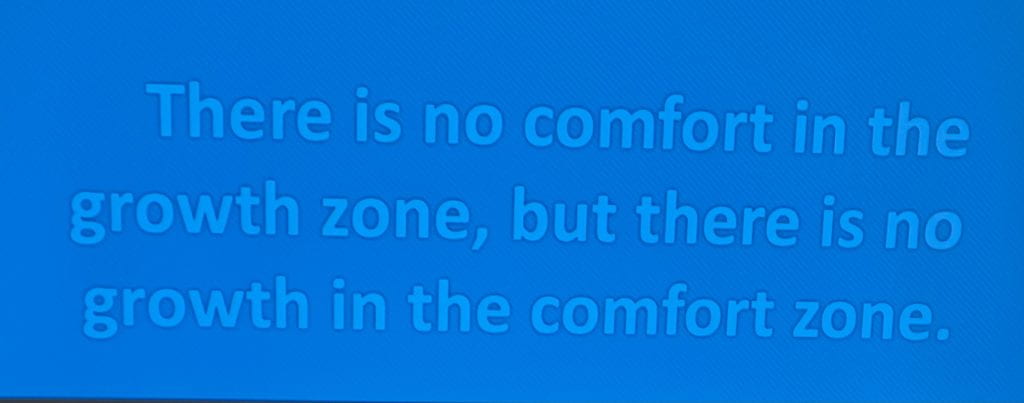
There is no comfort in the growth zone – but there is no growth in the comfort zone – this was a quote shared with us at the start of the National Superintendent Roundtable national convening in the summer 2023 conference in Los Angeles, California.

Nearly 40 of us convened to remember the education “reform” document and call to action called A Nation at Risk, and to contemplate the 40 years since – where we have been, where we are, and most important, where we are going!

With powerful presentations (some excerpted and summarized here in the blog and in subsequent posts) and with a visit to the President Ronald Reagan national presidential library & museum in Simi Valley (shared via images in the blog), the convening was awesome! Great dialogue, great, courageous conversations and questions and recollections, civil discourse with folks who have differing political views, and a whole lot more took place in our compact, concise, and short but powerful conference.

Often, people ask me, “What do I do as a superintendent” Part of the purpose of this blog is for me to illustrate just that. What “do” I do? 🙂 – A LOT … The role is diverse and rewarding, the opportunities to develop leaders are the most powerful and impacting legacy, and the power and honor to share and extend HOPE is a true gift.

In this blog post, I reflect on, share, and describe superintendent professional development. Leadership convening at a high level. History, politics, government, sociology, education, journalism, and more are covered in this experience and blog post.

40 years ago, A Nation at Risk was presented to the nation. It was a flawed report (as I will share), but it did raise PK-12 education to the forefront as a presidential issue – which can be a good thing. It started a four-decade pathway towards educational “reforms” and an obsession with standardized testing that we still grapple with today.

So …. What do I do?

I learn I gather with national and global experts, I engage in dialogue to make my thoughts known and clearer, and when challenged with new ideas, I may change my

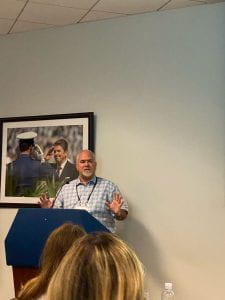
I am facilitating a discussion with one of our presenters

mind! I am a leader and a learner, and a lead learner. My attendance at and participation in professional development is part of what I do as a superintendent of schools. Each day I aim to be better, do better, and lead better for the thousands of students and staff, and community members I have the honor of serving.

40 Years Since a Nation at Risk … What have we learned … I will be sharing thoughts from the many pages of notes I took during our amazing and challenging presentations as well as during our incredible visit and guided tour at the President Ronald Reagan Presidential Library & Museum. As a former social studies and US

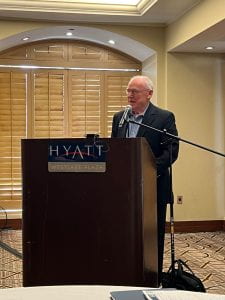
Me at the podium! The backdrop is the inauguration – pretty cool!!

History teacher, this was AMAZING. A whole bunch of peak moments were had during this short but powerful trip across the country!

The National Superintendent Roundtable (NSR) is a membership association of superintendents from around the USA. Currently, there are about 91 members nationwide. In partnership with its sister organization, the Schlecty Center, there are about 180 superintendents in total between the two organizations. Both are mission-driven to support leadership and growth.  We are all in favor of and stand by “Strong families, strong communities, with strong schools” as a mantra or “calling card.” We’re here to honor the 40th anniversary of A Nation at Risk and truly digest and dissect – what we have learned and where we are going.

James Jim Harvey – incredible speaker, scholar, writer, one of the authors of A Nation at Risk & Founder of the National Superintendent Roundtable

Our keynote presenter, Jim Harvey, founder of the NSR and one of the writers of A Nation at Risk was outstanding!! Jim reminded us all that public education is one of the major foundations of the United States society. Supporting American ideals and progress is our mission. Jim also reminded us of President Reagan’s inaugural address in 1980, where he stated that essentially, “…government is the problem.”. President Reagan ran on a platform that included eliminating the US Department of Education. His first Secretary was Terrell, Ted, and Bell.

Subsequent blog posts will detail more of the content and “What do we do now?”.

Reflections from Bottle School Trip – Guatemala 2023 July

Bottle School Project with Hug it Forward

Reflections from  Tecpan, Guatemala

July 2023
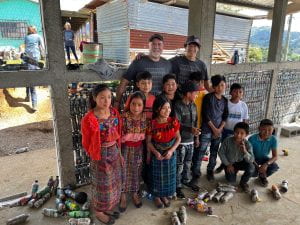
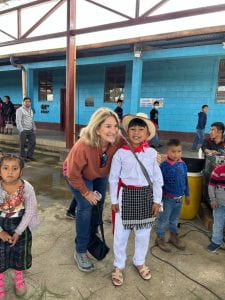
Wrapping up an incredibly meaningful experience with my son in Guatemala! We finished tying up the 10,000 bottles filled with inorganic trash in the three classrooms we helped complete in the elementary (K-6) school in Zaculeu, Tecpan, Guatemala! The 400 students in grades K-6 now have three more elementary classrooms for education. One day we or someone will build a middle school, grades 7-9, so that these kids can continue their education. Currently, about 15-20 students are able to continue to middle school from the community.
——
Think about that for a minute or two……. Trips like this, service like this, and experiences like this help to illustrate how education, economics, politics, geo-global politics, etc., all intersect to create or stifle opportunity. Trips like this give me context, perspective, hope, and love.
———
Thanks to Hug it Forward and Serve the World Today, my son and I got to join some amazing people from across the United States and from France and Guatemala to make change in our world – to do good with other good people – to build a school alongside people in a community who seek partnership, support partnership and work alongside in partnership! The bottle school project confronts many challenges, including trash/environment, community development/involvement, investment in often forgotten people, education – space, opportunity, function & hope, economic development, and migration policies (and more).
————-

From the Hug it Forward Website

From their materials:
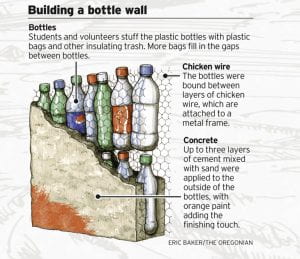
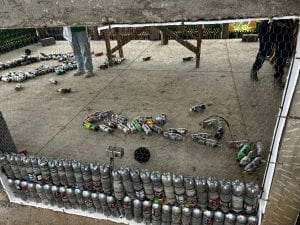
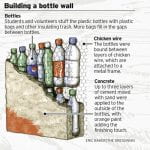
“Hug it Forward works to support and empower communities in Guatemala to build Bottle Schools: schools built using plastic soda bottles stuffed with inorganic trash. Entire communities come together to make the dream of educational opportunity a reality by upcycling “waste” to build their own bottle school.
  • This school infrastructure project will be accomplished thanks to funds provided by Hug it Forward’s donors and with the collaboration of community members. The municipality and the PTA (parent-teacher organization in the community) work jointly with students’ families in order to provide all the manual labor required for the construction, as well as a three-classroom bottle school requires over 10,000 bottles—children in the community are responsible for collecting the majority of these and stuffing them with trash to make “eco-bricks.” This gives them pride and a true sense of ownership in the school.
  • The school is built in Zaculeu, located in the municipality of Tecpan, Guatemala, Chimaltenango. Zaculeu means “White Land.” People in Zaculeu grow their own corn, beans, coffee, and a lot of different kinds of vegetables and fruits, especially snow peas, corn, and beans. This project of which we are a part, will benefit 386+ students, 13 teaching staff members, and 600 families in the area.
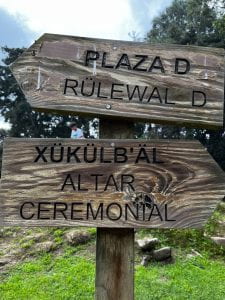
  • The members of the community are indigenous Mayan people who speak Kaqchikel.
  • The signs are in their mother tongue, Spanish and English.
——————
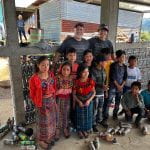
We built walls out of bottles in three classrooms. We expanded the educational footprint in the community and we supported ecological awareness and recycling on a grand scale. We played with the children, we spoke with the community elders, we visited homes of the members of the community.

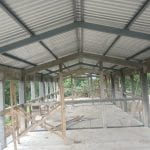
Before bottle walls are constructed

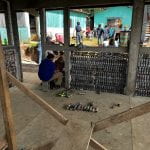
A bottle wall before it’s covered with plaster and used as insulation – construction in process

—————-
We immersed ourselves in Mayan culture, Guatemalan culture, we learned Guatemalan and Mayan history and politics and immigration perspectives first hand.

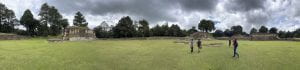
Park of the Cross, beautiful view of Agua Volcano (dormant)

——————-
We learned, we served, we experienced, we helped, we hugged, and we leave better people than when we arrived as we have new friends, new world views, and we now have a community with greater educational opportunities.
As I have stated, words and even pictures alone cannot fully illustrate the power and intensity of this trip and its set of experiences. I encourage you to consider attending a Hug it Forward service trip. Thanks for reading, as always, I welcome comments!
It is an honor to try to make the world a better place through service, family, spirit, and hands on learning. We leave Guatemala mentally, spiritually, emotional fulfilled. We brought good, we received good, and our little efforts will lead to generational change.
——
As we come home, we aim to extend the learning, feelings, doings, beings illustrated herein and live as best we can sharing good wherever we can.
As I prepare for another school year, I am recharged, refreshed, revised, and wholly energized to support and facilitate change. I am committed to supporting administrators so that they may create optimal conditions for teachers and staff, so that they may create the environment for “each child every day” where all means all and where, in North Shore School District 112, #112Leads, we inspire, engage and empower every day!

Education is Life

I’m a fan of the Apple TV show “Ted Lasso” and one of the characters, Dani Rojas, has a saying “futbol is life” … so, in the spirit of Dani Rojas, “Education is Life” is the title of this blog post!
I’ve been a public school educator in suburban Chicago, Illinois, USA since 1992. I’ve been a superintendent of schools (PK-8) since 2010. Education really has been and in some ways “is” my life too!! My daughter is in college studying to become a special education teacher, my son is a park district day camp counselor, my wife taught pre-school and worked in park district recreation, so I guess it’s in our DNA as a family too!
Education, of course, is essential – everywhere.
Together with my son and our other adventurers, we’re helping construct a bottle school in the indigenous Mayan community of Zaculeu in the Tecpan region. This is our third such trip together and my seventh since my first experience on the 2016 LifeTouch Memory Mission to Constanza, Rio Grande, in the Dominican Republic. I have written on my blog about past experiences and adventures! Feel free to search the blog (enter Dominican Republic or service learning).
The father son time is priceless, the father/educator in me also finds this time affirming and spiritual on many levels. To be able to serve and share these Peak Moments with my son is greater than any words I can piece together. The opportunity to make new friends from around my country as well as from all over the world is pretty amazing too.
During this bottle school building trip and Guatemalan culture, history, and ecology trip, we are fortunate to have amazing guides and leaders. From Guatemala, we have Vivi, Andres, Lilian, Enrique, Christy & Marta, from the USA Hug it Forward team we have Adam and Jennifer. Together with veteran Gary and so many others – we are engaged in lifetime memories and incredible learning. Our team is aged 9 to 67, we hail from multiple races, religions, ethnicities, vocations, locations, and together we are now one!
Working alongside of our Guatemalan hosts, working with the children of Zaculeu, and building walls made of eco bricks to help demonstrate care for the ecological needs of our planet, we learned, lived, felt, experienced, and did each day on this incredible set of experiences.
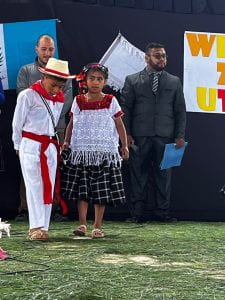
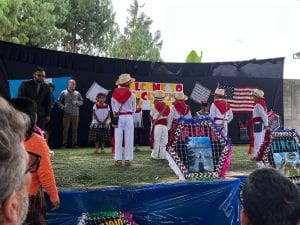
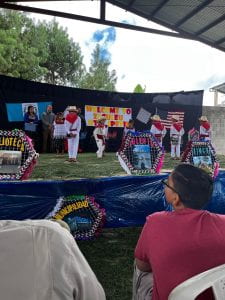
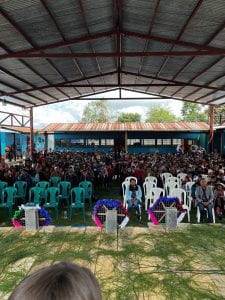
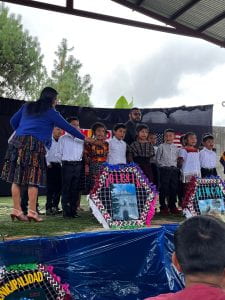
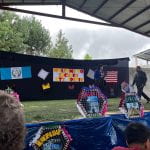
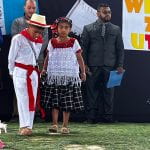
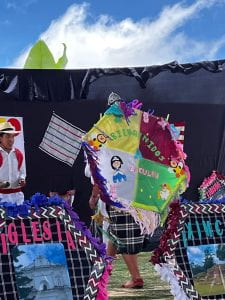
When we arrived in Zaculeu, as the first representatives from Hug it Forward, ever, and among the very few foreigners who ever have come to visit and serve with the Mayan people of the village, we were welcomed LARGE! The assembly from the nearly 400 students in grades K-6, the teachers, the principal, the mayor and the village elders, the parent organization and many of the parents of the children – we knew we were not in Kansas anymore! The assembly with speeches, songs, dances, signs, and an unbelievably warm welcome was so energizing and so motivating, that when we got to the job site, the excitement was palatable.
I’ll share a bunch of photos as a picture is worth “1000 words” in an effort to illustrate the incredible set of experiences — words alone cannot capture the power of this experience and even the photos & videos don’t do it justice – but I’m so moved and so inspired, that I am compelled to share my story.
Feel free to follow Hug It Forward on Facebook and on Instagram to see not only our trip, but previous and future trips. Anyone with the motivation can reach out and serve.
Service, education, cultural immersion, and more is what we found on this trip. Food was prepared for us daily by cooks Marta and Christy – the food was outstanding! Enrique drove us in our bus (chariot) through city streets, highways, country/rural roads, mountains, hills, and dirt roads with angles approaching 80 degree inclines – incredible!
We also met individuals who shared their personal stories and histories regarding various timely topics including the Guatemalan Civil War (1960-1996), migration from Guatemala to the United States, economic conditions in the nation, social history, and much, much, more.
We also engaged with local artisans who make their living creating cultural and personal effects for sale and for more than a “side gig” – for some folks, this is their primary income.
As I write these words, I realize, as best as I try, nothing can capture the power of this trip and the series of peak moments more than actually experiencing this, but my aim and my effort is to celebrate the good and highlight the hope of serving, learning, getting out of one’s comfort zone, and joining amazing people who do this all the time.
Education in Guatemala is different than education in the United States. The public school system is not always present, fully available, or even funded in the rural/indigenous areas of Guatemala where we were serving. There were classrooms from a USAAID project in 1987 and in 1993, and then there is our project in 2023! The classrooms for this village of Zaculeu serve children in grades K-5 — there are not classrooms for children in middle school, grades 7-9 (YET). High schools in Guatemala are fee based – not free.
Creating classrooms for children in grades K-6 and ultimately in grades 7-9 changes lives and changes cultural, historical, and economic opportunities and access to opportunities for generations of children. This bottle school project in which we are involved is one step to provide chances, hope, opportunities, and change for people.
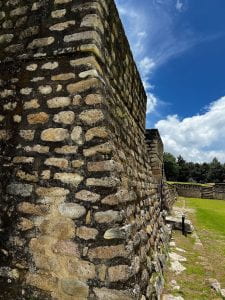
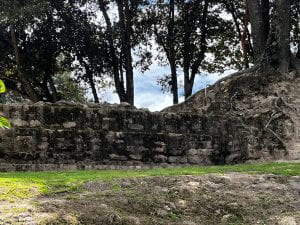
Our public ambassador programming and efforts represent efforts afloat all over the world and efforts I have had the privilege of participating in in the USA (Puerto Rico), in the Dominican Republic and now, in Guatemala! In addition to the bottle school construction, the engagement with the villagers via the welcome ceremony, the artisan markets, and the community walk/hike and home visits, we also visited sacred Mayan archeological sites, learned from first hand historical accounts and engaged with the powerful beauty of this incredible country!
Sharing more images of our incredible journey to Guatemala!

Guatemala Service Trip Culture School Building 2023

Guatemala 2023
Tecpan, Guatemala July 2023

Justin (my son) and I ventured from Chicago to Miami and from Miami to Guatemala City, Guatemala. We are serving, learning, exploring, and traveling to Guatemala with Hug it Forward, https://hugitforward.org/ , on a service, mission, culture, education, and ecological trip. Hug it Forward works with Serve the World – they are two organizations dedicated to making the world a better place. The Hug it Forward Bottle School Project is what Justin and I are investing our time in during this trip. Together with about 15 other people from the US States of Illinois, Georgia, Oregon, Texas, Minnesota, & New York, plus group members from France, we are working with our Guatemalan hosts, friends, and leaders.

Hug it Forward has engaged in about 140 bottle school projects over the past decade.

From their website, describing what a Bottle School is:

Bottle classrooms are constructed using eco-bricks, which are plastic bottles stuffed with inorganic trash. During the project process, entire communities come together to build a more environmentally responsible educational space for their future.

Bottle classrooms are built using eco-bricks, which are plastic bottles stuffed with inorganic trash. Our bottle classrooms are built using the established method of post-and-beam construction. The foundations, columns and beams are made from concrete reinforced with rebar. Unlike cinder-blocks which are not very environmentally responsible, we use eco-bricks in our constructions. As a result, our projects are much cheaper to build when compared to the more traditional building methods and materials, they work to clean up the environment, provide the space for real discussion about local environmental obstacles, and involve the entire community in their construction, resulting in a sense of pride and ownership

The people of Zaculeu collected 10,000 (yes, ten thousand) plastic drink bottles, filled them with debris to make them stable and full, and these became the “eco-bricks” to find a home as insulation in the walls of their school’s new classrooms. If they did not collect the “trash” it would have been burned, discarded, or placed in a landfill. The community collected the bottles and the trash – they cleaned up their area, their streets, their homes – and they prepared to welcome us to help them construct the walls of their school. Private donors funded the costs via donations to Hug it Forward for the skilled laborers to construct the flooring, roofs, structure, and masonry – some other Hug it Forward groups helped the skilled laborers, the government of Guatemala funded the masonry, and our group built the walls with the students of the school and members of the community! Our bottle school project was with the community, by the community, and with our help – it’s their lasting legacy of ecological awareness, activism, and educational commitment.

Subsequent blog posts will share more details and more images!