A Horse and Buggy won’t Make It to Mars

Reflections on Systemic Inequities and the need to cause change – and the tools to do so!

Nick Polyak and I have a new book coming out early in 2025! Our fifth book together will add to the leadership literature featuring experiences and change implications from two superintendents with nearly 60 years of combined educational experiences.

Book Description

Leading for Tomorrow’s Schools Today is a forward-thinking guide for educational leaders navigating the rapidly changing landscape of 21st-century schools. Authored by seasoned superintendents Mike Lubelfeld & Nick Polyak, this book offers practical strategies and insightful reflections on how to lead effectively in times of change and uncertainty. Drawing on years of experience and a deep understanding of the educational field, the authors provide a roadmap for fostering growth, embracing innovation, and driving meaningful transformation in schools. The book emphasizes the importance of change and growth planning, highlighting proven approaches to cultivating a positive school culture, empowering teachers and enhancing student outcomes. With a focus on both the challenges and opportunities that lie ahead, Leading for Tomorrow’s Schools Today equips leaders with the tools and mindset necessary to create learning environments that prepare students for success in a complex and dynamic world. This book is an essential resource for current and aspiring school leaders committed to shaping the future of education.

In this blog post, a follow up from a recent reflection on a professional journey to the Equal Justice Initiative in Montgomery, Alabama, I share additional insights as well as a call to action for leaders of tomorrow’s schools!

I start with a quote from Langston Hughes,  “I, too, am America.” (I’ll share the poem later in the post)

Throughout our new book Leading for Tomorrow’s Schools Today (coming out early in 2025), Nick Polyak and I share models of change, case studies of leadership, and a call to action to lead for tomorrow’s schools today. 

We acknowledge that some scholars like Yong Zhao argue that education needs transformational leadership that goes beyond change. In a 2024 paper, “Artificial Intelligence and Education: End the Grammar of Schooling”, Zhao submits that what is needed is  [for] “…schools to transform into something else instead of simply improving within the current framework of schools.” (12) 

He further suggests that it’s possible the actual design of schools has limitations inherent and more efforts to “reform” will not lead to “transform”. An analogy he uses is encapsulated in this quote, “For example, it is impossible to improve the horse wagon to make it reach the moon or Mars. The power of the horses is limited, so is the design of the wagon.” (16) In this metaphor, the wagon’s design is getting exactly what it is designed for, like our current public school system. 

W.E. Deming is credited with the quote, “A system is perfectly designed to get the results it gets.”

Further, if we wish to “go to Mars” tomorrow, the horse and wagon of today (and yesterday) will not get us there. We need a new system entirely. In this blog post, taking that assertion, along with the difficult history of Black people in the Americas, and the limits of reform in the equal justice under the law concept, we submit the following.

As you read, please note the reflective questions, these were generated by the National Superintendents Roundtable conference “Understanding Defining Moments in History” from where these reflections were distilled and shared in an earlier blog post.

  • From what sources do you gain a deeper understanding of the challenges faced by children and families impacted by poverty and unequal treatment?
  • How do you create awareness of and access to curriculum and community education resources that can be used by educational institutions?
  • In what ways do you illustrate an understanding of the challenges of educating children who are either incarcerated or who are being educated in an alternative setting?
  • What are your experiences helping people see how defining moments in American history continue to play a role in defining the current context for many students served in public schools?

The mission of the National Superintendent Roundtable is “Leadership for Just and Humane Schools.”

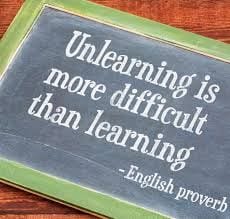
Throughout our new book, Nick and I share models of change that explain and proclaim that which can be measured, replicated, and changed for tomorrow. Zhao and others cause us to think and to unlearn that which no longer works nor meets society where it is going. 

Among other aims to improve outcomes for each child every day, we aim to increase justice, social and otherwise as we support the development of humane schools where legacies of structural racism and oppression no longer form the norm.

We agree with Zhao in his sentiment that “There is no consensus about the definition of educational excellence, but it seems that everyone would agree that an excellent education helps everyone become a good citizen of a society, a member of a productive workforce, and a happy and prosperous individual.” (17). 

Our modern school system was born out of (most recently) the mid-19th Century Prussian model. There were tweaks in the 1890s, 1920s, 1950s, and over the past 40 years since the publication of A Nation at Risk. It’s quite likely, despite the best and most noble of intentions, the public school system is getting the results it was designed to get – whether we realize it or not, and more germane, whether we designed it or not.

In this blog post we build on the concept introduced in the previous post as well as chapter 3 of our forthcoming book about going to where the smart people are. At a recent professional visit to Montgomery, Alabama to three sites that are part of the Equal Justice Initiative, we were inspired to think more boldly about change needed for transformation as opposed to reformation.

The change proposed in this post may be the most impactful for leading for tomorrow’s schools today. This material is a reflection pond for us Americans. Experiences from the 15th to20th Centuries might not always occupy the forefront of your mind, we ask that you join us in the deliberate attempt to frame the structures that cause some of today’s social ills should be changed to avoid the same or compounded social ills moving forward.

We believe that we can do this.

To lead for tomorrow’s schools today, we must build something other than a new horse and buggy; as Yong Zhao asserts, the horse and buggy will not get us to Mars.

The quote at the start of the post comes from Langston Hughes’ poem, I, Too. For clarity and context, I am sharing the poem below as a backdrop to the context that in the 21st century, we aim to create conditions for each child, every day, however, for many in our nation’s past, the systems were not necessarily designed for each child.. 

 “I, Too”

I, too, sing America.  

I am the darker brother.  

They send me to eat in the kitchen  

When company comes,  

But I laugh,  

And eat well,  

And grow strong.

Tomorrow,  

I’ll be at the table  

When company comes.  

Nobody’ll dare  

Say to me,  

“Eat in the kitchen,”  

Then.

Besides,  

They’ll see how beautiful I am  

And be ashamed—  

I, too, am America.

So if we look at American history from, say, 1619 to the present, through the lens of African American, Black people in America, the lens is complex, full of contradictions, and holds some very hard truths. 

In order for us to create conditions where each child belongs (every day) and each staff member belongs (every day), Nick and I submit that it’s important to address and confront some implications of the past on the present; so we can create a different future. 

Intentional and deliberate structures from our past have caused unintentional and undesirable impacts and effects on the present for many children in our schools. 

Notably, the history and legacy of slavery, racist laws following the American Civil War, Lynching and terror against Black people, and resistance to Civil Rights leading to mass incarceration have contributed to a complex and very difficult reality that can be changed by leadership, modern abolitionism, and the public schools.

Looking at this history through the reflective experiences gained via a visit to three American historical sites in Montgomery, Alabama, the Freedom Monument Sculpture Park, the Legacy Museum: From Enslavement to Mass Incarceration, and the National Memorial for Peace and Justice, we add to our calls to action as leaders, to create a new outcome for our nation through public schooling. Our aims are for a socially just education system that ends the legacy of enslavement to mass incarceration. We call for a new future.

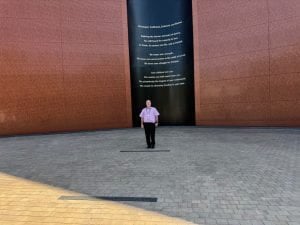
At the Freedom Monument Sculpture Park, the inscription on the massive monument to Americans reads,

Kidnapped, Trafficked, Enslaved, and Abused.

Enduring the horrors and pain of slavery,

You still found the capacity to love, 

to dream, to nurture new life, and to triumph.

We honor your strength.

We honor your perseverance in the midst of sorrow.

We honor your struggle for freedom.

Your children love you.

The country you built must honor you.

We acknowledge the tragedy of your enslavement.

We commit the advancing freedom in your name.

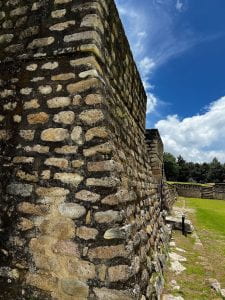
That quote is on the National Monument to Freedom, a massive structure with 120,000 surnames from the 1870 census. This monument recognizes the tens of millions of descendants of enslaved people in this country, many of whom are still identified by the names their formerly enslaved foreparents chose (an inscription in the bricks in front of the monument.)

What we are envisioning, and why we wrote our newest book, is to illustrate how to pave the pathways to a transformed school system. Zhao and others suggest that public schools have proven quite resistant to change. Reforms for decades and legal changes for decades have not yet established socially just and equitable learning inputs and outputs for all children.

With all we know, with all we believe in, with the principles upon which our nation was founded, we do believe that we can change. Throughout our new book, we call for and share evidence of change. Our new (to be introduced) CHANGE leadership framework’s foundation is based upon the belief that transformative change does, can, will, and must be done as we lead for tomorrow’s schools today.

In the image below we show a graphic of the CHANGE elements all together. 

Image showing the CHANGE Leadership Framework components

While we did not create the conditions under which trans-Atlantic slave trading, US Domestic slave trading, the US Civil War, Reconstruction, Jim Crow Laws, segregation, or racism were born, we are the keepers of the nation and leaders of society today.

In order that we can lead for tomorrow’s schools today, we ask that honest, authentic, and difficult acknowledgment come forth so that we as a nation can heal and fulfill the bold aspirations of the nation’s founders. The Preamble to the United States Constitution reads,

“We the People of the United States, in Order to form a more perfect Union, establish Justice, insure domestic Tranquility, provide for the common defense, promote the general Welfare, and secure the Blessings of Liberty to ourselves and our Posterity, do ordain and establish this Constitution for the United States of America.”

A better horse and buggy won’t get us to Mars. A “reformed” model of slavery won’t get us justice. Let’s work to acknowledge the reality of our shared history and create new systems and structures that include – each of us – no exceptions. Leading for tomorrow’s schools today calls for schools with structures in place that develop a sense of belonging and worth for each member of the community.

Leading for Tomorrow’s Schools Today (2025) Rowman & Littlefield/Bloomsbury Education will be available anywhere books are sold early next year!

Table of Contents

Acknowledgments

Foreword by Tom Murray

List of Tables & Figures

Preface

Introduction

Section 1: Leadership is Change  

Chapter 1: Cultivating Change 

Chapter 2: Selection of Staff, Who, How, and How Long?

Voices from the Field: Leading Transformation in a VUCA World: A Progressive Vision for Brigantine Public School District, Glenn Robbins, Superintendent, Author

Section 2: Go Where the Smart People Are – Learning From Others

Chapter 3: Networks and Professional Organizations

Chapter 4: Language Matters

Voices from the Field: My Journey of People-Centered Leadership as Superintendent, Dr. Zandra Jo Galvan

Section 3: You Can Do It

Chapter 5: We’re Not Broke, We’re Broken

Chapter 6 Transformation: Flip the Mindset

Voices from the Field: Expanding Pathways to Success, Gladys I. Cruz

Section 4: Change Faster – Embrace Your Context – Revolutionary Change

Chapter 7: Bomb Threats and Social Media

Chapter 8: Artificial Intelligence & Innovation

Voices from the Field: Jeff Dillon, The Student’s Bill of Rights

Conclusion

References

About the Authors

Appendix A Interviews from the Pandemic Era-Use Case for Generative AI and Leadership

Appendix B (Teach AI Guidance)

Appendix C Listing of Generative Artificial Intelligence Tools Used Throughout this Book

Testimonials

The vast amount of professional experience and talent that exists with Mike Lubelfeld and Nick Polyak is on full display in Leading for Tomorrow’s Schools Today. They inspire me and others through research, practical frameworks, and case studies that reveal  strategic and successful approaches to innovating in school. Their text should be required reading for any leader wishing to be highly effective with change management and the implementation of generative artificial intelligence into their practices.

Luvelle Brown

Superintendent, Ithaca City School District

Founder/CEO Love2Achieve LLC.

Leading for Tomorrow’s Schools Today provides a rich blend of real-world experience and practical insights from two seasoned superintendents who have navigated and led change in schools for nearly 60 years. Through compelling stories, Mike and Nick emphasize how creating supportive conditions and fostering innovation leads to long-term success. The book offers lessons that extend beyond education, making it a valuable read for leaders in all fields of leadership. Mike and Nick provide a clear framework for understanding and managing the complexities of organizational change. This is an inspiring and practical guide for anyone looking to lead purposefully and prepare everyone in their organization for the future.

Joe Sanfelippo

Superintendent, Author, Speaker, Wisconsin

In Leading for Tomorrow’s Schools Today, Polyak and Lubelfeld delve deep into the realities of leadership, embracing the chaos and resistance that often accompany the drive for change. They do not shy away from the difficulties but instead confront them head-on, offering a wealth of success stories that illuminate their points, offering real-world examples of how visionary leadership can yield remarkable results and a candid exploration of the obstacles leaders face. Polyak and Lubelfeld urge us to adapt and be flexible, framing leadership as an evolving journey rather than a destination.Their approach is both pragmatic and inspirational, thought-provoking yet practical, encouraging leaders to view challenges as opportunities for growth rather than insurmountable barriers. Leading for Tomorrow’s Schools Today is a vital read for anyone in educational leadership. 

Courtney Orzel

Superintendent

Lemont Bromberek Combined School District 113A, Illinois

Leading for Tomorrow’s Schools Today by Nick Polyak and Michael Lubelfeld offers a robust framework that has become a cornerstone for how we approach change management in our AASA Redefining Ready work. The practical tools and insights in this book have directly supported our mission to redefine what it means for students to be college, career, and life-ready.

Polyak and Lubelfeld’s CHANGE Framework—Challenge the Status Quo, Have Open Conversations, Adapt and Be Flexible, Navigate Obstacles, Generate a Shared Vision, and Enjoy the Journey—is particularly valuable in guiding school leaders through the transformation required in our AASA initiatives. We’ve applied this framework to help districts across the country rethink outdated measures of success, shifting focus to real-world indicators such as career pathways, internships, and dual credit programs, which better prepare students for life after graduation.

Their use of the Satir Change Model has given us a structured process for managing resistance and chaos that inevitably arise when implementing new readiness metrics. This model provides the emotional and psychological scaffolding that leaders need to navigate through disruption and arrive at a new, more equitable status quo—one where students are assessed not just by test scores, but by their demonstrated readiness for the future.

Additionally, their call for embracing AI and innovation mirrors the cutting-edge work we are doing in Redefining Ready to prepare students for the future workforce. Their emphasis on future-focused leadership is critical as we guide districts in integrating technology and real-world learning experiences into the curriculum.

This book is not just theory—it’s a playbook for action. It has been instrumental in shaping our strategies, and I believe it’s a must-read for any school leader looking to foster transformative, sustainable change in their district.

Christopher Nesmith

Superintendent 

Elma School District, Washington

Dr. Michael Lubefield and Dr. Nick Polyak are nationally renowned and highly esteemed leaders. They are masterful at fostering strong relationships on behalf of their school district communities. Through their co-teaching of both aspiring and current superintendent classes, they effectively impart their extensive knowledge, experience, and expertise to many leaders.

Their book, Leading for Tomorrow’s Schools Today, is a valuable resource for all leaders working in different organizations including school systems. It serves not only as a comprehensive guide but also as a compelling call to action, emphasizing the critical role we play in shaping the future of our students. Leadership at all levels matters tremendously!

I was particularly impressed by their authenticity and their ability to provide real-life examples of challenging situations. They effectively demonstrated how they employed successful strategies to motivate staff and achieve positive outcomes across different school systems. Their commitment to generating clarity, fostering a shared vision for success, and encouraging constructive dialogue to challenge the status quo highlights their dedication to forward-thinking leadership. This approach is crucial, as it underscores our responsibility to build future-ready schools that meet the needs of ALL students.

Gracias!

Dr. Lupita Ley Hightower

Superintendent/Treasure Hunter

Arizona Superintendent of the Year 2023

Tolleson Elementary School District, Arizona
Reflections from Montgomery – A Superintendent’s Notes

Understanding Defining Moments in History

Montgomery, Alabama | September 17-19, 2024
Fall Symposium of the National Superintendents RoundtableCover of briefing book

As a proud member of the National Superintendents Roundtable (NSR), I looked forward to our fall conference in Montgomery, Alabama. With a mission focused on “Leadership for Just and Humane Schools,” the NSR, alongside the Schlecty Superintendent Leadership Network, brings together 85 superintendents committed to advocating for the future of public education. This conference emphasized the significance of civics education—an essential component for understanding our nation’s complex history.

Our host, Dr. Melvin Brown, Superintendent of Montgomery Public Schools, welcomed us to a city steeped in both the legacy of the Confederacy and the Civil Rights Movement. Montgomery, a city of contrasts, was the perfect setting for

Superintendent Roundtable Members Panel

Panel of Members – Discussion

exploring the contradictions and realities of American history. Here, in a school system serving 26,000 students, we confronted the unresolved tension between the 1954 Supreme Court decision in Brown v. Board of Education and the lived experience of desegregation, which for Montgomery, only began in earnest during the 1970s. While the law declared the end of segregation, reality played out differently, and the deep divides of the past remained unresolved for decades.

As a lifelong advocate for student voice, choice, and empowerment, I found myself reflecting deeply on the impact of these historical legacies on today’s education system. Our schools are, and must always be, for students—no exceptions.

Three Profound Sites of American History

The heart of this symposium was our visit to three deeply impactful historical monuments:

The Freedom Monument Sculpture Park (April 2024)
The Legacy Museum: From Enslavement to Mass Incarceration (2018)
The National Memorial for Peace and Justice (2018)

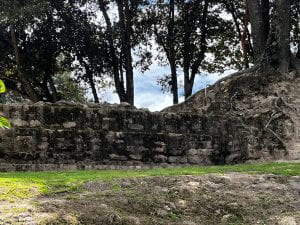
In front of Freedom Monument Sculpture Park Wall of NamesThese landmarks tell an unfiltered story of America, starting from pre-Columbian history through the African and African American experiences. They challenged us to reckon with the harsh truths of slavery, systemic racism, and the ongoing consequences of mass incarceration.

The Equal Justice Initiative (EJI), founded by Bryan Stevenson, operates the Legacy Museum and National Memorial for Peace and Justice. EJI has been at the forefront of documenting the intersection of racial injustice, from slavery to modern-day inequalities. Learning about their work and walking through these spaces was emotionally overwhelming yet essential.

At the Freedom Monument Sculpture Park, we were immediately faced with the brutality of colonialism. I found myself reflecting on the devastating impact European exploration and colonization had on both Indigenous and African peoples. Walking through this park, located by the serene Alabama River, was a stark contrast to the brutality it documented. I realized how disconnected my previous understanding of history had been, shaped largely by sanitized textbooks that glossed over the horrors of our past.

The Domestic Slave Trade and Unseen Realities

One of the most startling realizations during this trip was learning about the domestic slave trade that thrived in the United States after the transatlantic trade was abolished in 1808. I hadn’t fully grasped how the demand for enslaved labor

Sculpture

Depiction of bondage and suffering

persisted, especially in building the Southern railway systems. As a history teacher, I taught about slavery—but never truly taught about it. Now, I find myself asking: What is my obligation as an educator to teach authentic and real history?

Equally disturbing was the realization of how deeply Northern banks profited from the Southern economy, showing that slavery wasn’t just a Southern institution—it was an American one.

Emancipation and Its Complex Legacy

The common narrative we often hear is that the Emancipation Proclamation freed the enslaved. Yet, in reality, the Proclamation only declared freedom for those enslaved in Confederate states still rebelling against the Union in 1863. It took the 13th Amendment, ratified in December 1865, to legally end slavery in the United States. The legacy of that struggle, from Reconstruction to Jim Crow, has left a profound and lasting impact on our nation’s journey toward racial equality.

The visit to the National Memorial for Peace and Justice was perhaps the most sobering of all. Walking through the steel monuments bearing the names of over 4,400 lynching victims, I was confronted with a history I hadn’t fully absorbed before. The legacy of racial violence and terror extends far beyond what many of us learned in school, and the psychological damage it inflicted is immeasurable.

Close Up

Victims of lynching from one county

Personal Reflection and Call to Action

This journey wasn’t just an opportunity to learn—it was a moral reckoning. I’ve often said that students have only one chance to experience the grade they’re in, and it’s our duty to make their time with us meaningful. Now that I’ve confronted these truths, I have to ask myself: What will I do with this knowledge?

What will I do?
What will you do?
More importantly, what will **we** do, now that we know?

As educators and leaders, it’s our responsibility to empower our students, activate their voices, and offer them choice, agency, and engagement. If we’re to inspire, innovate, and engage, we must do so with a full understanding of where we’ve been as a nation and where we need to go.

I encourage all who read this to visit Montgomery, Alabama.

Our nation’s future depends on it.

Close up of monument quote

Quote on the monument of remembrance

Community Collaboration Marker - Communities are coming to terms with their history

Memorial to victim of lynching – part of community awareness project

Radio Interview – Leadership and Cultural Competency in Education: Dr. Sonya Whitaker and Dr. Michael Lubelfeld

In North Shore School District 112, we’re proud of our Journey of Continuous Improvement and Growth! In all areas, we remain “unfinished,” and we constantly seek to become better tomorrow than we are today!

In this blog post, I’m sharing a 49-minute audio from a recent July 3 on WVON with Rufus Williams interviewing me and Dr. Sonya Whitaker following a two-day Culturally Responsive Boot Camp professional development in Highland Park, attended by more than 90 staff members!

In addition to the audio file, I had Gen AI (generative artificial intelligence) summarize the audio into text for the blog post (below the audio you will see the Gen AI generated summary).

Comments are always welcome!

Learn more about our evolving journey at our website!

Summary of the audio interview from Generative AI

Continuing the Journey: Cultural Competency and Leadership in Education

#### Dr. Whitaker’s Approach

Dr. Whitaker reflected on the boot camp’s success, attributing it to the elimination of distractions and the focus on intentional, uninterrupted work. The boot camp raised consciousness among educators by addressing biases head-on. A key message that resonated with participants was, “If we have a brain, you have a bias.” This simple yet powerful statement helped level the playing field, allowing educators to acknowledge their biases and work through them collaboratively.

#### Culturally Responsive Teaching

One of the most significant outcomes of the boot camp was the movement toward culturally responsive teaching. Dr. Whitaker emphasized that understanding student culture is crucial for effective instruction and assessment. The training encouraged educators to reject negative societal narratives about the students they serve and to transform their teaching practices to be more inclusive and supportive.

## Embracing Equity and Cultural Competency in Education: Insights from Dr. Sonya Whitaker and Dr. Michael Lubelfeld

In a recent conversation on WVON, we had the pleasure of hosting two esteemed education leaders: Dr. Sonya Whitaker and Dr. Michael Lubelfeld. Dr. Whitaker, the Deputy Superintendent of Schools in a southern Chicago district, is also the National Policy Director for PUSH-Excel and an expert in cultural competency. Dr. Lubelfeld has served as a public school superintendent in Illinois since 2010 and currently leads the North Shore School District 112, which includes Highland Park and Highwood. Both guests shared their insights on the importance of cultural competency and equity in education, particularly in the context of recent events in Highland Park.

### Reflections on Tragedy and Community Resilience

#### Dr. Michael Lubelfeld’s Perspective

Dr. Lubelfeld began by reflecting on the tragic shooting that occurred during the 4th of July parade in Highland Park two years ago. He described the event as a shattering of the community’s innocence, resulting in widespread emotion, anger, fear, anxiety, and confusion. In response, the school system, alongside city and county leadership, focused on trauma-informed healing, counseling, and fostering a celebration of compassion and love. Recognizing that members of their student body and staff were victims, they committed to taking care of their youth and supporting the community through this difficult time.

#### Community Mobilization

Dr. Lubelfeld acknowledged the efforts of the Highland Park community to organize, mobilize, and address the issues that arose from the tragedy. This collective response showcased the community’s resilience and ability to come together in the face of adversity. Despite the unplanned timing of the interview, he emphasized the importance of recognizing the anniversary of the event and the ongoing healing process.
Understanding Highland Park’s Demographics and Challenges

### A Diverse Community

Dr. Lubelfeld provided an overview of Highland Park, highlighting its demographic diversity. He explained that the district serves a varied population, with 66% of students being white, 25% Hispanic, 4% Asian, and a mix of other races. Notably, 20% of the students come from families who qualify for free or reduced lunch, indicating that one in five children in the district lives in poverty.

#### The Importance of Equity

The district’s focus on equity stems from its history of three school districts merging in 1993. Since then, the issue of ensuring equal educational opportunities for all students, regardless of their background, has been a priority. Dr. Lubelfeld emphasized that equity means providing every child with the same educational opportunities, which has been a driving force in the district’s initiatives.

### Cultural Competency: A Crucial Element in Education

#### Dr. Sonya Whitaker’s Insights

Dr. Whitaker shared her extensive experience in leadership roles across various districts, serving diverse student populations. She highlighted a significant challenge in the education profession: the majority of teachers are white females, which often leads to a lack of exposure to diverse perspectives. This homogeneity can result in educators isolating themselves and missing opportunities to counter negative societal narratives about black and brown people.

#### Raising Cultural Competencies

To address this issue, Dr. Whitaker emphasized the importance of raising cultural competencies among educators. She noted that leaders like Dr. Lubelfeld and supportive boards of education play a crucial role in this process. By increasing cultural competencies, educators can reject negative narratives and ensure that all students, including those experiencing poverty, receive the best possible education.

Implementing Cultural Competency in North Shore School District 112

#### Realizing the Board’s Vision

Dr. Lubelfeld expressed confidence that the boot camp would lead to significant improvements in student engagement, satisfaction, and equity. He highlighted the concept of collective efficacy, where educators believe in their abilities and in their students’ potential. The goal is to create a more equitable and effective educational experience for every child in the district.
#### The Decision to Bring in Dr. Whitaker

Dr. Lubelfeld recounted the steps taken by the North Shore School District 112 to address cultural competency. After becoming superintendent in 2018, one of the top priorities identified by the board and community was equity. The district conducted an equity audit in 2020 and, recognizing the need for expert guidance, hired a national consultant to train the board.

#### Accelerating the Work

In early 2024, the district faced several incidents of anti-Black racism against students, which prompted urgent action. Dr. Lubelfeld took the unprecedented step of sending a letter to the entire community and met with concerned parents who demanded more substantial efforts. This led to an accelerated, intensive plan involving immediate staff and administrator training, community meetings, and the development of a comprehensive approach to cultural competency.

#### The Boot Camp

One of the key initiatives was a boot camp led by Dr. Whitaker, which provided training to approximately 90 staff members. This program aimed to equip educators with the skills and knowledge needed to handle cultural competencies, address incidents of racism, and foster an inclusive and supportive environment for all students.

### Personal Reflections and Authentic Leadership

Dr. Whitaker’s approach to the boot camp involved sharing personal experiences that many white educators might not have been aware of. She discussed issues like colorism and the impact of these experiences on students. By revealing her own vulnerabilities and challenges, she fostered a safe environment where educators could learn and grow together.

#### Safe and Supportive Environment

Dr. Whitaker felt safe and supported by Dr. Lubelfeld and the staff at North Shore School District 112. This sense of safety allowed her to share candidly and authentically, which in turn encouraged educators to reflect on their own biases and assumptions. The presence of leaders, including the board president, reinforced the importance of this work and the district’s commitment to continuous improvement.

### Cultural Competency and Pedagogy: Moving to the Classroom Level

#### Recognizing Individual Experiences

Dr. Whitaker explained that the first step in achieving high rigor and high achievement in instruction is for teachers and administrators to understand their own cultural identities. During the training, many educators realized that while they may share the same skin color, their experiences were vastly different. This understanding is crucial for translating cultural knowledge into effective teaching practices.

#### The Legacy of Brown v. Board of Education

Dr. Whitaker highlighted the 70th anniversary of the Brown v. Board of Education ruling, which declared segregation in public schools unconstitutional. Despite this landmark decision, schools remain as segregated as ever, making the need for cultural competency training even more critical. She stressed the importance of acknowledging and addressing institutional racism within the education system.

### Culturally Responsive Pedagogy: The Next Step

#### From Knowledge to Action

Dr. Whitaker emphasized that cultural competency is about understanding different cultures, while culturally responsive pedagogy involves applying that knowledge in the classroom. Educators must learn to recognize the unique cultural strengths of their students and use those strengths to enhance learning. This approach helps achieve the board’s vision of high rigor and high expectations for every student.

#### Building a National Model

Dr. Whitaker expressed confidence that the teachers and staff at North Shore School District 112 have the potential to serve as a national model in cultural competency. The feedback from the boot camp participants indicates a readiness to transform teaching and learning practices. The next focus is on how to implement these changes in the classroom, ensuring that educators can effectively support and engage all students.

### Conclusion: The Path Forward

As Dr. Whitaker and Dr. Lubelfeld continue their efforts to enhance cultural competency in education, their work serves as a model for other districts facing similar challenges. The boot camp experience at North Shore School District 112 demonstrates the power of intentional, focused efforts to create a more inclusive and equitable educational environment for all students.

Generative AI in NSSD112 – #112Leads

AI Generated Image after running my blog post through Chat GPT 4o

In our school district, since November 2023, and with a great deal of energy and purpose since the CoSN national conference in April 2024, we have been on a “vision quest” with Generative Artificial Intelligence (AI) tools. The potential revolutionary changes for teachers and students alike have inspired teams of administrators and teachers in the exploration, research, implementation, study, review, and implementation of GEN AI into our professional practice!

In this blog post, I’m sharing an AI produced (and human edited) executive summary of the District 112 Generative Artificial Intelligence (AI) Guidance Document and Plans shared with the Board of Education in May and June 2024.

What follows the executive summary is an information blog post further illustrating our “why” in terms of deep study of how GEN AI will support our vision to Inspire, Innovate, and Engage for each child – and each staff member – EVERY day! The blog post is entitled, Embracing the Future: Integrating Generative AI in North Shore School District 112

First, here is an Executive Summary:

North Shore School District 112 (Illinois) Generative Artificial Intelligence Guidance and PlansGenerative Artificial Intelligence Guidance and Plans

Introduction
North Shore School District 112 is at the forefront of integrating cutting-edge technologies to enhance educational outcomes and operational efficiencies. The “Generative Artificial Intelligence Background, Guidance, Plans” document outlines the strategic approach to piloting Magic School AI in our district, providing a roadmap for successful implementation.

Key Objectives
The primary objectives of integrating Generative AI in our district include:
1. **Personalized Learning**: Leveraging AI to tailor educational content and experiences to meet the unique needs of each student, thereby improving engagement and academic performance.
2. **Operational Efficiency**: Streamlining administrative tasks and processes to allow educators to focus more on instruction and less on bureaucracy.
3. **Data-Driven Decision Making**: Utilizing AI to analyze vast amounts of data, providing insights that drive informed decision-making and strategic planning.

Implementation Strategy
1. **Pilot Program**: The initial phase involves piloting Magic School AI in select classrooms to evaluate its effectiveness and gather feedback from educators and students.
2. **Professional Development**: Providing comprehensive training for teachers and staff to ensure they are equipped with the skills and knowledge to effectively use AI tools.
3. **Stakeholder Engagement**: Engaging with students, parents, and the community to build support and ensure transparency throughout the implementation process.

Benefits
1. **Enhanced Learning Experiences**: AI can create customized lesson plans, provide real-time feedback, and suggest resources tailored to each student’s learning style and pace.
2. **Increased Efficiency**: Automation of routine tasks such as grading and attendance tracking frees up valuable time for educators to focus on teaching and mentorship.
3. **Improved Outcomes**: Data-driven insights help identify areas for improvement, monitor student progress, and develop targeted interventions to support student success.


Challenges and Mitigation
1. **Data Privacy**: Ensuring the security and privacy of student data is paramount. Strict protocols and compliance with relevant regulations are in place.
2. **Equity and Access**: Addressing potential disparities in access to technology and ensuring all students benefit from AI integration.
3. **Change Management**: Managing the transition and ensuring all stakeholders are adequately supported through continuous communication and training.

Conclusion
The integration of Generative AI in North Shore School District 112 represents a significant step towards modernizing our educational approach. By embracing this technology, we aim to create a more personalized, efficient, and data-driven educational environment that prepares our students for the future. This pilot program is just the beginning of our journey towards transforming education through innovation.

With that background, I share the following blog post which further illustrates our “why” for deep exploration of GEN AI tools for our 500 staff members and nearly 4000 students in grades PK-8 in Highland Park & Highwood Illinois.

Embracing the Future:

Integrating Generative AI in North Shore School District 112

In our rapidly evolving educational landscape, the integration of cutting-edge technologies is no longer optional but essential. At North Shore School District 112, we are pioneering the use of Generative Artificial Intelligence (AI) to enhance both educational outcomes and operational efficiencies. As we pilot Magic School AI in our district, I want to share insights into how this innovative technology is transforming our schools. As of this writing, we have 252 users who have generated 3,817 uses of Magic School AI tools since May! – SINCE MAY 13, 2024 – There is interest here 

As a public school superintendent with a passion for educational leadership and teacher practices, my focus has always been on driving change and growth. Our recent work on “Generative Artificial Intelligence Background, Guidance, Plans” highlights the potential of AI to revolutionize our approach to teaching and learning.

WHY?? Enhancing Educational Outcomes

Generative AI offers a myriad of opportunities to personalize learning. By analyzing vast amounts of data, AI can tailor educational content to meet the unique needs of each student. This aligns perfectly with the strategies outlined in my upcoming book, *Leading for Tomorrow’s Schools Today*, where Nick Polyak and I emphasize the importance of individualized learning pathways. Truly creating opportunities for each child every day is more within our grasp, I strongly believe, with GEN AI tools than ever before. This is not just “ed tech” or a “cool suite of tools” – this is revolutionary change in our time.

For instance, Magic School AI can help create customized lesson plans, provide real-time feedback, and even suggest resources that align with each student’s learning style and pace. This not only improves student engagement but also empowers our educators to focus more on instruction and less on administrative tasks. With Magic Student (with great data privacy guardrails and nearly total control by teachers), students can get book lists, engage with historical figures, and much, much more. It’s not going to do their work for them – it’s going to help them do their work better!

GEN AI helps with Operational Efficiencies

Beyond the classroom, Generative AI can streamline various administrative processes. From automating routine tasks to improving data management, AI helps our district operate more efficiently. This aligns with the holistic approach I advocate in sessions like “Creating and Sustaining a Mentally Healthy Community,” where effective use of data and technology supports the overall well-being of our students, staff, and community. All that we do, and all that we have done, align with ways to support teachers, educational support staff, administrators, families, and at the core, students.

Building on Success

North Shore School District 112 has a history of success, and integrating AI is a natural next step. Over the past six years, our district has achieved remarkable milestones, thanks to the dedication of our staff and the support of our community. The adoption of AI technologies will build on these successes, ensuring we continue to lead in educational innovation. We cannot wait to see the results of this pilot (May – September) with professional development opportunities this summer and fall! Based on input we’ll determine our next steps!

We encourage educators to explore and experiment with GEN AI tools in their lives too (we encourage taking advantage of Khanmigo – free to every teacher/educator in the US – thank you Sal Khan!, ChatGPT – thanks to Open AI there are free versions with tremendous capabilities, Microsoft’s co-pilot, Google’s Gemini, Latimer offers a diverse AI tool, and much, much more. Our point, safety and legal concerns are addressed by Magic School AI – which is why we are in full pilot implementation mode. There are other really cool tools that we support reviewing, using, checking out, etc. as humanity itself is embracing the advent of this strange, new, powerful technology reality.

Collaboration and Continuous Learning

Our journey with AI is collaborative. By involving teachers, students, and the community in this pilot program, we ensure that the implementation is both effective and sustainable. This approach reflects the principles I discussed in my newest publication, *The Unfinished Teacher: Becoming the Next Version of Yourself*, which emphasizes the importance of continuous learning and adaptation.

Looking Ahead

As we move forward, I am excited about the possibilities that Generative AI brings to our district. This pilot program is just the beginning. By embracing these technologies, we are preparing our students for a future where digital literacy and technological proficiency are paramount.

I look forward to sharing more updates as we continue this journey. Together, we are shaping the future of education, one innovative step at a  time!!

An AI Generated Image relating to North Shore School District 112

Holiday Greetings – Multi-Lingual Video – Supt Message

“When there is teamwork and collaboration, wonderful things can be achieved.” – Mattie Stepanek, American Poet

December 2023

Dear North Shore School District 112 Parents/Guardians and members of the Community, 

Happy Holidays! As the calendar year ends and we prepare for a well-deserved winter break starting after school on Thursday, I’m sharing a note of gratitude, information, and a fun video animation. To create the festive and inclusive video, Enrique Castro, our coordinator for ESL and Bilingual Programs, recorded “happy holiday” greetings from our students representing each of the 30 home languages spoken by our families. Thank you to our families, students, Mr. Castro, and the EL teacher team!

As you may already know, in District 112, we take great pride in supporting diverse cultures, languages, and backgrounds. 


LINK TO VIDEO 

As we take time to reflect on our time in District 112, we are proud to acknowledge that we have accomplished a great deal this year.  We are optimistic that our future is going to be bright and exciting. The important work we do puts our children on the path to success. Some highlights of our successful work include the following:

  • Historic construction projects continue with support from the community
    • Completion of Phase 1 of the Long-Range Plan (Edgewood opened April 2023)
    • Indian Trail and Ravinia School Construction is underway and ongoing
  • Sixth-year of staff, student, and family culture/engagement data collection & growth
    • Even with some “survey fatigue,” we are getting great feedback on what we are doing well and what we need to work on – thank you!
      • Top rated item from the Family Survey, “Teachers treat me with respect” 4.64 out of 5.00
      • Top rated item from the Student Survey, “I have friends at school who care about me” 4.45 out of 5.00
  • Improvements in PK-8 Learning
    • Last year’s state assessments showed our students were in the 81st and 90th percentiles in English and math, respectively, compared to all students in IL
  • Increased mental health interventions
    • Wellness webinars with the Cook Center for Human Connection

We look forward to a fantastic year in 2024! 

With regards,

Mike

Michael Lubelfeld Ed.D.
Superintendent of Schools

Part 1 of 4 – Forty Years Since “A Nation at Risk” – Education Reflections

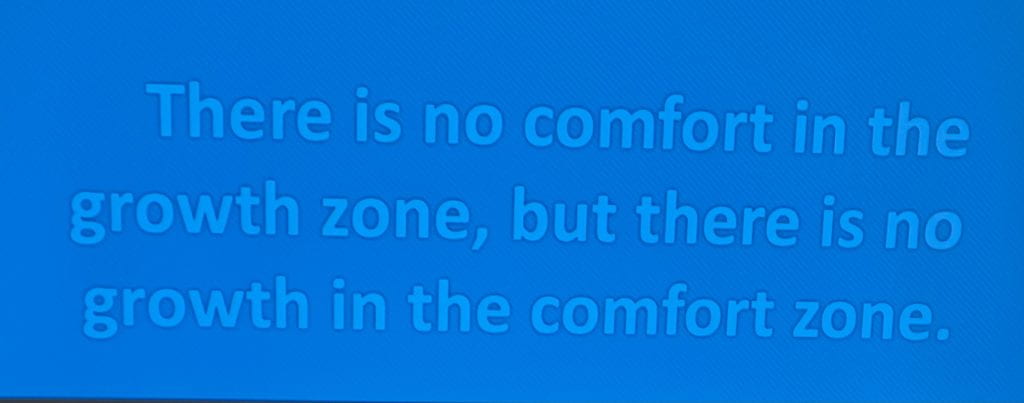
There is no comfort in the growth zone – but there is no growth in the comfort zone – this was a quote shared with us at the start of the National Superintendent Roundtable national convening in the summer 2023 conference in Los Angeles, California.

Nearly 40 of us convened to remember the education “reform” document and call to action called A Nation at Risk, and to contemplate the 40 years since – where we have been, where we are, and most important, where we are going!

With powerful presentations (some excerpted and summarized here in the blog and in subsequent posts) and with a visit to the President Ronald Reagan national presidential library & museum in Simi Valley (shared via images in the blog), the convening was awesome! Great dialogue, great, courageous conversations and questions and recollections, civil discourse with folks who have differing political views, and a whole lot more took place in our compact, concise, and short but powerful conference.

Often, people ask me, “What do I do as a superintendent” Part of the purpose of this blog is for me to illustrate just that. What “do” I do? 🙂 – A LOT … The role is diverse and rewarding, the opportunities to develop leaders are the most powerful and impacting legacy, and the power and honor to share and extend HOPE is a true gift.

In this blog post, I reflect on, share, and describe superintendent professional development. Leadership convening at a high level. History, politics, government, sociology, education, journalism, and more are covered in this experience and blog post.

40 years ago, A Nation at Risk was presented to the nation. It was a flawed report (as I will share), but it did raise PK-12 education to the forefront as a presidential issue – which can be a good thing. It started a four-decade pathway towards educational “reforms” and an obsession with standardized testing that we still grapple with today.

So …. What do I do?

I learn I gather with national and global experts, I engage in dialogue to make my thoughts known and clearer, and when challenged with new ideas, I may change my

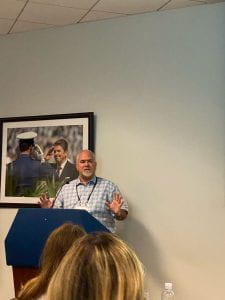
I am facilitating a discussion with one of our presenters

mind! I am a leader and a learner, and a lead learner. My attendance at and participation in professional development is part of what I do as a superintendent of schools. Each day I aim to be better, do better, and lead better for the thousands of students and staff, and community members I have the honor of serving.

40 Years Since a Nation at Risk … What have we learned … I will be sharing thoughts from the many pages of notes I took during our amazing and challenging presentations as well as during our incredible visit and guided tour at the President Ronald Reagan Presidential Library & Museum. As a former social studies and US

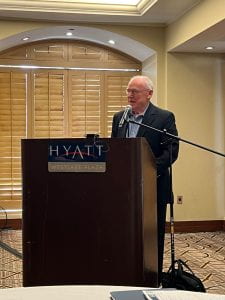
Me at the podium! The backdrop is the inauguration – pretty cool!!

History teacher, this was AMAZING. A whole bunch of peak moments were had during this short but powerful trip across the country!

The National Superintendent Roundtable (NSR) is a membership association of superintendents from around the USA. Currently, there are about 91 members nationwide. In partnership with its sister organization, the Schlecty Center, there are about 180 superintendents in total between the two organizations. Both are mission-driven to support leadership and growth.  We are all in favor of and stand by “Strong families, strong communities, with strong schools” as a mantra or “calling card.” We’re here to honor the 40th anniversary of A Nation at Risk and truly digest and dissect – what we have learned and where we are going.

James Jim Harvey – incredible speaker, scholar, writer, one of the authors of A Nation at Risk & Founder of the National Superintendent Roundtable

Our keynote presenter, Jim Harvey, founder of the NSR and one of the writers of A Nation at Risk was outstanding!! Jim reminded us all that public education is one of the major foundations of the United States society. Supporting American ideals and progress is our mission. Jim also reminded us of President Reagan’s inaugural address in 1980, where he stated that essentially, “…government is the problem.”. President Reagan ran on a platform that included eliminating the US Department of Education. His first Secretary was Terrell, Ted, and Bell.

Subsequent blog posts will detail more of the content and “What do we do now?”.

Reflections from Bottle School Trip – Guatemala 2023 July

Bottle School Project with Hug it Forward

Reflections from  Tecpan, Guatemala

July 2023
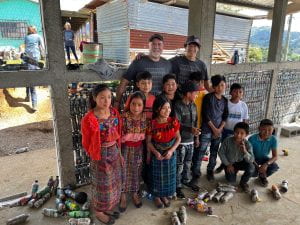
Wrapping up an incredibly meaningful experience with my son in Guatemala! We finished tying up the 10,000 bottles filled with inorganic trash in the three classrooms we helped complete in the elementary (K-6) school in Zaculeu, Tecpan, Guatemala! The 400 students in grades K-6 now have three more elementary classrooms for education. One day we or someone will build a middle school, grades 7-9, so that these kids can continue their education. Currently, about 15-20 students are able to continue to middle school from the community.
——
Think about that for a minute or two……. Trips like this, service like this, and experiences like this help to illustrate how education, economics, politics, geo-global politics, etc., all intersect to create or stifle opportunity. Trips like this give me context, perspective, hope, and love.
———
Thanks to Hug it Forward and Serve the World Today, my son and I got to join some amazing people from across the United States and from France and Guatemala to make change in our world – to do good with other good people – to build a school alongside people in a community who seek partnership, support partnership and work alongside in partnership! The bottle school project confronts many challenges, including trash/environment, community development/involvement, investment in often forgotten people, education – space, opportunity, function & hope, economic development, and migration policies (and more).
————-

From the Hug it Forward Website

From their materials:
“Hug it Forward works to support and empower communities in Guatemala to build Bottle Schools: schools built using plastic soda bottles stuffed with inorganic trash. Entire communities come together to make the dream of educational opportunity a reality by upcycling “waste” to build their own bottle school.
  • This school infrastructure project will be accomplished thanks to funds provided by Hug it Forward’s donors and with the collaboration of community members. The municipality and the PTA (parent-teacher organization in the community) work jointly with students’ families in order to provide all the manual labor required for the construction, as well as a three-classroom bottle school requires over 10,000 bottles—children in the community are responsible for collecting the majority of these and stuffing them with trash to make “eco-bricks.” This gives them pride and a true sense of ownership in the school.
  • The school is built in Zaculeu, located in the municipality of Tecpan, Guatemala, Chimaltenango. Zaculeu means “White Land.” People in Zaculeu grow their own corn, beans, coffee, and a lot of different kinds of vegetables and fruits, especially snow peas, corn, and beans. This project of which we are a part, will benefit 386+ students, 13 teaching staff members, and 600 families in the area.
  • The members of the community are indigenous Mayan people who speak Kaqchikel.
  • The signs are in their mother tongue, Spanish and English.
——————
We built walls out of bottles in three classrooms. We expanded the educational footprint in the community and we supported ecological awareness and recycling on a grand scale. We played with the children, we spoke with the community elders, we visited homes of the members of the community.

Before bottle walls are constructed

A bottle wall before it’s covered with plaster and used as insulation – construction in process

—————-
We immersed ourselves in Mayan culture, Guatemalan culture, we learned Guatemalan and Mayan history and politics and immigration perspectives first hand.

Park of the Cross, beautiful view of Agua Volcano (dormant)

——————-
We learned, we served, we experienced, we helped, we hugged, and we leave better people than when we arrived as we have new friends, new world views, and we now have a community with greater educational opportunities.
As I have stated, words and even pictures alone cannot fully illustrate the power and intensity of this trip and its set of experiences. I encourage you to consider attending a Hug it Forward service trip. Thanks for reading, as always, I welcome comments!
It is an honor to try to make the world a better place through service, family, spirit, and hands on learning. We leave Guatemala mentally, spiritually, emotional fulfilled. We brought good, we received good, and our little efforts will lead to generational change.
——
As we come home, we aim to extend the learning, feelings, doings, beings illustrated herein and live as best we can sharing good wherever we can.
As I prepare for another school year, I am recharged, refreshed, revised, and wholly energized to support and facilitate change. I am committed to supporting administrators so that they may create optimal conditions for teachers and staff, so that they may create the environment for “each child every day” where all means all and where, in North Shore School District 112, #112Leads, we inspire, engage and empower every day!

Audio Excerpts of National Presentation – Supt and Principals – Impact on learning in #112Leads

In this episode, learn how an initiative and partnership called DMBreakthrough Teams implemented last year at the District 112 Dual Language elementary schools positively impacted student growth & achievement!

Over spring break, I went to New York with Oak Terrace Principal Lilli Melamed and Wayne Thomas Associate Principal Colleen Goodrich. In addition to learning at the conference, we were invited to present the results from an initiative implemented last year at both dual language schools, DMGroup Breakthrough Teams.

Having the opportunity to share, and specifically, hearing from Lilli and Colleen about the impact of last year’s DMBreakthrough teams 10-week program on multi-lingual learners in grades K-5 at their respective schools is incredible and made me very proud of our work, our students, and the District. Our session was titled “Learn how North Shore School District 112 (IL) supported their multilingual learners and achieved a higher percentage of students meeting their MAP growth goals after the Breakthrough Results experience.”

Our work with DMGroup to implement their Breakthrough Teams programs at our Dual Language schools last year was driven by that commitment to continuous improvement in learning. We are committed to creating conditions for equitable access to educational opportunities for each child every day. We are committed to creating conditions for teacher support and excellence every day. We are on a journey and proud to be focused on results.

En este episodio, aprenda cómo una iniciativa y asociación llamada DMBreakthrough Teams implementada el año pasado en las escuelas primarias de lenguaje dual del Distrito 112 impactó positivamente el crecimiento y el rendimiento de los estudiantes.

Durante las vacaciones de primavera, fui a Nueva York con la directora de Oak Terrace, Lilli Melamed, y la directora asociada de Wayne Thomas, Colleen Goodrich. Además de aprender en la conferencia, fuimos invitados a presentar los resultados de una iniciativa implementada el año pasado en ambas escuelas bilingües, DMGroup Breakthrough Teams.

Tener la oportunidad de compartir, y específicamente, escuchar a Lilli y Colleen sobre el impacto del programa de 10 semanas de los equipos DMBreakthrough del año pasado en estudiantes multilingües en los grados K-5 en sus respectivas escuelas es increíble y me hizo sentir muy orgulloso de nuestro trabajo, nuestros estudiantes y el Distrito. Nuestra sesión se tituló “Aprenda cómo el Distrito Escolar 112 (IL) de North Shore apoyó a sus estudiantes multilingües y logró un mayor porcentaje de estudiantes que cumplieron con sus objetivos de crecimiento MAP después de la experiencia de Breakthrough Results”.

Nuestro trabajo con DMGroup para implementar sus programas Breakthrough Teams en nuestras escuelas de lenguaje dual el año pasado fue impulsado por ese compromiso con la mejora continua en el aprendizaje. Estamos comprometidos a crear condiciones para el acceso equitativo a las oportunidades educativas para cada niño todos los días. Estamos comprometidos a crear condiciones para el apoyo y la excelencia de los maestros todos los días. Estamos en un viaje y orgullosos de estar enfocados en los resultados.

What are DMGroup Breakthrough Teams Results in D112? #112Leads

In the 2021-2022 school year, we chose to implement a robust planning and results-oriented project at both K-5 dual language (Spanish/English) schools in the District, Oak Terrace and Red Oak. Our main work has always been to create conditions that support student growth, learning, and teacher collective efficacy. In this post, I’m sharing some images that show graphically how incredible the student growth, learning, and performance was in this 10 week initiative last year.
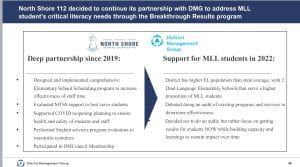
The results focused approach, led by a team from strategic partner DMGroup (from Boston, MA), helps teams of leaders, teachers, and educational support staff refine their sense of urgency and target professional efforts to impact student growth and learning. We worked with DM Group on a number of challenging projects over the past few years (reopening in COVID, Student Services/EL audit, MTSS planning and implementation).

Firstly, in District 112, our motto is Inspire, Innovate, Engage; and we firmly believe each child can learn and grow – every day. We stand firmly for equitable access to educational opportunities for each child every day. We take pride in the excellence of our teachers, administrators, support staff, parents, and Board.

 When we learn how to do better – we do better. When we make a mistake, we own it – explain it – and learn from it (and take efforts not to repeat it). After the devastating impacts of the COVID global pandemic (on society, learning, social connection, etc.) we reached out to experts in strategic leadership to see how we could improve and enhance our impact on learning to help our students emerge successfully.

Student success and district success are measured in multiple ways.  Pleasesee a previous blog post to get a sense of how I measure “success” (culture, engagement, service, assessment, etc.). Search Results for “Measure succes” – Mike Lubelfeld’s Blog

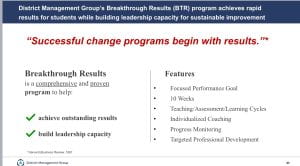
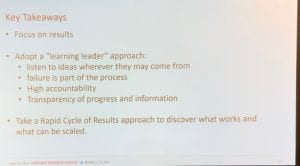
The point of working with the DMGroup on Breakthrough Teams comes from their motto: “Successful Change Programs Begin with Results”. The focus of the initiative is to focus on results – not barriers; not challenges; not the “why nots;” not the “yea buts;” but results.  Let’s make an impact.

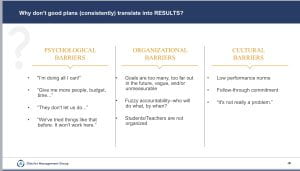
 They acknowledge psychological, organizational and cultural (org. Culture) barriers such as: “I’m doing all I can;” “It’s overwhelming;” “It’s not MY problem;” etc… .  And then share a team of strategic consultants to support the existing organizational structures and  help guide questions to and for student learning/growth and teacher learning/growth to work around, through and over those barriers to ultimately bring them down.

The cool part about working with the DMGroup on Breakthrough teams is that we had the opportunity to take existing structures (teacher team planning/group thinking time) student learning (using assessment tools), instructional coaching (District teacher leaders), administrative collaboration (co-designing and considering solutions) all to help us do our work better.
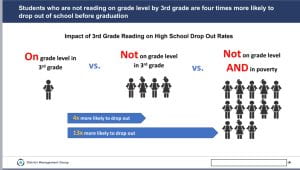
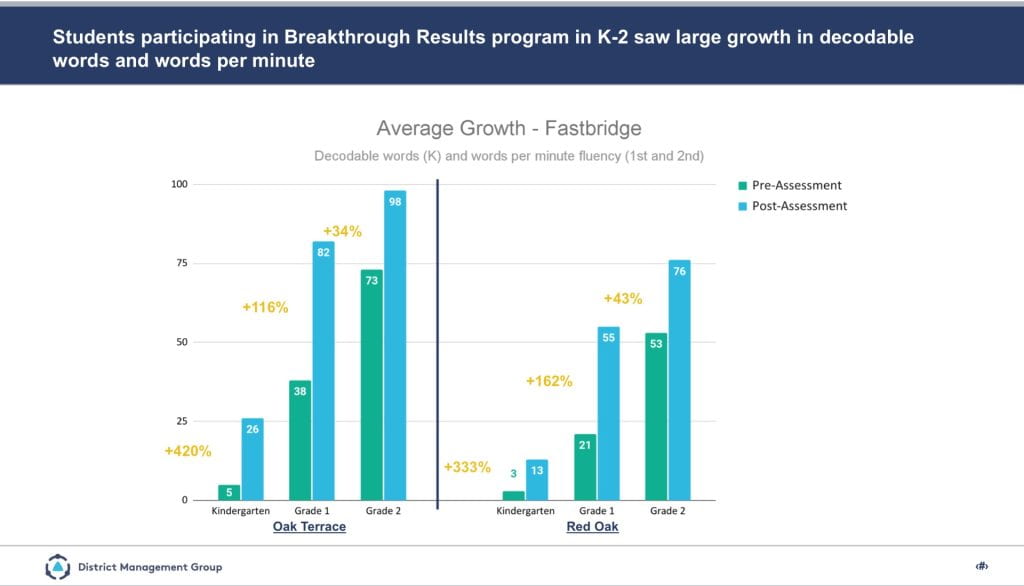
 

The DMGroup Breakthrough Teams program is focused on 10 weeks of intense, targeted, focused planning, ideation, succeeding, failing, learning, and re-ideating. The District, the School and the Teams work together to make the best decisions with the information at hand in real time on behalf of the learning. It’s an amazing professional experience – and, in D112, it yielded groundbreaking results for kids (and teachers) last year at Red Oak and Oak Terrace Schools.

We focused on our dual language schools with multi-lingual students in the District’s historic and long running magnet/choice instructional program. English Learners in the District have traditionally had challenging performance on standardized assessments, and the focus on their learning and needs, first, with this innovative program, proved that every child (regardless of “box to check”) can learn and grow in the proper conditions. We helped our teachers create the proper conditions and focus, and we co-created professional planning space to establish a results orientation.  And the results justify and support this effort.

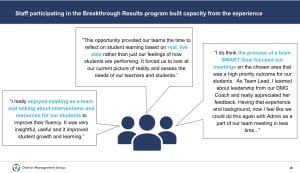
As mentioned, in this post, I’m sharing some slides that show graphically how incredible the student growth, learning, and performance was in this 10 week initiative last year.

On April 11, at an upcoming school Board meeting, I will share a detailed presentation with two of my colleagues, Lilli Melamed (Principal at Oak Terrace School) and Colleen Goodrich (Associate Principal at Red Oak School last year and Wayne Thomas school this year).

 In June, we’ll share this year’s results from this year’s Breakthrough Teams experience at the five K-5 schools with traditional (English only) education, in grades kindergarten, first grade, and second grade.

Thanks for reading the blog! Check out the podcast, our upcoming board meetings, and general District communications as we share our journey of leadership, experiences, learning, growth, and results oriented focus.

Reflections from National Superintendent Summit – #112Leads

DMGroup Superintendent Strategy Summit

Reflections

March 29-31, 2023

New York City, New York

As a longtime member of a professional organization for superintendents, District Management Council (DMGroup), I am attending a conference—the DMGroup Superintendent Strategy Summit.

This conference focuses on how to leverage best practice strategies in educational leadership and management – we’re in it for students, staff and communities. It is a convening of leadership. I am one of 45 superintendents at this conference. In addition, there are 43 district and building leaders, 25 sector leaders (state chairs, etc.), representing 18 US states in 50 school districts. Conference sessions focus on sharing new insights into student supports, accelerating learning, strength leadership and strategic budgeting. This includes reviewing a Harvard Business School case study focused on the Chilean Mine Crisis to enhance our abilities to impact the communities and schools we serve.

Over the last few years, I have reached out to DMGroup for strategic consulting advice. For example, our ability to remain open during COVID was supported by very clear, direct, strategic, and thoughtful collaborative processes and planning based on DMGroup insights. As you will recall, in September 2020, NSSD112 was able to open with half-day in-person schooling, which proved to be a lifeline and far better for our students and community than being fully remote at that time.

NSSD112 is committed to continuous learning and improvement. This includes regularly reviewing our programs, services and processes to ensure that we are utilizing best practices in teaching and learning, as well as operating efficiently and cost-effectively. Over the past few years, we have conducted audits of our cybersecurity protections, technology service, equity, student services and internal financial controls. We proudly accept the findings from these thorough reviews, “warts and all”, as we lead with purpose, passion, and professionalism.

Our work with DMGroup to implement their Breakthrough Teams programs at our Dual Language schools was driven by that commitment to continuous improvement in learning. We are committed to creating conditions for equitable access to educational opportunity for each child, every day. We are committed so creating conditions for teacher support and excellence every day as well. We are on a journey and we’re proud to be focused on results.

This year, I am proud to have two members of the NSSD112 leadership team joining me to present about the results of our DMGroup Breakthrough Teams Results implementation last year at the District’s two K-5 Dual Language (Spanish/English) schools—Oak Terrace Principal Lilli Melamed and Wayne Thomas Associate Principal, Colleen Goodrich. As you will recall, Ms. Goodrich was the associate principal last year at Red Oak School and, this year, she was named Illinois Assistant Principal of the Year! As a superintendent, one of the greatest job roles is the development and support of other leaders.

Hearing from Lilli and Colleen about the impact of last year’s DMBreakthrough teams 10-week program on multi-lingual learners in grades K-5 at their respective schools is incredible and made me very proud of our work, our students and the District. Their session was titled “Learn how North Shore School District 112 (IL) supported their multilingual learners and achieved a higher percentage of students meeting their MAP growth goals after the Breakthrough Results experience.”

In an upcoming blog post, I’ll share more details about those student achievement results, including data and infographics from our presentation and process details, as well as updates on this year’s DMBreakthrough Team experience in grades K, 1, and 2 in five of our District’s elementary schools.