Perspective and Context – #Engage109

“Happiness is not something ready-made. It comes from your actions.”
– Dalai Lama 

As we approach this holiday season and the end of 2016 many people are busy getting the “new year’s resolutions” … eat better, exercise more, spend more time in nature, etc… The end of year is a fine 2017time for reflection and contemplation.

Did we accomplish what we set out to accomplish in 2016? Did we do the best we could for ourselves, our families, our co-workers, our communities? Did we listen enough to opposing viewpoints? Did we stand up for what is right? Questions like those and so many more fill our minds and hearts as the work world slows down, if only for the week between Christmas and New Years Day.20140803-165030.jpg

Whatever we did in 2016 … it’s coming to a close.

2017 allows us new opportunities, new learning, new challenges, and new realities! As this year comes to a close, and as I write the final blog post of 2016, I realized that my blog, in effect since July 2013, has about 300 posts.

So in roughly three and a half years I’ve written 300 posts, responded to about 100 comments; there have been 50,000 page views with an average reader spending a minute and a half reading the posts. Google Analytics reports that there have been 23,458 users engaging in one form or another with the blog. 40% of the blog readers are regulars and 60% of the readers are categorized as new visitors. This is pretty cool – in the context of one person’s blog. Is this significant in terms of all bloggers? Is this significant in the blog world of superintendents? Depends on the context of review.

Readers of this blog hail from the United States, Australia, Canada, the United Kingdom, Russia, China, India, Brazil, Japan, and some 1100 sessions unidentified.

The title of this blog post Perspective and Context came to me after viewing the following video that gives perspective to how earth relates to the rest of the “universe”. The context is “space” and size:

Our universe, this blog, your identity – all form ‘parts of wholes’. Wherever we are in time and space, from wherever we hail, we are significant and meaningful. Ideally we always add value to our family, our community, our world. We, though, are but a small parts of a larger reality.

Regardless of our perspectives, our importance, our perspectivevalue, we must be mindful of context. We also must be mindful that each new year allows us to learn more, to grow more, to do a better job than perhaps we did last year.
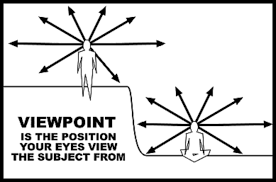
The new year allows us to “reset” to redo, to start whatever it is we’re doing with fresh eyes. Perspective and Context guide and define our thoughts and actions.

Earlier this year in the Deerfield Public Schools District 109, we spent time looking at two films: Beyond Measure and Most Likely to Succeed. Both were shown to hundreds of people in our community. Both challenged long held assumptions about public education and the forms of instruction best suited for our future. Both challenged our perspectives and caused a review of our context. I wrote blog posts about these films and the viewing experiences.

CScRi5IWsAAIIv8

As we approach 2017, I’m equally as energized with hope and vision about the realities we will create here in Deerfield, IL, and Riverwoods, IL (my small parts of the world) on behalf of students, staff, and community. We are on the forefront of causing change, perhaps forcing change in some contexts on behalf of the future we are creating – like it or not – we in education are future creators.

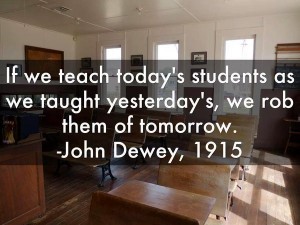
Are we supporting structures and systems that perpetuate the 1893 era thinking and needs and context? Or do we change our perspective and support structures designed for future context.

Happy New Year 2017

Best wishes to us all to consider our perspectives and to consider our contexts, and to realize the value and power of change for innovation, improvement, and the future.

future


ENGAGE, INSPIRE, EMPOWER

ENGAGE, INSPIRE, EMPOWER


How school superintendents explored the future of learning together

“When a gifted team dedicates itself to unselfish trust and combines instinct with boldness and effort, it is ready to climb.”
– Patanjali

google-a51985becaa6

This following is from a blog post I co-authored with Nick Polyak, and it is originally published on the Google EDU blog

How school superintendents explored the future of learning together

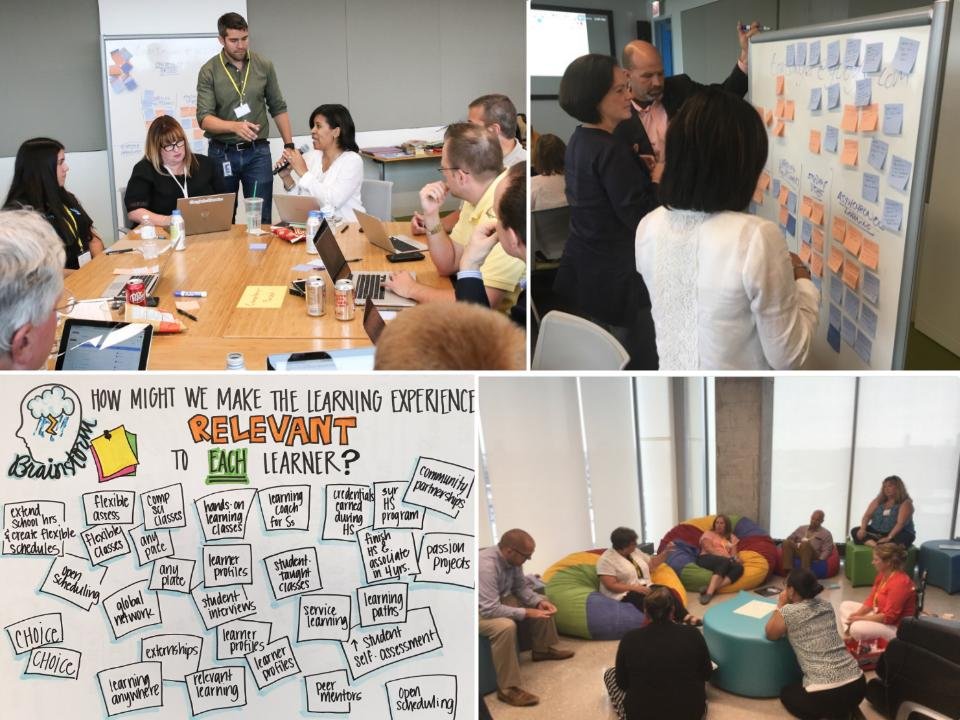
As education leaders, we’re expected to have all the answers. When we don’t, we solve problems by talking to our peers. The School Superintendents Association (AASA) invites administrators and educators to come together and talk about the challenges superintendents face, like how best to integrate technology in the classroom. This is a focus of the AASA’s digital consortium leadership cohort, which recently reached out to Google to see how they could further the AASA’s goal of leading new ways to use digital media in classrooms. We also reached out to Education Reimagined, an organization that advocates a paradigm shift to learner-centered education.

Google hosted a meeting of the AASA’s digital consortium with Education Reimagined at Google’s Chicago office in July 2016. Our discussion led us to realize we were thinking about the problem we wanted to solve in the wrong way. We had been making plans for how technology would transform our schools without considering one of the most important voices — our students! “The group’s discussion was a powerful reminder that we don’t make decisions in a vacuum,” said Mort Sherman, Associate Executive Director of the AASA. Putting student voices at the center of everything we do will help us design the future with them and for them. This will be a long journey for all of us, but one we are thrilled to embark on.

Putting student voices at the center of everything we do will help us design the future with them and for them.

Discovering student voices

At the Google office in Chicago, Education Reimagined Director Kelly Young kicked off the day by emphasizing the need to put students at the center. She advocated for a student-centered approach, where learning revolves around the needs of individual students instead of traditional classroom structures. She also encouraged us to bring students to the event to make sure that student input informed all of our discussions.

Google then worked with us to leverage their innovation methodology, informally known as “10x thinking” or “moonshot thinking” to help solve the challenges we were facing. It’s a version of “human-centered design thinking” that helps participants develop solutions while keeping the end-user at the center of the process.

GEDU_AASA.jpg
Superintendents used a design thinking process to explore learner-centered education
GEDU_AASA_students1.jpg
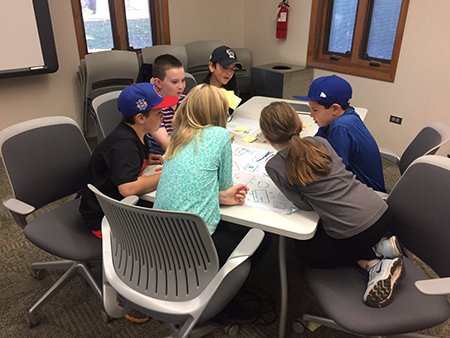
In the STAT program at Deerfield Public School District 109, students facilitate a technology review committee meeting.

As we began, it occurred to us all that students are our users, and our users weren’t part of our conversation as much as they should be. Without their input, we wouldn’t be poised for success, because we weren’t empathizing with their daily experience. By going through the 10x process with the students present, we gave them a voice in a way we rarely do. As the realization of user-centric education sunk in, we were excited to share our takeaways with our schools.

After meeting in Chicago, we returned to our districts to put this learner-centric approach into action. Leyden High School District 212, for example, created two student advisory board member posts, giving students the opportunity to weigh in on meaningful decisions. Another, Deerfield Public School District 109, set up the STAT program (Student Technology Advisory Team), in which students provide their input on how technology in the classroom impacts them and what tools, devices, or practices are relevant and effective from their perspective. These are just two examples of the learner-centric transformation happening across the country.

Cementing our progress

More recently the AASA’s digital consortium re-convened in California to discuss, among other things, how we could turn this “aha” moment into action. A huge barrier to action is getting buy-in from teachers and parents, most of whom grew up in a classroom-centric education system.

Consider this: each of us spends over 16,000 hours in the classroom — that’s a lot of experience to work against. So together, we’re working to develop ways for schools to pilot learner-centric education without abruptly abandoning the classroom model. Google’s approach to innovation had us work through six questions in groups. We asked questions such as “If I look back in 12 months, how will I know I succeeded?” We ended the session with answers to some of the questions we had posed, bearing in mind our work isn’t finished.

We’re still working to implement learner-centered education in schools. And it’s not easy. When we meet next spring, our superintendents will report on progress made in individual schools and districts.

It took combining Google’s approach to problem solving, the philosophy from Education Reimagined and the amazing network of superintendents brought together by the AASA to help us think differently about the role of technology in learning. Now that we’ve identified the paradigm shift that needs to happen, we’re excited to share our moment of realization with districts, schools, and classrooms across the country.

GEDU_AASA_students2.jpg
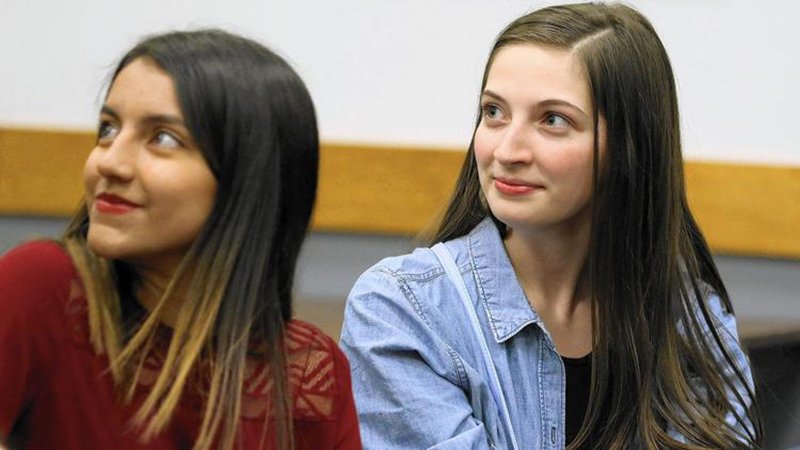
Vanessa Gallegos, left, of East Leyden and Noelle Lowther of West Leyden were introduced as student representatives for the school board during a meeting on May 12 at East Leyden High School.

The Unlearning Leader – Book Coming out in March 2017 – #suptchat

“I always wanted to be honest with myself and to those who had faith in me.”
– Rafael Nadal 


Have you ever had to “unlearn” something? Do you think Yield Signs are still yellow (as you may have learned), or do you know that they are red?

yieldsignyello

What about the planets? Do you still remember the mnemonic device “My Very Elegant Mother Just Sat Upon Nine Porcupines (Mercury, Venus, Earth, Mars, Jupiter, Saturn, Neptune, Pluto)”? Or do you know that Pluto is no longer a planet (due to scientific discoveries between 1992-2000).

Have you ever had to unlearn a concept like leadership or professional learning? Well, Nick Polyak and I have a book coming out in March 2017 with the following title: The Unlearning Leader: Leading for Tomorrow’s Schools Today, with the following chapter titles:

Chapter 1: Unlearning Connection
Chapter 2: Unlearning Planning and the Change Process
Chapter 3: Unlearning “That’s the Way We Have Always Done it”
Chapter 4: Unlearning Fear of Social Media
Chapter 5: Unlearning Professional Development
Chapter 6: Unlearning Leadership

In our book (available for pre-order now and in print in March 2017) we bring the concept of Unlearning to our leadership and influence in education. As part of our writing and discovery, we were recently interviewed by leadership expert Doug Eadie. With permission, I’m reprinting Doug’s blogpost and sharing his podcast where we are interviewed about the upcoming book. As always comments are welcomed and encouraged!


Reprinted with permission from the Board Savvy Superintendent Blog

Board Savvy Superintendent

Superintendents Michael Lubelfeld and Nicholas Polyak Talk About “The Unlearning Leader”

November 30, 2016

In today’s always changing environment – technologically, culturally, demographically, etc. – an organization’s capacity to innovate and change is the key to long-term success – to thriving and sometimes even surviving. Not systematically innovating and changing are a sure-fire path to failure.  So leading innovation and change is one of the highest priority – and one of the most challenging – functions of nonprofit and public chief executives, including superintendents.  Wearing their “Innovator-in-Chief” hat, superintendents must not only put in place and lead board members and staff through well-designed process for generating innovation initiatives, they’ve also got to play the leading role in overcoming the inevitable and very understandable human resistance to changing in important ways.

In my work with nonprofit and public organizations over the years, I’ve found that people’s resistance to change – even of the most sensible and well-conceived innovation initiatives – can be quite ferocious, principally because of that old demon fear: fear of failing, of being embarrassed, of losing status or ego satisfaction.  And this fear can be an especially insidious enemy of change when a person isn’t consciously aware of it.  I recently witnessed a classic case of unconscious fear at work.  I was facilitating a superintendent’s cabinet work session at which we were batting around the idea of transforming school board members into major league ambassadors of the district, who would be “booked” to speak on behalf of the district in key forums in the community, such as the county commission.  An associate superintendent – a thirty-year veteran who handled the district public relations portfolio – began to raise a number of questions about a variety of things that might go wrong if board members were sent out as district ambassadors, such as a board member veering off topic during a presentation, or getting facts wrong, or expressing personal opinions at odds with other board members, or……..on and on and on.  After sitting through this monologue for fifteen minutes I realized that I was once again hearing from a self-proclaimed devil’s advocate who, although no doubt well-meaning, was engaged in what I call “killing change with a thousand sensible questions.”  I have absolutely no doubt that she was fearful of losing control and status, albeit unconsciously.

In light of the tremendous importance of systematic innovation in the K-12 sector, Mike Lubelfeld and Nick Polyak’s forthcoming book, The Unlearning Leader: Leading for Tomorrow’s Schools Today (due out from Roman and Littlefield in spring 2017) is a welcome addition to the K-12 leadership literature.  The unifying theme of their book is that in order for significant innovation to take place in a district, board members, executives, and staff must engage in unlearning traditional assumptions and practices in all functional areas, clearing the way for essential new learning to take place.  Looking over Mike and Nick’s manuscript, I was pleased to see that they pay close attention to a subject that this blog has addressed in recent articles:  the innovation planning process.  Observing that traditional five-year strategic planning is a largely ineffective district tool in these changing times, Mike and Nick go on to discuss how plans can be turned into action, the key role of mission and vision as drivers of change, and the human resource dimension of implementing planned change.


The podcast that Mike and Nick have recorded for www.boardsavvysuperintendent.comprovides a great introduction to a powerful new book that you’ll want to add to your leadership library.


suptchatnote

Social Emotional Focus – #ENGAGE109 – Botvin Life Skills

“If I were to wish for anything, I should not wish for wealth and power, but for the passionate sense of potential, for the eye which, every young and aredent, sees the possible.  Pleasure disappoints; possibility never.”
– Soren Kierkegaard, Danish philosopher

In the Deerfield Public Schools, District 109, our aim is to educate the whole child. This year two of our schools, South Park (Safe Whole Child School) and Kipling (Engaged Whole Child School) were recognized for excellence in educating the whole child from the Illinois Association for Supervision & Curriculum Development (IASCD). Our view of the whole child is demonstrated in our measurement of multiple metrics (including but not limited to the list below):

  • Engagement of students
  • Academic performance of students
  • Organizational culture of staff
  • Climate perceptions from stakeholders
  • Impact of Technology and Innovative Instruction from parents, students, and staff

roi

Current efforts on mental health, drug abuse resistance, addiction, decision making, life skills, prevention, safety, anti-bullying, etc. are in place using evidence based programming, including our recent implementation of the Botvin Life Skills Program.


This year we are implementing parent training/education starting after the first of the year; our mission Engage, Inspire, Empower focuses on students, staff, parctadents, and the entire community. Our efforts are not in isolation, we are in partnership with a local Drug Free Community Grant coalition, Community the Anti Drug. CTAD is leading and coordinating the efforts of our villages/cities, school districts, police departments, clergy, media, treatment providers, students, teachers, and more. Through this partnership as well as the partnership with the Jordan Michael Filler Foundation, we are able to provide mental health evidence based, proven instruction to our students across the communities the coalition represents.


This week the Wall Street Journal ran two articles about our efforts

(sharing below):

Schools Step Up Efforts to Fight Opioid Abuse

Measures include enlisting pharmacists, counseling and prevention programs

Many U.S. schools are launching more aggressive campaigns to prevent opioid abuse among students as evidence mounts of a growing problem. Gilbert Botvin, developer of the Botvin LifeSkills program, which teaches children the proper way to use prescription drugs, joins Lunch Break. Photo: CVS Health

Many U.S. schools are ramping up campaigns to prevent opioid abuse among students as evidence mounts of a growing problem.

Some are inviting pharmacists to schools to convey the dangers of prescription pills. Others are offering emergency counseling via text message. In some regions, schools are teaching a substance-abuse-prevention program developed at Cornell University to students as young as fourth grade.

The widening crisis of addiction to heroin, prescription painkillers and other opioids “has been very scary, very serious,” says Michael Lubelfeld, superintendent of an elementary- and middle-school district in Deerfield, Ill. “We want to do everything as a community to start addressing it at age 10, 11, 12, so when they are 23 they aren’t going to be addicted.”

 The rate of U.S. children hospitalized for prescription-opioid overdoses more than doubled over a 16-year period ending in 2012, according to a study in JAMA Pediatrics last month. Particularly at risk were 1- to 4-year-olds, who most likely swallowed their parents’ medications, and older teens who abused the drugs or attempted suicide, the researchers said.

Hospitalizations for heroin overdoses among teens 15 to 19 nearly tripled over the same period, from 0.96 to 2.51 per 100,000 teens, the study showed.

The roots of the crisis lie in widespread prescribing of painkillers that created a generation of opioid addicts among adults and children, public health experts say.

Because opioid addiction often begins with misuse of prescription painkillers, CVS HealthCorp. last year started sending pharmacists to schools to warn about the dangers. The pharmacists gave nearly 3,000 presentations in 40 states in the 2015-16 school year.

Kayla Mays, a CVS pharmacist who has given presentations in Atlanta-area schools, says she rattles off a list of generic and brand-name prescription painkillers—Lortab, Norco, OxyContin, fentanyl and others—and asks kids to raise their hands if they have heard of them. “There is a lot of giggling around names like Percocet or OxyContin,” she says, “because those drugs are mentioned in a lot of pop songs.”

But the mood turns serious when Ms. Mays plays a video describing the downward spiral of four teens who got hooked on prescription medication, she says. Drug overdoses killed one of the students and paralyzed another; two others made it into rehab. “The video really demonstrates this can happen to anybody—good kids, athletes, anybody,” Ms. Mays says.

CVS this summer paid $3.5 million to settle federal allegations that 50 of its pharmacies in Massachusetts and New Hampshire filled forged prescriptions for painkillers and other controlled substances. The company says it has “implemented enhanced policies” to help its pharmacists “determine whether a controlled substance prescription was issued for a legitimate medical purpose.”

In the suburbs north of Chicago and east of Los Angeles, some schools are trying a new texting tool that connects kids to a counselor within minutes. Kids send their questions anonymously—the system hides their phone numbers—and can use the service to seek help for themselves or a friend, says Andy Duran, executive director of Linking Efforts Against Drugs, or LEAD, a nonprofit in Lake Forest, Ill., that developed the tool, called Text a Tip.

Licensed therapists are on-call round the clock to respond. “We have had kids text at a party and say, ‘There are kids using around me and I don’t know what to do.’ So we respond and say, ‘Can you distract yourself, can you leave, can you call a friend or adult to pick you up?’” says Dana Slowinski, who oversees the therapist team. “Because what we find is, in the moment kids are not thinking through their options.”

More than 100 school districts in Illinois and California are using Text a Tip. To cover the program’s costs, LEAD charges each district about $7,500 a year for the service, plus a per-student fee of about 49 cents.

We want to do everything as a community to start addressing it at age 10, 11, 12, so when they are 23 they aren’t going to be addicted.

—Michael Lubelfeld, superintendent of an elementary- and middle-school district in Deerfield, Ill.

The Jordan Michael Filler Foundation, established by the family of a young man who died of a heroin overdose in 2014, helped finance the cost of the texting service for eight schools in Highland Park and Deerfield, Ill. The foundation also helped fund a substance-abuse-prevention program, called Botvin LifeSkills Training, in the schools.

Botvin LifeSkills was developed by Gilbert Botvin, a professor emeritus at Weill Cornell Medical College in New York. Conducted in as many as 15 sessions over several weeks, the program teaches kids the traits they need to resist pressure to abuse substances, including self-esteem and strong problem-solving and decision-making skills.

One study in middle-school children in Iowa and Pennsylvania found that use of the Botvin program “significantly reduced” the chances of students taking prescription opioids for nonmedical purposes by grade 12, compared with a control group that didn’t receive the training, according to results published in 2014 in the journal Preventive Medicine.

Julie Filler, the mother of the young man who died, said it took a while to convince some of the schools to accept the help. “The communities don’t want to talk about it because they want people to buy houses here,” she says of drug addiction.

Write to Jeanne Whalen at jeanne.whalen@wsj.com

2nd article:Putting Addiction-Prevention Program Into Action

School relies on role-playing, class discussion to help students make good decisions

Gilbert Botvin, a professor emeritus at Weill Cornell Medical College in New York, developed the Botvin LifeSkills Training substance-abuse-prevention program.
Gilbert Botvin, a professor emeritus at Weill Cornell Medical College in New York, developed the Botvin LifeSkills Training substance-abuse-prevention program. PHOTO: WEILL CORNELL MEDICINE

At South Park Elementary School in Deerfield, Ill., teaching kids to resist drugs, alcohol and cigarettes involves a lot of role-playing and class discussion.

The school, like others in District 109, uses Botvin LifeSkills Training, a program designed to help kids resist peer pressure and make good decisions.

In a recent lesson on assertiveness, fifth-grade teacher Faith Keidan says she first defined the difference between passive, aggressive and assertive responses, and then asked students to role-play them. The scenario: responding to a sibling who borrowed a videogame without asking.

Then she explained why being assertive is a good thing: because it helps people know what to say to get out of bad situations.

In another lesson on resisting cigarettes and marijuana, the kids discussed the economic history of tobacco and how it gained acceptance by being a big part of the economy. She also asked students to suggest five laws that would decrease tobacco use.

Joanna Klopfer, assistant director for student services in the district, says it tested the Botvin program in its fifth-grade classes before extending it to fourth and sixth grades, with plans for seventh and eighth grade down the road.

Write to Jeanne Whalen at jeanne.whalen@wsj.com

5 Minutes in 5th Grade – Podcast of Student Voice – #Engage109

“Without continual growth and progress, such words as improvement, achievement, and success have no meaning.”
– Benjamin Franklin

Many years ago when I taught 8th grade students U.S. history and reading at Blackhawk Middle School in Bensenville, Illinois, the team of teachers with whom I worked grappled with the home/school communication conundrum. We did not have ready access to email or blackhawkmiddleschoolwebsites back then, and we did not always have the most compelling “packets” and paper reminders going home.

So we set up a weekly communication for the parents called “Behind the Nothing”. This was a letter which was a letter written by each student each week for their parents to see and learn what the students learned that week.

You see for most of our students, back then, when their parents would ask, “What did you learn today at school?”, the student would almost always reply, “nothing”. So we decided to create a communication from the student voice and from the student perspectives as a new way to inform their parents what they were learning! Well . . . a lot has happened in education, communication, and technology since 1993 when I first started teaching! Of course students were learning then and they are learning now!

In today’s blog post I’m sharing 5 minutes in 5th grade, a five minute podcast withwhatdidyoulearn students telling the listener what they learned at a recent outdoor education experience. Today’s teacher is equipped with far more tools for communication than the teacher of 1993. Using the application AudioBoom, I recorded the student’s voices on my iPhone. Click the link below to spend 5 minutes in 5th grade!

Special thank you to Dr. Dave Sherman, Ms. Megan Chin, Ms. Keidan, Ms. Kramer, and Mr. Templer and their awesome South Park School 5th grade students!

ENGAGE, INSPIRE, EMPOWER

ENGAGE, INSPIRE, EMPOWER

Reflections from a Book Study – Khan Academy – #Engage109

“We cannot change the cards we are dealt, just how we play the hand.”
– Randy Pausch


bookstudyThere are many ways to lead professional learning for staff. Often there is a meeting of the whole staff, a team meeting, a department meeting, an in-service, a conference, online learning, etc. From time to time in our district we engage in book study experiences to learn together, share common experiences, engage and interact with one another, and participate on their own time.

Recently at Kipling School the principal Anthony McConnell invited me and some other central office administrators to participate in a book study with his staff for Sal Khan’s oneworldschoolhousebook The One World Schoolhouse. This is a professional learning activity in which members of team can engage at any time and at any place is an activity that inherently differentiated. I was happy to be invited and I was happy to contribute.

Every few days another staff member writes a post from one part of the book and several other staff members write comments about the postings. It’s really powerful learning to see, read, think about, and begin to understand the multiple perspectives emerging from the shared experiences of reading this book from an EduRock Star! Khan Academy programming is in use in our schools, in other schools where I have served, and quite frankly, all over the world. Khan’s experiences, origins, purposes, and mission motivates educators and educational leaders at all levels in all settings.

This is a link to the blog with the current post listed first; and then all other posts follow. My section was on an early part of the book: No Frills Videos, Focusing on the Content – cornerstones of Khan’s experiences, background, and methods. I’m sharing excerpts of this post below:

Khan started out tutoring his cousin and using basic technology for the purpose of assisting his efforts at tutoring. He did not set out to become a phenomenon, though he did! Khan aimed to bring back fun to learning. The chalkboard (represented virtually by the black background on which he draws) symbolizes perhaps a simpler time when school was fun. My hope is that school is fun everywhere and every day! My hope is that Khan’s influence in bringing fun and joy back to school permeates the walls of our district and districts all over.

Khan’s videos started out as “no-frills” in part because he was simply tutoring a few people and in part because he is a self-Khanphotodescribed austere person (page 27). What flows throughout the book (and not to get too far ahead of my part here …) is a research and evidence base. Khan’s work and the successes he and the Academy enjoy are actually grounded in research, evidence, study, and affirmation. Though he appears to start out whimsically, he shares small nuggets of evidence and research as the base for his decisions. For example, in this chapter, he spends a few pages identifying why the length of his videos rests around 10 minutes.
I encourage readers to check out the public book study (everything on the internet is public of course) as well as consider my endorsement of Khan’s book as a worthy read!

For more on my experiences with the Khan Academy, and our district’s future focus and commitment to innovation and change, please see earlier posts from this blog:

Online Learning Tool-The Khan Academy from 9/3/2013,

More on the Future of Education – What is School For? from 11/2/2015

The overall purposes of all of these blogs, study groups, books, videos, opportunities and learning is to improve educational opportunities for children and teaching opportunities for staff!

ENGAGE, INSPIRE, EMPOWER

ENGAGE, INSPIRE, EMPOWER

Let’s continue to push the envelopes of change and create new and better realities where we unlock restrictions on learning and we unleash the power of synergy in our classrooms, board rooms, and communities!


Through learning opportunities like this blogging book study, we get to learn with and from one another while gaining new perspectives on current trends. It’s a great experience and I applaud the leadership and staff at the school for letting me tag along on their journey!

Alignment-After the first week of the new year #Engage109

Continuous improvement is better than delayed perfection.”
– Mark Twain

Today while I was driving my car I noticed it felt different, it was not the normal smooth ride I typically enjoy. My wife CSWju_OUsAAJMuethought the wheels sounded different, sort of a thumping sound as opposed to the relative quiet of a regular ride. As I reflected on the quality of my driving and the quality of the ride over the past few days I noticed it felt odd, a little off, I still was able to drive from point a to point b, but something was off. Something was out of alignment.

I then began to reflect on the first week of school that we just completed in our district and I wondered how the week felt for everyone … Did it feel good, smooth, and normal, or did it feel strange, and possibly out of alignment? In our district just about 3000 students started a new school year with a new teacher, new classmates, new curricula, new expectations, and new opportunities for joy and innovation. Are we aligned with what the students need? Are we aligned with what the teacher need?

Did the students and teachers get off to a smooth start? Did they have alignment of expectations, of hopes and dreams, of feelings and results? Or was the first week bumpy, with odd sounds and perhaps an uncomfortable feel? With respect to my car, the right rear tire was flat … That I guess is why the orange tire light stayed on even though I filled the air to journeythe manufacturer’s specifications. Even though I did what I always do, drive … And I responded to the warning light (I thought) by filling the air … I still had a warning light, initially I did not change my approaches, and it turns out my wife was right (of course all husbands know that their wife is always right – but that’s for another blog).

My wife asked “did you check the tires before you left today?” I said, “no, I filled the tires the other day – clearly the yellow warning light is wrong.” You see, my approaches were the same – I filled the air, I ignored the light, and I kept driving. Clearly I was not aligned with what my car needed … A new tire and a wheel alignment, and a balance. I actually needed two new tires for balance and alignment.

So how does this relate to alignment in the first week of school? Well perhaps some of us have returned to work mis-aligned, some of us are not noticing that the signals are right but our responses might not be. Some of us are repeating the ways we have always done it and not getting new results. Perhaps the signs are right and our reactions are not. Perhaps doing what we have always done does not yield the proper results anymore. Perhaps we need to innovate and change our approaches. I want to enjoy a good, safe, meaningful ride in my car. In order to do this I need to listen to Continue reading

Information from Illinois Vision 20/20 – links and video on finance

“One’s philosophy is not best expressed in words; it is expressed in the choices one makes…and the choices we make are ultimately our responsibility.”
– Eleanor Roosevelt

vision2020

I have written about the Illinois Vision 20/20 initiative over the past few years in an effort to share policy information and proposed legislation that will benefit Illinois public schools and Illinois public school children. What I like about the initiative is that it is “for” as opposed to “against”, and the issues are relevant, timely and meaningful. The vision involves support for highly effective educators, 21st Century learning, shared accountability, and equitable and adequate funding.

For links to previous blog posts, click: A little bit more about Illinois Vision 20/20, and Taking a Stand for Public Education-Illinois Vision 20/20

A hot topic is school finance and the Illinois Vision 20/20 team has produced a video about the funding model supported and proposed by the coalition.

It will take a great deal of action and effort to amend the Illinois School Funding Model. It’s essential for all of us to learn, listen, study, and get involved as appropriate to improve structures and systems in place.

The Vision 20/20 initiatives include free curriculum resources via iTunes U, click this link to visit the 21st Century Learning Center

images

Welcome Back Institute Day – 2016 – #Engage109

“Open your arms to change, but don’t let go of your values.”
– Dalai Lama

ENGAGE, INSPIRE, EMPOWER

ENGAGE, INSPIRE, EMPOWER

Today, August 18, 2016, was the first official day back for DPS109 staff. As we have done for the past four years we gathered as a whole school family at Alan B. Shepard Middle School for the opening institute day. This year our themes are Joy and Innovation.

Earlier in the week I sent out a note to the entire community, I’m sharing excerpts of that letter below:

Dear District 109 Parents, Staff and Community Members,

On Thursday, we welcome our teachers and staff back to work with a full day inservice that includes a keynote speech by Rich Sheridan, author of Joy, Inc., as well as collaborative learning time to prepare all of us to welcome our students back to school on Monday, August 22. …Nearly 50 staff members attended a three-day intensive workshop led by a faculty member of the Buck Institute to bring project-based learning to our classrooms.  In addition, teachers and staff set up classrooms, collaborated on curriculum, researched innovative methods, and mentored new teachers and staff, whom we welcomed to the District 109 family last week.

What’s New?

Click Here for a 360 degree view of a new library learning space

Click Here for a 360 degree view of a new art space

Click on image for a 360 degree view of labs in our district
…Every elementary school has reconstructed their library media space, adding PTO funded SmartLabs fulfilling a long held plan to incorporate more STEAM into the elementary schools. Click for live video of the construction progress – we’re getting close!

Both middle schools also have innovative and redesigned learning spaces; the art and music spaces have been completely transformed into areas that will inspire creativity, innovation, and future focused arts instruction.

Last year, the Department of Teaching & Learning awarded our second phase of innovation grants. Ten teachers across every building in the District won grants to have a classroom set of iPads, and two other teachers earned special grants for their exceptionally innovative projects. In addition, 100 teachers received individual iPads to begin exploring the potential of tablet technology to our already robust 1:1 transformative learning environments…


As part of my welcome remarks, I shared the following slide deck (I’ll also be sharing notes for clarity). The notes reflect my thinking and preparation and they are very close to the commentary I delivered in person at the assembly. As always, your comments are encouraged and welcomed!

Notes for slide 3: Our mission, our motto, our statements as to WHY we exist  –  Engage, Inspire, Empower our students, each other, and our community. You continue to do an amazing job of engaging, inspiring, empowering each and every day. I remain quite proud to serve you as the superintendent of schools!

Notes for slide 4: How do we engage, inspire and empower? One major way is through innovation. We innovate to increase student learning … We facilitate learning for our students as well as one another. Innovate means trying new and better ways of doing things. We started with Innovation grants three years ago and we keep on demonstrating new and better ways to inspire learning and to support a culture of excellence.

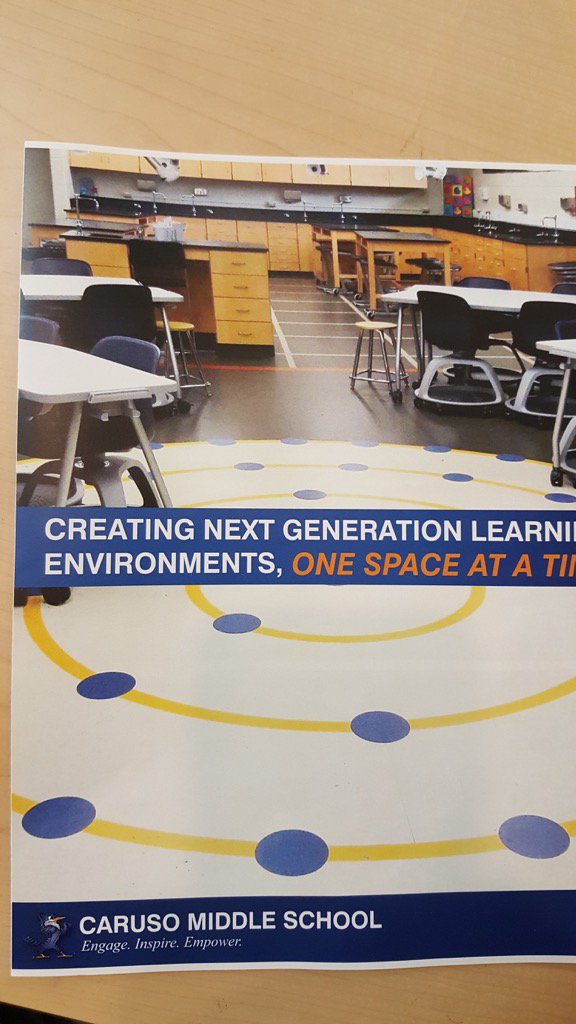
Notes for slide 5: One very public way we show innovation is through modern learning spaces. We have been designing and creating new and better learning spaces across the district for the past several years. With new lighting, better flooring, award winning classrooms and labs we demonstrate our commitment to excellent public education. We are proud to host visits from leaders all over the state and nation to our award winning middle school science labs. This year we cannot wait to open and unveil new middle school art and music spaces, PTO funded K-5 SMART labs, redesigned library spaces, student friendly furniture, and more. All of these physical changes are designed to support innovative learning and teaching practices. The spaces themselves do not reflect innovation though, it’s what you do with and in these spaces that truly creates new and better learning for ALL students. We provide the conditions for optimal learning and growing, the spaces provide opportunities for new and better experiences.

Notes for slide 6: We also innovate with new and better instructional tools and resources designed to support your work. With collaborative Google Apps for Education we have created opportunities for communication across boundaries of time and space. Other tools like the extensive suite of technology we offer support innovative learning and teaching practices. The tools themselves are not innovative; it’s what you do with these tools that creates new and better learning for our students. This year we’re proud to celebrate Innovation Grant Phase II with new and better ideas about how to leverage the power of technology. A focus area includes the 4Cs of communication, collaboration, creativity and critical thinking. These new tools allow for innovative practices supporting the 4Cs.

Notes for slide 7: We also innovate in DPS109 with professional learning opportunities. I am so proud of the hashtag #engage109 on Twitter where any day or time I can look and see what is happening in the classrooms around the district. #Engage109 is known far and wide as a space where DPS109 staff share and learn and communicate. Often our hashtag is trending due to the activity. Twitter is a space where anyone can learn and access virtually anything at any time. In addition, this year’s early release Wednesday structure is designed to create new and better ways for teacher learning. Through sustained job embedded learning opportunities we will create conditions for innovation. We are also proud of the Deerfield University an often replicated example of innovative professional learning and teacher support. The DU offers a voluntary personalized, learning platform where we can learn and grow any time any place at any speed or any pace, our motto is You can DU it! Finally, the upcoming EdCamp North Shore 16 to be held at Kipling on October 29 reflects yet another way we innovate in the professional learning space. I hope the folks from Kipling will tweet out the link to sign up via the #engage109 hashtag today!

Notes for slide 8: I consider myself to be an innovative superintendent. I learn from you and I learn with you. I truly enjoy learning alongside you and joining in classroom practices like Shark Tank shown in the photo above. I look forward to every visit to the classrooms. I learn new and better ways of doing education from you. Thank you for continuing to invite me and welcome me into your classrooms. In addition, I innovate through partnerships and professional memberships in forward thinking organizations like BrightBytes, Discovery Education, and the American Association for School Administrators, the AASA. This summer a group of 50 superintendents from around the USA came to learn our story – they came to visit our new and better learning spaces. Because of your great work I get to show off and share our stories of innovation. In addition, I learn from them and their expertise and I share that here in Deerfield. You give me great pride and so much to share! Finally I innovate by experimenting with gizmos and gadgets that support new and better learning, I am eager to see the innovative results of the 2nd phase of the Innovation Grant process.

Notes for slide 9: I seek out innovation in my personal life too. For the past 11 years my family has gone to the same resort in Elkhart Lake, Wisconsin. We love the vacation and the kids look forward to it each year. This summer we innovated – we experienced tubing for the first time. While it may seem simple or even silly for me to share this personal example, I wanted to share how we took an awesome family experience, our annual trip to Wisconsin – perfectly fine for 11 years; and with an innovation, the tubing, our first time as a family doing so, we innovated our vacation! We tried something new and better and created a new learning experience.

Notes for slide 10: I highly value being a connected educator and leader, I learn from others, I share our stories of innovation, and I become a better leader through collaboration. Please continue to reach out to me and welcome me into your learning spaces. You can contact me, and I encourage you to do so, through any number of addresses and social networks. Welcome back to another fantastic school year! Please give a warm welcome to Dr. Jeff Zoul who will continue our program this morning. Thank you.

CSWju_OUsAAJMue

Back to School – 2016 – #Engage109 Update

“Diversity: the art of thinking independently together.”
– Malcolm Forbes

downloadIt’s back to school time across the USA and Illinois! In the Deerfield Public Schools our teachers have been hard at work all summer and they are eager to return to their classrooms. The 25 new teachers have been engaged in New Teacher Orientation since August 11, and all staff return to the Welcome Back Kick Off Institute on August 18. Finally, our 3000 students will return starting on August 22. We in education get “do overs” every year! While we have but one opportunity to create the best and most impactful experience for each of our learners, we as educators get each year to refine our craft, hone our skills, and improve.

downloadThe Deerfield Public Schools are Future Ready! From innovative curriculum & instruction resources and practices to devices and engaging learning spaces, we are constantly improving and changing and learning how to get better at education. This year’s summer construction has been extensive.

Edreimframework


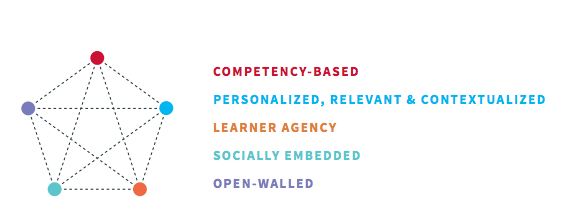
One of the major frameworks upon which my beliefs are based is the Education Reimagined framework (the five core components are listed above). We’re seeking educational offerings that enhance and support the 4C’s (communication, collaboration, creative thinking, creativity). We are reading and learning all that we can in an effort to improve and refine our craft.

Workers have been quite busy renovating the four elementary school libraries, installing four SMART labs for STEAM learning, renovating the middle school art and music spaces, and re-cabling the entire school district!

This year marks the current executive leadership team’s fourth year in the district. Our aim is to Engage, Inspire, Empower each and every member of our organization – students, staff, leadership team, parents, community, everyone! We’ll continue to measure success and input and feedback with surveys and outreach. This year we’ll also start the strategic planning process where we’ll seek the input in focus groups, surveys, and interviews to ensure we’re representing the community values, norms, and visions for education.

The key to our student success is and will continue to be creating learning environments that support learning, growth, success, the 4C’s, innovation, creativity, and JOY!! We want to bring back and sustain joy and happiness in our school system.

ittakesavillageThank you for reading, commenting, helping sustain our success as a premier public school district. We Engage, Inspire, Empower as a matter of practice, vision, and course. This year the district proudly offers Innovation Grant II where a number of the teachers will push the limits and explore additional ways to facilitate learning in new, creative, and innovative ways. Through the blog and other communication venues we’ll share our story. We’re on a journey.