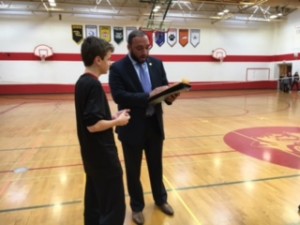
I Voted Today! What does this mean? Decision Making #engage109

“Teamwork is the ability to work together toward a common vision. The ability to direct individual accomplishments toward organizational objectives. It is the fuel that allows common people to attain uncommon results.”
– Andrew Carnegie

Democracy is a value ingrained in the “DNA” of Americans. Our entire education system is based upon democratic principles, our Declaration of Independence from the British Monarchy declares our rights to be independent (men and women).  “…certain unalienable Rights, that among these are Life, Liberty and the pursuit of Happiness.”

Liberty is the right most closely aligned with voting. The right to give input is a foundational right we enjoy. We apply and extend democratic principles all through the tapestry of our society.

Ten year olds “vote” for the student council (a governance model in the image of our government). Associations vote their members in for leadership positions. In the USA, we feel it is normal and just to vote for pretty much anything.

Some of you reading this will remember commercials where people voted for the better tasting soft drink on TV. Often couples will vote on which restaurant to attend. Families may vote on what colors to paint their rooms. The concept of voting, choosing, giving input is almost an assumed right as an American. The will of the majority rules so many of our institutions of government and society. The majority rule, though, is not the only rule in democratic societies. The rule of 3/5 or “super majority” as well as the rule of “plurality” (the number of votes cast for a candidate who receives more than any other but does not receive an absolute majority.)

In leadership, though, even in a democratic republic, sometimes the elected representatives vote in a different way than their constituents. This does not mean theydisregard the input, it simply means that multiple factors influence decisions.
In general, if you don’t vote can you really complain about the decisions made on your behalf? No, I don’t think so, that’s why I vote; I want to have a voice, whether it is a large voice or a small voice, whether my candidate choices win or not – at least I can say I voted! I went to the table to give my input and in some small way I contributed to our democratic way of life.

I vote for candidates who I believe will represent me, my values, my interests, and the choices I would make if I were in their shoes. I don’t expect the folks for whom I cast a ballot to always agree with me, at times, perhaps often, they will be better educated on the particular issues than I.

In the United States our government and ways of life are more Roman than Greek. That is to say we follow a republican form of government (not the political party) but it’s a representative democracy concept. We don’t employ a direct democracy where everyone gets one vote; we have a representative democracy. This means we vote for people who will represent the views of groups of people. For example, members of Congress are assigned to districts, geographic areas, representing certain numbers of people. This is why the decennial census (the population count every 10 years) is so important to political map-makers.

  • I vote in every election.
  • I vote because I can.
  • I vote because I am a free man.
  • I vote because it is my civic duty.
  • I vote because it is my responsibility as a free man to exercise this powerful right – the right to give input as to whom should represent me and my interests.
  • I vote because I hold great value in the power of representative democracy.
  • I vote because I would like to have my input considered.
  • I vote so I can share my views and values and be a responsible member of society.

One of the tenets of voting that some people overlook is that their vote is going to elect others who will represent their interests. Will those for whom I cast a ballot always vote the way I want them to? No – of course not.

Will they take my follow up input under consideration? Yes – that is the beauty of a democratic republic, the type of society in which we live. I would like everyone I vote for to become elected. But that is unlikely since there are many other voters and that is not a realistic wish. I understand this and I’m ok with this.

As a regular part of my role as the superintendent of schools, I regularly give input to our elected representatives in Washington, D.C., and in Springfield, IL. I would like them to consider my input even if they disagree with it. They may disagree in principle or they may disagree because they are better informed, or they may disagree for political reasons. They also may take my input and form, reform, or transform their beliefs!

I vote for school board members (even my own bosses!); I vote for village trustees and township trustees; I vote for friends, neighbors, colleagues, folks about whom I know a lot and at times, I vote for folks about whom I do not know a lot, but who are aligned with a political coalition I support or understand.

Many voters select based upon political party or candidate gender or candidate ethnicity. It is free choice; people can literally vote for anyone who is on the ballot (and at times they can enter a “write-in” candidate too). That is the beauty of living in a free society.

What does democracy mean in the workplace?

I consider myself to be an inclusive and collaborative leader. I seek input and views and votes from the people likely to be impacted by a decision or set of decisions. I work in an industry full of committees, viewpoints, processes, procedures, etc.

I work for an elected non-partisan school board made of seven citizens who, with me, form a governance team of 8 to manage and govern the school district. I seek input from the nearly 500 employees whom I serve and employ.

Do I always agree with every one of their votes? (no) Do I always do what the will of the majority requests? (no) The plurality (the larger number of votes when a majority is not there)? (no)

Or do I consider their input with care, concern, and respect, and make a decision based upon the combination of input, voice, votes, research, evidence, etc. YES – As a leader I truly have to balance the will of the many with the right decision – often equal or congruous with the will – but not always.

The paradox of leadership is leading with an inspired vision and per a collective plan, mission, agenda, vision, etc.

Seeking input, empowering people yet “at the end of the day” realizing that “the buck stops here” and the accountability and responsibility rests with the leader.

Not following the will of the majority is not rejecting input. Not following the will of the majority is not “not listening”. From time to time the leader must seek input, gather facts, anticipate impact and … well … lead. Sometimes leading means helping the group see a different reality than the one they think they want or the one they think is right.

Recently as part of our work, I shared committee recommendations and my administrative recommendation to the Board of Education (there were sometimes differences in the committee recommendation and my ultimate decision). These examples about which I refer are from the 2013-14 Superintendent’s Task Force for Middle Level Education. This coalition of students, parents, teachers, administrators, community leaders, and board members, a 140 member stakeholder community engagement group, made recommendations for improvement to our middle schools.

I took input from many, shared the input publicly, reviewed a number of factors, synthesized the priorities and make a recommendation. For the elective areas I took all the votes/input and I made a recommendation with some differences. The input continues to guide decision making and resource allocation. The STEM team recommendations were accepted 100%.

The challenge of a leader in a democracy is to respect input and consider the votes and then decide what is in the best interest of the many and to lead. The leader may know more and be able to see around corners the people cannot yet see. The leader often needs to have vision beyond the past experiences and limits of the group. The leader needs to lead and challenge the process and manage the change process.

Does your vote and your input guarantee that your choices will be advocated? No – just like the village trustee for whom I cast a ballot will vote his/her conscious when employees give input, or vote, if you will, they are giving input to the representatives who will ultimately decide what action to take. Your vote does guarantee that your views will be at the table and respectfully reviewed and considered!

What does a leader do when the needs of the many outweigh the needs of the few and the future for which he is leading requires systemic unlearning? Well … with compassion and conviction, he leads.


I’m proud I voted today.

I’m proud that the educators with whom I work continue to share voice, vote, values, viewpoints and vision.

I’m proud to share the Deerfield Public Schools District 109 new Strategic Plan later this month.

The mission, vision, guiding principles, portrait of a graduate, goals, objectives and action plans have been carefully prepared, reviewed, planned, and considered.

The Strategic Plan is created by reviewing input of more than 1700 stakeholders – those who voted in surveys have their voice represented. Those who participated in focus groups have their voice represented. Those who Engage, Inspire and Empower have their voice represented as we “rebrand” and “re form” our educational organization for the next several years.

We have the research! Let’s update our practices! #Engage109

“Many people die with their music still in them.”
– Oliver Wendell Holmes


As educators, it’s our job to help them find their music!

I think that the superintendent of schools should ensure that all children have access to educational opportunities despite decades of segregation and practices that have overtly and covertly separated children who learn differently.

Segregation due to race ended by law in 1954, but there have been other ‘segregationary’ practices – some well intentioned as well – like special education, exclusionary tracking, etc..

Often districts and schools practice “sifting” and “sorting” of students, these are practices that have, in general, led to disparate equity of educational opportunity across the schools, districts, states, and nation.

Regardless of evidence and research findings, many educational programs and practices still exist because school systems and leaders don’t understand how to manage change or because they are afraid to change.

When Public Law 94-142 (the special education law) was enacted in 1975, four main purposes were:

  • “to assure that all children with disabilities have available to them … a free appropriate public education which emphasizes special education and related services designed to meet their unique needs
  • to assure that the rights of children with disabilities and their parents … are protected
  • to assist States and localities to provide for the education of all children with disabilities
  • to assess and assure the effectiveness of efforts to educate all children with disabilities”

Source: Education for All Handicapped Children Act, 1975

The reality is that since 1975, many well intentioned educational programs for diverse learners ended up creating separate (but equal) “programs” and “service delivery models” for various learners.


I also think that it’s incumbent upon a superintendent to share the latest evidence, research, information, studies, etc. with his/her community to inform and improve practices.

I believe in the concept of innovation (changing for improvement).

You have probably heard about John Hattie. Specifically, you may have heard about his research on the factors that affect student achievement. Hattie uses effect sizes to show the relative impact of each factor. An effect size of 0.4 is regarded as average or typical. His work is ongoing. To my knowledge, his results were 1st published in 1999. They became well-known after he published a book in 2008 called Visible Learning. His results were last updated in late 2016. This Hattie effect size 2016 update summarizes these new findings in the context of what went before.

Despite overwhelming evidence to the contrary, see Hattie, et. al, for example, updated in 2016, many “mythological” and ineffective educational practices are still in place all over the school systems because “that’s the way it’s always been done“. Doing what’s right is not always popular – but we have no excuses for not doing what’s right.

The figures below show the latest findings from Hattie’s meta-analyses about the most effective instructional practices.  (I have written about Hattie‘s findings from time to time): (from the figures below, the concept of teacher credibility has an effect size of 0.90 and feedback has an effect size of 0.73, acceleration has an effect size of 0.68, for example).


Hattie’s studies have found that an effect size of 0.40 reflects the average impact of an intervention; those above 0.40 are more impactful. (click on the images below to go to the source)

Teacher Credibility Defined:

According to Hattie teacher credibility is vital to learning, and students are very perceptive about knowing which teachers can make a difference. There are four key factors of credibility: trust, competence, dynamism and immediacy. In an interview Hattie puts it like that: “If a teacher is not perceived as credible, the students just turn off.”

Examples for teacher credibility: Earn trust by showing trust towards pupils. Appear highly organised in the presentation of the subject matter. Develop a powerful style of speaking that uses few verbal hesitancies such as “OK” or “you know”. Reduce distance between teachers and students by moving or moving away from barriers (e.g., desk, podiums). Source: cie.asu.edu

The impact of a teacher on a student’s learning is so important that it’s arguably the most important duty of an administrator to select teachers who are predictive of excellence.


Goals to mathematics are 0.40-0.49 effect size
Play programs to preterm birth weight are 0.50-0.59 effect size
Teaching strategies to acceleration are 0.60-0.69 effect size
Feedback (0.73) to Teacher credibility (0.90) complete the list


The role of superintendent of schools is often a mysterious role. I have found that many people don’t really know what a superintendent actually does on a daily basis. Some think it’s like an “uber” principalship, others think it’s like a “CEO” of a corporation, and still others really have no idea. From time to time I write about what a superintendent does.

From my employment contract it states my responsibilities and duties as superintendent:

The Superintendent shall have charge of the administration of the schools under the direction of the Board; he shall be the chief executive officer for the Board; he shall recommend the selection, retention and dismissal of, and direct and assign, teachers and other employees of the School District under his supervision; he shall organize and direct the administrative and supervisory staff; he shall make recommendations to the Board concerning the budget, building plans, location of sites, and the selection of textbooks, instructional material, and courses of study; he shall direct the keeping of all records and accounts, and aid in the making of all reports, as required by the Board; he shall recommend rules, regulations, and procedures deemed necessary for the welfare of the School District; and, in general, he shall perform all other duties incident to the office of the Superintendent as the Board may delegate to him or as required by law.


Subsequent blog posts will reflect on the duties of a superintendent who must lead to ensure that ALL students receive high quality education with structures and systems supported by evidence. It’s time to stop doing what is easy and wrong! It’s time to do what is right – even when it makes people change.


Just because our school system was designed in 1893 does not mean that we should still act like it’s 1893!

Vision – Change – Growth #Engage109

“Great organizations demand a high level of commitment by the people involved.”
– Bill Gates

Vision (eyesight) is one of our five senses, eyesight is how ‘sighted’ people get input from the world around us. Eyesight is something that I do NOT take for granted, especially due to personal circumstances over the past six months. In this blog post I am going to draw parallels to my personal experiences with my vision and the concept of Vision in terms of organizational growth and change.

For 35 years I wore eyeglasses to correct my vision – correct as in meaning to improve sight. Sight in terms of what I could see with focus, distance, depth, perception, etc. I could still “see” without glasses, but my “vision” was distorted. With a distorted vision, I was not able to fully “see” or take in the world. The change I needed to make in my life was the change to wear glasses to “correct” my vision.

Often our vision needs to be corrected so that change and new methods can be embraced for improvement

Last year I started to lose my clear vision in my left eye (even with the change I had made 35 years prior) – even with glasses, the vision in my left eye was deteriorating. Again, I had to make choices: 1. let my vision deteriorate and accept a new limited reality; or 2. embrace change again to “correct” my sight.

During the period last year when my vision was departing from my left eye  I discovered I was developing cataracts. A cataract “grows” on the lens of the eye and impedes sight. During this experience the first change method I used to correct my vision, eyeglasses, was no longer sufficient.

For 35 years one method of correction worked and I was able to “see”. All of a sudden, out of nowhere I had two options: 1. live with limited vision or 2. have cataract surgery. Cataract surgery is not Lasik surgery; lasik works on the cornea (see the image at the left). Cataract surgery requires the removal and replacement of the lens in the eye. I also discovered during this process of stress, uneasiness, chaos, dissonance, “cheese moving” so to speak – that I needed to replace the lens in both eyes not just in my left eye. So … for a guy who is queasy with “health” stuff … I had to make a choice to confront my fears, confront risk and uncertainty and depart with the habits I had developed over a 35 year glasses wearing period.

So, after two surgeries – successful thankfully – my vision had not only been improved, but I did not need glasses anymore. My brilliant opthamologist inserted a distance lens in my right eye (still 20/20) and a reading/mid range lens in my left eye (20/20 reading and mid range). Wow – change was awesome! Wow – surgery and recovery was not so bad after all.

A change model I use in graphic form is the Virginia Satir change model (depicted in the image to the left). Applying this model to my personal health changes, the discovery of cataracts equate to the foreign element (by red triangle) introduced in my life.

Initially there was resistance (step 2). I was scared, angry, resentful, concerned, confused, and uncomfortable. The chaos, step 3, was the surgery, recovery and my experiences in those settings.

The Transforming Idea (red triangle at the bottom of the image) was the fact that after two surgeries I had better eyesight  than I had ever had. NO more glasses! NO reading glasses! The ability to wear sunglasses! No limited night vision. This all led to “integration”, step 4, and a new status quo. The change was fantastic and the new status quo was far better than the old one!

Change is a process, change is part of life, change is inevitable. Few of us seek change but in the end, many changes are far better than “that’s the way we have always done it” mentality.


ENGAGE, INSPIRE, EMPOWER

In the Deerfield Public Schools, District 109, we are engaged in a Strategic Planning process. Strategic means change, improvement, new, different. Strategic Planning means that the Satir Model of Change will now be applied to our organization.

In strategic planning organizations (in our case as a public school district) the Board of Education sets the mission, vision, values, and goals, and the superintendent and leadership team works to develop objectives for each of the goals. Each objective aligns to a goal.

Each goal is also aligned with the values or guiding principles. Those principles are aligned to the portrait of a graduate (beginning with the end in mind).

The portrait of a graduate is aligned to the vision and mission. I’m deliberately stating all of this to set the stage for how vision and change are coming to the Deerfield Public Schools! Our past 3.5 years have been filled with completing plans made by previous boards and leaders – we are proud of these plan completions and I have penned a number of blog posts about the impact of these changes. Now, the stage is set for the next few years to be guided and directed by and grounded in the new Strategic Plan.


In terms of strategic planning, setting the stage for what we hope to become, or setting the vision, is a complex process of input, review, soul searching, input searching, and hope.

Vision on in an organization refers to an aspiration   — or hope about the future.The vision describes what the future will become. It describes how the organization will lookin its future. The visions that get actualized are those that are based upon shared values and ideals.


A shared vision is powerful because members of the organization synthesize their hopes and aspirations in support of the common cause – or SHARED VISION. As a leader my aim is to inspire a shared vision. My aim is to generate ideas and synthesize multiple points of input into coherent action plans. My aim is to plan for change that is powerful, meaningful, and that becomes all hands on deck change.

Kouzes & Posner, authors of the Leadership Challenge, have found through extensive research across industry, that the 5 Exemplary Characteristics of leaders are:

Model the Way/Inspire a Shared Vision/Challenge The Process/Enable Others to Act/Encourage the Heart

Over the past few years our leadership team has spent significant time engaged in book review, 360 degree assessments based upon the Leadership Challenge LPI 360, and as a team we have strived to embody all five of these characteristics in all that we do as we lead and serve. The leadership framework upon which Nick Polyak and I frame in our upcoming book, The Unlearning Leader, is based on the 5 exemplary practices of a leader! These practices resonate with me and my leadership team.

By Inspiring a Shared Vision, when the “foreign” element is added into the mix, and the old status quo is challenged (challenge the process is another of the exemplary practices of a leader) the resistance is lessened and the pain is diminished when large numbers of stakeholders are engaged in the planning, vision creation, and planning!

In the Deerfield Public Schools we received more than 1,700 people’s input into our Strategic Plan – our district has 3000 students from 1,850 families, so the 1,700 voices helping guide our work give me great comfort that all voices are on the table as we prepare to make our system better – and as we prepare to make changes in our system.

Just like my personal experiences with change have had painful and uncomfortable moments, and just as I did not control elements of what happened to me, our organization is on the path toward meaningful change!


For another post at another time, I’ll explain how my perfect vision and my revised status quo was once again challenged as a torn retina became yet another foreign element in my life creating chaos, and change. As I march towards my new status quo I’m proud that my medical team, family, friends, co-workers, and employer have all helped inspire a shared vision in me — quite literally and figuratively!

To the future ….

As always comments are welcomed and encouraged!

Why Must We Change Instructional/Organizational Practices in Education? – #engage109

“Consider the rights of others before your own feelings, and the feelings of others before your own rights.”
– John Wooden


Why change?

What is the sense of urgency?

Why do we constantly seek new and better ways to educate?

Well … for many reasons … among them – the world is different today – like it or not – there is new research, empirical evidence of impact and effects (see John Hattie and a number of posts I have written) yet it is so hard to change habits and it is so hard to make people believe in change since change also causes loss …

From time to time I post “Did you Know” videos … today I’m posting a new version – please take a few moments to watch the video and think – then watch the second video and please share your thoughts and comments.

The next video has some repeat information – but it’s worth a look:

Change is needed in the schools today. In a recent article in the December 2016 issue of District Administration (on page 10), Marc Prensky is quoted:

…”Up until now education has been about improving individuals, “he says. “What education should be about in the future is improving the world–and having individuals improve in the process.”

What does that mean to you?

How does all of this reconcile with the empirical evidence of what works in education (and what myths need to be corrected) (from Hattie, et. al)?

This is an exciting and quite arduous time to be a public educator.


From my 2/25/2014 POST where I repost material from Dana Schon:

An Index Of Teaching & Learning Strategies: 39 Effect Sizes In Ascending Order by Dana Schonsai-iowa.org

Effect Size Defined-Statistically speaking, the strength of the relationship between two variables. John Hattie, Professor of Education and Director of the Melbourne Education Research Institute at the University of Melbourne, Australia, says ‘effect sizes’ are the best way of answering the question ‘what has the greatest influence on student learning?’Effect Size Applied

  • Reverse effects are self-explanatory, and below 0.0
  • Developmental effects are 0.0 to 0.15, and the improvement a child may be expected to show in a year simply through growing up, without any schooling. (These levels are determined with reference to countries with little or no schooling.)
  • Teacher effects “Teachers typically can attain d=0.20 to d=0.40 growth per year—and this can be considered average”…but subject to a lot of variation.
  • Desired effects are those above d=0.30 (Wiliam, Lee, Harrison, and Black 2004) and d=0.40 (Hattie, 1999) which are attributable to the specific interventions or methods being researched– changes beyond natural maturation or chance.
  • Blatantly obvious effectsAn effect-size of d=1.0 indicates an increase of one standard deviation… A one standard deviation increase is typically associated with advancing children’s achievement by two to three years*, improving the rate of learning by 50%, or a correlation between some variable (e.g., amount of homework) and achievement of approximately r=0.50. When implementing a new program, an effect-size of 1.0 would mean that, on average, students receiving that treatment would exceed 84% of students not receiving that treatment.
 Cohen (1988) argued that an effect size of d=1.0 should be regarded as a large, blatantly obvious, and grossly perceptible difference [such as] the difference between a person at 5’3″ (160 cm) and 6’0″ (183 cm)—which would be a difference visible to the naked eye.

Effect Size CAUTION

Reduce temptation to oversimplify. This is one more resource in our efforts to problem-solve on behalf of our students. We need to be careful about drawing too definite a conclusion from an effect size without examining the study. For example, homework is shown to have an overall effect size of 0.29, which is low and well below the average of 0.40. But when you look more closely, you find that primary students gain least from homework (d = 0.15) while secondary students have greater gains (d = 0.64).

Editor’s Note

Data is only as useful as its application. As hinted at above, don’t fall into the trap of assuming the teaching and learning strategies and other impacts on student achievement at the top of the list are “bad,” and those at the bottom are “good.” These are not recommendations, but rather a comprehensive synthesis of a huge amount of data. Every study has a story, and every strategy and impacting agent below has a background.

Ultimately, to best use this data to inform teaching and planning, every study we need to be looked at on its own. We would need to clarify what the terms were for success. Two of Hattie’s books–Visible Learning and the Science of How We Learn, and Visible Learning: A Synthesis of Over 800 Meta-Analyses Relating to Achievement–must-buys so that you can do that kind of analysis on your own rather than skimming a blog post and extracting misguided takeaways …That said, the results of the synthesizing of the data appear below.

What Has The Greatest Influence On Learning? A Synthesis Of Hattie’s Synthesis

Retention (holding back a year)

-0.13

Repeating a grade. Also negatively correlated with social/emotional adjustment, behavior, and self-concept.
Open vs traditional learning spaces

0.01

Open classrooms range widely in features—not correlated to increases in achievement.
Student control over learning

0.04

Effect of student choice and control over learning is somewhat higher on motivation outcomes than achievement outcomes, but neither have major consequences on learning and too many choices can be overwhelming.
Teacher subject matter knowledge

0.09

Little data to support claim that teacher content knowledge is critical to student achievement. Darling-Hammond claims content knowledge influential up to some level of basic competence but less so thereafter. Since publishing Visible Learning, Hattie has studied this topic more in depth and has shared that the issue is a pedagogical issue—teaching is occurring at a surface level such that deep content knowledge has not presented itself as influential or not. Expert teachers know how to connect their content to other relevant issues and content and how to organize that content.
Ability grouping/tracking/streaming

0.12

Refers to whether classes are heterogeneous or homogeneous. Studies consider achievement effects and equity effects. More than 300 studies show tracking has minimal effects on learning outcomes and “profound negative equity effects.”Separate gifted programming is not considered in this set of studies—see ability grouping for gifted.
Gender (male compared with female achievement)

0.12

Males and females are more alike than they are different, and differences are minor. 2,926 studies all point to the same conclusion. “The differences between males and females should not be of major concern to educators.”
Matching teaching with student learning styles

0.17

Contends different students have differing preferences for particular ways of learning—auditory, visual, tactile, or kinesthetic, for example. No gains in achievement found when teacher matched instruction to preferred modality.  Much skepticism surrounding claims around learning preferences. Research does not support correlation between matching learning style and increased achievement.
Within-class grouping

0.18

Defined as “teacher’s practice of forming groups of students of similar ability within an individual class.” Such groups that were studied were formed on semi-permanent basis. This is different from grouping for purpose of targeting instruction toward a specific skill area in which a heterogeneous group (achievement-wise) needs support for a short amount of time/intervention. Effects on research re: within class grouping (excluding gifted) was higher when class size was above 35—i.e. students in class sizes over 35 benefitted from small group instruction. Different from small group learning, defined as teacher assigning a task to small group and expecting them to complete.
Extra-Curricular

0.19

Not a high correlation between extra-curriculars and achievement—sports is even lower than academic-related activities like speech/drama/music; however, because students enjoy activities, they are engaged and keep attending schools where they “gain the dividend of instruction in more academic subjects.” Effects from activities were found to be more related to identity formation and peer self-esteem, which are especially important to adolescents.
Reducing class size (Reduce from 25-15, effect between 0.10 to 0.20)

0.21

Effects may be higher for working conditions which may or may not translate into effects on learning. For smaller class size to yield higher effects, the type of instruction needs to be re-conceptualized to ensure the needs of all students are met within whatever the class size. Need to focus on strategies that are maximized in smaller or larger groups and apply respectively.
Individualized instruction (Note: NOT special education)

0.22

Based on ideas that each student has unique interests and past learning experiences, and individualized program takes this into account. Allows for student flexibility and individual differences. Small effect, but one study claimed higher effects based upon teacher adapting instruction to needs of students and aligning to capability in addition to finding resources that were fitting. Other whole class/group influences like peer tutoring have higher effects.
School finance

0.23

Minimal relationship between educational expenditure and student achievement; more positive correlation between expenses for cost of instruction (e.g. teacher salaries and instructional supplies) and achievement. Not amount of money spent, but how it is spent.
Teaching test-taking and coaching

0.27

Many studies around SAT preparation show influence impacted by length of coaching/training. Other studies indicate that familiarizing students with the examination process and examiner can make a difference, more so than test prep. Students in the low SES group performed significantly higher on standardized tests when they were familiar with the examiner.
Homework (Note: Elementary effect size of 0.15, and high school of 0.64)

0.29

Involves “tasks assigned to students by teachers that are meant to be carried out during non-school hours.” Effects twice as large for high as for junior high, and twice as large again for junior high as for elementary. Smallest effects in math. Largest in science and social studies with English in the middle. Effects greater for higher than lower ability students. Homework for some reinforces that they cannot learn by themselves. Can undermine motivation and internalize incorrect routines and strategies.
Inquiry-based teaching (Note: Hattie wondered why effect wasn’t higher and since publishing, has learned that teaching content so students have some background knowledge about which they are inquiring increases effect)

0.31

Art of developing challenging situations—students observe and question phenomena, pose explanations, devise and conduct experiments, collect data, analyze data, draw conclusions, design and build models, or any combination. Open-ended. Greater effects when teaching process rather than content. Shown to produce transferable critical thinking skills.
Using simulations and gaming

0.33

Typically involves use of model or game (such as role playing, decision-making) with an aim to engage students in learning. Aims to mimic real-world problems.
Decreasing disruptive behavior

0.34

Teachers need skills to ensure no student disrupts his/her own learning or that of others. Argument is NOT that disruptive student should be removed.
Computer-assisted instruction (Note: Web-based learning, interactive video methods, and simulations are analyzed separately)

0.37

25 times out of 100, computer-aided instruction in the form of tutoring, managing, simulation, enrichment, programming, and/or problem-solving will make a positive difference. Majority of studies are about teachers using computers in instruction compared to those who don’t—fewer about students using them in learning in different ways. Use of computers more effective when a diversity of teaching strategies, when teachers receive pre-training in their use, when multiple opportunities for learning, when the student (not teacher) is in control of learning, when peer learning is optimized, and when feedback is optimized.
Integrated curricular programs (e.g. global studies class that incorporates both science and social studies or thematic unit– Friendship)

0.39

More effective in elementary and middle school than high school. Greater effect when instruction was organized around a theme (0.46) and process skills were emphasized (0.36). Greater effect for lower achieving compared to middle and higher achieving students and when more experienced teachers implemented.

Effect Size greater than 0.4 effects student achievement

How to develop high expectations for each teacher (Note: Hattie contends teachers must stop over-emphasizing ability and start emphasizing progress—steep learning curves are the RIGHT of ALL students regardless of where they start. Be prepared to be surprised!)

0.43

Studies included effects related to the notion of self-fulfilling prophecy—teachers are more likely to have their students reach their expected outcomes regardless of the “veracity” of the outcomes. Studies in this meta-analysis also show students know they are treated differentially in the classroom due to expectations by teachers for certain students to take AP courses, for example, or others to pursue technical fields.
Professional development on student achievement

0.51

Research re: PD seems to focus more on changes in teachers rather than impact on student outcomes. PD likely to change teacher learning but has less effect on teacher behavior. PD in science has highest effects on student outcomes (0.94) then writing (0.88). Seven themes re: what works best in PD were advocated as a result of 72 studies.
Home environment

0.52

Includes measures of the socio-psychological environment and intellectual stimulation in the home. Most highly correlated factors with achievement were maternal involvement, variety and play materials.
Peer influences on achievement

0.53

Studies include a variety of influences: peer tutoring, helping, friendship, and giving feedback. Studies examining what happens when a student moves schools show single greatest predictor of subsequent success is whether student makes friend in first month.
Phonics instruction

0.54

Teaching students the alphabetic code. Designed for beginners in early elementary.
Providing worked examples

0.57

Typically consist of a problem statement and the appropriate steps to a solution. Three steps: introductory phase, acquisition/training phase, test phase (assess learning). Reduces cognitive load for students such that they concentrate on the processes that lead to the correct answer and not just providing an answer.
Cooperative vs individualistic learning

0.59

Most powerful when students have acquired sufficient background knowledge to be involved in discussion and learning w/peers. Most useful when learning concepts, verbal problem-solving, spatial problem-solving, retention and memory.  Effects increase with age.
Direct instruction

0.59

Not to be confused with didactic teacher-led talking from the front. Refers to 7 major steps:

  1. Teacher specifies learning outcomes/intentions
  2. Teacher knows and communicates success criteria
  3. Builds commitment and engagement in learning task (the hook)
  4. Lesson design: input, model, check for understanding
  5. Guided practice
  6. Closure
  7. Independent practice

Speaks to power of stating learning intentions/outcomes and communicating standards for performance and then engaging students in getting there. Effects were found to be similar for regular education and special education—i.e. direct instruction is effective for all.

Concept mapping

0.60

Involves development of graphical representations of the conceptual structure of content to be learned. Importance of concept mapping is in its emphasis on summarizing main ideas in what is to be learned. Assists in synthesizing and identifying major ideas, themes, and interrelationships.
Comprehension programs (Interesting note: Hattie did not find a 4th grade reading slump, just no growth or increase during upper elementary years. Several possible reasons for plateau: most curricula does not attend to reading progressions, lack of building upon learning to read once students have learned to read, and possibly perceived “unimportant” reading difficulties appear for the first time in Grade 5 when students encounter information materials and multiple text types requiring more inference and comprehension.

0.60

Comprehension programs with dominant focus on processing strategies (e.g. inferential reasoning, rules for summarizing, and chunking texts) produced higher effect than did text programs (e.g. repetition of concepts and explicitness) and task programs.
Teaching learning strategies

0.62

Teaching kids how to learn and developing students’ strategies for learning. Need to provide students with learning strategies in the context of learning, a chance to practice, and assurance that the strategies are effective. Need to understand intention to use, consistency in appropriate use ,and knowing when chosen strategy is effective—learning to learn or self-regulation.
Teaching study skills

0.63

To get to deeper levels of understanding and effectiveness, combine study skills instruction with the content.
Vocabulary programs

0.67

Students who experienced vocabulary instruction experienced major improvements in reading comprehension and overall reading skills. Most effective vocabulary instruction included providing both definitional and contextual information, involved students in deeper processing, and gave students more than 1 or 2 exposures to the word to be learned.
How to accelerate learning (e.g. skipping a year)

0.68

Other forms of acceleration include compacting curriculum, telescoping curriculum, and advanced placement. No negative social effects for accelerated students were supported by the research. Effect size for 2 meta-analyses and 37 studies regarding all forms of acceleration was 0.88.
How to better teach meta-cognitive strategies

0.69

Meta-cognitive strategies refer to those “thinking about thinking” strategies: planning how to approach a learning task, evaluating progress, and monitoring comprehension. Self-questioning is another meta-cognitive strategy.
Teacher-student relationships

0.72

Interestingly, “when students, parents, teachers and principals were asked about what influences student achievement, all BUT the teachers emphasized the relationships between the teachers and the students.” “Building relationships implies agency, efficacy, respect by the teacher for what the student brings to the class (from home, culture, and peers) and recognition of the life of the student.”
Reciprocal teaching

0.74

Teaching cognitive strategies intended to lead to improved learning outcomes. Emphasis on teachers enabling students to learn and use strategies such as summarizing, questioning, clarifying, and predicting. Dialogue between teacher and students around text. Students take turns as teacher and lead dialogue to bring meaning to written word with assistance to learn to monitor their own learning and thinking.
How to provide better feedback

0.75

Among most powerful of influences, especially when it is from the student to the teacher. If the teacher is open to feedback regarding what students know and understand, where they make errors, when they have misconceptions, and when they are disengaged, then they can respond accordingly.  Feedback is about providing information about the task performance. Effect sizes from these studies show considerable variability, meaning some forms of feedback are more powerful than others. Least effective: programmed instruction, praise, punishment, and extrinsic rewards. Feedback is more effective when it provides information on correct rather than incorrect responses and when it builds on changes from previous trials.
Providing formative evaluation to teachers

0.90

Refers to teachers attending to what is happening for each student in their classrooms as a result of their instruction—when teachers ask, “How am I doing?” Highest effects when teachers seek evidence on where students are not doing well.
Teacher credibility in the eyes of the students (Note: This link is to an interesting article on credibility and how to build it: http://bit.ly/WRZ5iA)

0.90

“If a teacher is not perceived as credible, the students just turn off. If a student doesn’t get (the value of education) by the age of 8, they are behind for most of the rest of their school life. Students are very perceptive about knowing which teachers can make a difference to their learning. And teachers who command this credibility are most likely to make the difference.”
How to develop high expectations for each student

1.44

Refers to students’ expectations for and beliefs in themselves. Involves students predicting or self-reporting their grades. Implications: teachers need to provide opportunities for students to be involved in predicting their performance. “Making the learning intentions and success criteria transparent, having high, but appropriate, expectations, and providing feedback at the appropriate levels is critical to building confidence in taking on challenging tasks.”

(See above for effect sizes and context/explanation.)

  1. Retention (holding back a year)
  2. Open vs traditional learning spaces
  3. Student control over learning
  4. Teacher subject matter knowledge
  5. Ability grouping/tracking/streaming
  6. Gender (male compared with female achievement)
  7. Matching teaching with student learning styles
  8. Within-class grouping
  9. Extra-Curricular
  10. Reducing class size
  11. Individualized instruction
  12. School finance
  13. Teaching test-taking and coaching
  14. Homework
  15. Inquiry-based teaching
  16. Using simulations and gaming
  17. Decreasing disruptive behavior
  18. Computer-assisted instruction
  19. Integrated curricular programs
  20. How to develop high expectations for each teacher
  21. Professional development on student achievement
  22. Home environment
  23. Peer influences on achievement
  24. Phonics instruction
  25. Providing worked examples
  26. Cooperative vs individualistic learning
  27. Direct instruction
  28. Concept mapping
  29. Comprehension programs
  30. Teaching learning strategies
  31. Teaching study skills
  32. Vocabulary programs
  33. How to accelerate learning (e.g. skipping a year)
  34. How to better teach meta-cognitive strategies
  35. Teacher-student relationships
  36. Reciprocal teaching
  37. How to provide better feedback
  38. Providing formative evaluation to teachers
  39. Teacher credibility in the eyes of the students

Innovation Has Many Forms – #ENGAGE109

“Humility is not thinking less of yourself. It’s thinking of yourself less.”
– C.S. Lewis

IL In our school district we take pride in the words and actions ENGAGE, INSPIRE, EMPOWER. We aim to do this each and every day with and for each and every student, staff member, and the community! Since July 2013 our Big 5 have been driving our actions and initiatives:

Common Core State Standards (a/k/a Illinois New Learning Standards), Next Generation Science Standards
Teacher Evaluation – Charlotte Danielson Frameworks for Effective Teaching
Technology
Organizational Culture
Superintendent’s Task Force for Middle Level Education

ENGAGE, INSPIRE, EMPOWER

ENGAGE, INSPIRE, EMPOWER

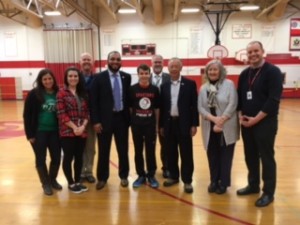
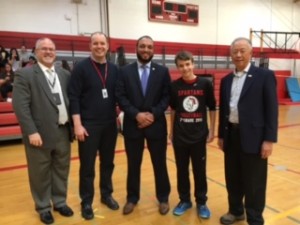
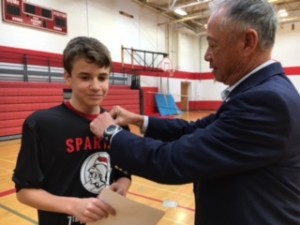
We often write about innovation and we often share examples of the teacher’s innovative practices in blogs, Twitter, Facebook, principal newsletters, emails from the district, in person events, etc. Today I’m writing to celebrate an innovative project experience from 7th grade English Language Arts. In the 7th grade ELA class this year the students had to complete a project entitled:  Change the World. One of our students sent a letter to the Illinois Department of Homeland Security. The boy’s letter was so impressive to the staff that the Deputy Director, James Joseph, called principal, Dr. John Filippi, and he shared his delight at the letter. In addition he offered to come visit the student and his classmates!

IMG_0039 IMG_0035 IMG_0034 IMG_0028 (1)

Today Mr. James Joseph, the Director of the Illinois Emergency Management Agency (IEMA) and Deputy Homeland Security Advisor came to Alan B. Shepard Middle School and visited with the student, his classmates and teachers.

In addition he made a brief presentation and answered questions from the students. In the pictures shown to the left we also show another special guest, retired Major General Robert G.F. “Bob” Lee. Gen. Lee was visiting the Governor’s office and it fit into his schedule to join Director Joseph. Gen. Lee shared information about his fascinating service to our country as well as to his home state of Hawaii. Security is a national concern and it’s nice to know we have such able, knowledgeable, talented and able leaders helping defend our nation and our state.

The power of a letter, the power of a communication, the power of an inquisitive student can lead to the highest levels of government, society, agencies, companies, etc. Our amazing teachers are taking learning to new levels with engagement, inspiring lessons and empowerment of students to reach out to “real people” in the world who do the work about which we are learning!

Check the podcast for a 5 minute excerpt of today’s visit:

In Deerfield we truly believe, and we teach our students, that, in the words of Margaret Mead:

Never doubt that a small group of thoughtful, committed citizens can change the world; indeed, it’s the only thing that ever has.

Our students, through agency and voice, are learning that they matter not only in school and at home, but as part of the larger world. It’s wonderful, especially as a public school leader, to show the power ofittakesavillage education and the value of our innovative public education in terms of meaning and relevance.
We are grateful to General Lee, Director Joseph, as well as other dignitaries who have visited our schools like Governor Bruce Rauner, U.S. Congressman Hon. Robert Dold, Illinois Senator Hon. Julie Morrison, Illinois Representative Hon. Scott Drury, Lake County Regional Superintendent of Schools Hon. Roycealee Wood, Deerfield Mayor Hon. Harriet Rosenthal, and many others who visit to engage with students, learn from our teachers, interact with our world class facilities, and in one way or another, show support for meaningful, effective public education!

Global Service – On my way to help build a school in the Dominican Republic

“Our environment, the world in which we live and work, is a mirror of our attitudes and expectations. ”
– Earl Nightingale


Image retrieved from: http://www.lifetouchmemorymission.com/photo-gallery.html

This January I will be a part of a team that will build an elementary school in Rio Grande, a small community in Constanza in the Dominican Republic. The team of volunteers will consist of superintendents, principals, educators, PTA members and others who all share a passion for serving children and families. This memory mission trip is sponsored by LifeTouch and supported by the American Association of School Administrators (AASA), the National Association of Elementary School Principals (NAESP), the National Association of Secondary School Principals (NASSP), the National School Boards Association (NSBA), and the National Parent Teacher Association (PTA).  I am proud to be one of the superintendents representing the AASA on this mission!

As part of the process of participating in the mission, there are some volunteer questions which I was asked and answered and I want to share via the blog as an amplification as to the purpose of this upcoming leadership and life experience for me.

Question: Why did you volunteer for the Lifetouch Memory Mission?

Response: I view education as a calling and as a call to service. I have been blessed with guidance, mentorship, coaching, and opportunities from others, and I want to pay it forward and servleadquotee globally. Over the course of my career (23 years in public education so far) I have worked with students from various nationalities, economic stations, religions, and perspectives. I believe, and I know from experiences, that spending meaningful time in another country serving a local community will improve my life and my service. My aim is to also show via modeling for my own children and family and for the folks in the community where I serve that I am willing to “walk the walk” in multiple venues and situations.

Question: What do you hope to learn from the experience of building this school, interacting with the residents of Constanza and working as a team with your fellow Memory Mission volunteers?

Response: I expect a truly life changing experience in terms of culture, language, building, caring, and doing. I am hoping to see the world through the lens of the people of Constanza and through that lens Image result for public diplomacybetter clarify my own lens. I hope to spread “public diplomacy” as well by showing the good side and caring side of our American people and of our school personnel. I look forward to making life long friendships and connections with my fellow volunteers. I want to make my wife and children proud of me by modeling a life of service.

Question: How do you think the Memory Mission will change you? Do you have personal goals for what you take away from this experience?

Response: I think this trip will change me in terms of the building experiences, the family/citizen interactions, the overall cultural exchange in the Dominican Republic. My goal is to listen, learn, embrace the culture and the people and aim to give as much as I can to these projects.

Question: Please tell us about any past experiences with international travel. Where have you visited? What experiences abroad have left the greatest impression on you?

Response: I have traveled to Germany, Spain, Mexico, Canada, Bermuda, St. Kitts, St. Maarten, Dominica, Barbados, St. Croix, and Puerto Rico. I lived with a family in Cuernavaca, Mexico in 1992 while attending coursework at a school. The homestay in Mexico gave me an appreciation and respect 20140803-165030.jpgfor the Mexican people, culture, and ways of life as well as the life long skills of biculturalism and bilingualism. My travels to Spain included recruiting Spanish teachers to work in the USA in a dual-language Spanish/English immersion education program. I learned about Germany in 1995 during the opening of the Berlin Wall and the wrapping of the Reichstag. In addition I visited schools, professional learning institutes and government facilities. The greatest impressions I have include the “sameness” that we all share regardless of language, heritage, country, etc. We are all citizens of the world with contributions and benefits to share and to serve. My Caribbean experiences broadened my appreciation for global history, economic interdependence and natural and cultural beauty.

My efforts to help support this project stretch beyond manual labor. There is still a great need to raise funds for the construction and furnishing of the school. Your donation of any size to the Lifetouch Memory Mission can help us continue to raise a village out of poverty. Let’s create a positive change for hundreds of children and their families in this community!

Each day Kids Risk Lives to Reach School

For most parents and kids, crossing the street to catch the school bus may be the riskiest part about getting to school. Could you imagine sending your child on a 2 ½ mile hike up a mountain in order to receive an education? Or what if you didn’t have the ability to send them in the first place?

Children in Constanza, Dominican Republic face these unfavorable conditions daily. Many choose not to take the long journey to school and stay home instead. With the lack of educational resources in this part of the world, children are being deprived of reaching their full potential.

For more information:

Mike Lubelfeld’s Page Lifetouch Memory Mission

We are Building Schools – And Hope – And You Can Help

More on Hattie and Marzano – We KNOW what works!

“The experience of others is the best classroom you will ever find.”
– Warren Buffett

From time to time I share information about relevant and timely educational research. in this post I am reprinting excerpts from an earlier post regarding the powerful and influential research findings from John Hattie. The excerpt is from a post on January 2015 about my own connections educationally with the constructivist philosophy as well as some powerful findings of impact/effect from John Hattie’s meta analytical research. Following the excerpt, I’m reprinting a blog post from Shaun Killian that shares commonalities from Robert Marzano’s findings and Hattie’s findings. So much information about impact and effects of instructional methods rests at our fingertips – it’s exciting to have multiple mediums to share and communicate and inform!

As early as in 1995, I experimented with U.S. History Workshop where students were given voice and choice – with guidance, support, and direction – as they learned about U.S. History. I published an article in “The Councilor” (the official publication of the Illinois Council for the Social Studies), Volume 56, pages 11-25, title: “Planning Powerful and Engaging Social Studies: The U.S. History Workshop for Students”

Looking back at past blog posts I shared about Hattie’s research and in commentary where I have read and written about Hattie’s meta analytical research, I found that the effect size of student expectations also referred to in his writing as self-reporting grades is 1.44, for more on Hattie, there are books, articles, publications, and links from my blog. The main points are for us to keep our eyes on the prize so to speak, raise our expectations – remove limits and obstacles – teach better, create more active learning spaces and allow our students to soar – using what we know and using what we believe -there are no limits!

It is incumbent upon us – public education leaders – to learn from research findings, apply interventions in the ways enumerated in the syntax of the research – and to cede some control to the students as we activate their learning and as we support their limitless growth and success!


From Shaun Killian’s Blog Post: Reprinted and shared with permission

8 Strategies Robert Marzano & John Hattie Agree On

Robert Marzano and John Hattie have both reviewed research into what teaching strategies make the biggest difference to students’ results. While they used different methods and terminology, they agreed on these 8 powerful strategies.


Strategy 1: A Clear Focus for the Lesson

focusJohn Hattie highlights how important it is for you (and your students) to be clear about what you want them to learn in each lesson. According to Hattie, teacher clarity is one of the most potent influences on student achievement. Robert Marzano agrees, including lesson goals in his top 5 list of factors that affect how well students do at school.

Hattie states that lesson goals:

  • Clearly state what you want your students to learn
  • Can focus on surface or deep learning (or both)
  • Must be challenging for the students relative to their current mastery of the topic
  • May be grouped (i.e. a single lesson may have more than one goal)
  • Need to be shared with the students

Marzano also found that posing questions at the start of a lesson is an effective way to focus students: For example:

  • How do you add mixed fractions with different denominators? That’s what you must know by the end of this lesson.
  • What is the difference between elements and compounds? …
  • Why is Persuasive Essay A better than Persuasive Essay B? …
  • When (what period) were Egypt’s great pyramids built? …

Hattie suggests using questions a slightly different way:

  • What are today’s lesson goals?
  • What do I already know that will help me achieve these goals?
  • What actions will I need to do to ensure I achieve these goals?


Strategy 2: Offer Overt Instruction

Robert Marzano claims it is important to explicitly teach your students the things they need to learn. His review of research actually revealed it was the most important factor (teacher controlled) affecting students’ success. You need to tell them what they need to know and show them how to do things they must be able to do for themselves.

John Hattie did not review explicit teaching per se, but he did find that Direct Instruction was very effective. Direct Instruction involves explicitly teaching a carefully sequenced curriculum, with built in cumulative practice.

Furthermore, Hattie highlighted the power of giving students worked examples when explaining how to multi-step tasks. Marzano also highlights the importance of giving examples and non-examples (similarities and differences) of the concept you are teaching. For example, when teaching prime numbers it would be useful to highlight 2 as an example, and 9, 15 and 21 as non-examples to avoid confusion with odd numbers.

Marzano also found that you can explicitly teach deeper levels of understanding by using graphic organisers You should use graphic organisers to show how different ideas were related to each other (e.g. steps, cause-effect, hierarchy, lists, comparisons, etc.).

Neither Hattie nor Marzano believes that great teaching is nothing more than standing out the front of the class and imparting knowledge. However, both agree that telling students what they need to know and showing students what they need to be able to do are essential aspects of teaching.


Strategy 3: Get the Students to Engage With the Content

While it is essential to actively teach students what they need to know and be able to do, it is also important to get them to actively engage with the content.

Marzano and Hattie agree that this starts with students actively linking your newly provided information with their prior knowledge of the topic. Students need to engage with the content as soon as they hear it by:

  • Adding it to what they already know, or
  • Using it to clarify some of the faulty assumptions they currently hold

Your students can then engage with your information in other ways. Hattie talks about the value of getting kids to take notes. Marzano also found there was great value in having your students take notes, and getting them to work with physical manipulatives.  Also, he found that the simple act of asking students to recall information that you have just taught them (i.e. asking basic questions) had a substantial impact on how well they mastered the material. All these strategies are useful, but they only allow students to engage with the material at a surface level.

vennRobert Marzano also found several ways for students to engage with the material in ways that help them deepen their understanding beyond surface knowledge. These include the use of graphic organizers that show how information is connected (e.g. steps, cause-effect, in comparison to, hierarchical classification). It also includes the use of analogies, such as:

  • Persuasive devices are to a writer what tools are to a tradie, or
  • The Magna Carta offers citizens what a referee offers a game of soccer.

These are practical strategies that exemplify the higher levels of the SOLO taxonomy (an alternative to Bloom) that Hattie also advocates.


Strategy 4: Give Feedback

It is important that you give your students feedback after they engage with any new material. This:

  • Highlighting what is right and wrong, or good and bad about their work
  • Helping students to see how they can improve

Robert Marzano highlighted that students need to be given feedback while there is still time to improve (i.e. before finishing a topic or assigning a formal assessment task). John Hattie agreed with this but went further, showing that novice or struggling students need immediate feedback, while more experienced students do better when they receive delayed feedback. Hattie also discovered that different types of students need distinct types of feedback (see How to Give Feedback: The Advanced Guide).

Hattie also highlighted that feedback is a two-way street, where student results tell the teacher the degree to which their efforts are working (or not). When teachers see feedback this way, it has an even larger impact on their students’ subsequent results.


Strategy 5: Multiple Exposures

If you want students to internalize new information, you need to expose them to it several times.

When exploring how to enhance students’ vocabulary, Robert Marzano found that it was critical for teachers expose students to the same word multiple times. When each exposure was coupled with an explicit comment about the word and its meaning, students’ vocabulary acquisition doubled.

John Hattie picks up on the significance of multiple exposures by revealing the critical importance of techniques such as rehearsal and review.  Put simply, rehearsal means going over material until you can remember it, while review involves going over things you have learnt previously.

He also stresses the merit of giving students time to practice doing the things they have learned to do. When spaced out over time, Hattie found that having students practice things led to a 26 percentile improvement in their marks.

On a more cautious note, Hattie warned that practice without feedback can be dangerous as it leads to students internalizing the wrong things.


Strategy 6: Have Students Apply Their Knowledge

Robert Marzano found that helping students apply their knowledge deepens their understanding.

Knowledge application is a deductive process whereby students apply general principles to specific case studies or problems. Marzano found that teaching students how to think deductively and giving them guided practice in doing so helps them generalize their learning beyond the particular topic or task at hand. Hattie confirmed that deductive processes (i.e. general principle applied to specific situation) is much more effective than inductive teaching (i.e. asking students to discover general principles from observing specific situations).

Knowledge application also involves problem-solving. Robert Marzano’s synthesis of research revealed that problem-solving had a large effect (d = 0.54) on students’ understanding. Marzano believes that problems should require students to apply previously learned knowledge and skills – and Hattie agrees.  When problem-solving is used in this way, Hattie found a similar effect size (d = 0.61) to Marzano. However, when a problem is used to stimulate discovery learning, the opposite is true (d = 0.15). Hattie also emphasized the importance of teaching students how to solve problems, e.g. understand the problem  come up with a plan of action implement the plan  review the results.


Strategy 7: Get Students Working Together

group workRobert Marzano and John Hattie both agree that getting students to work with each other helps them to achieve better results. The use of cooperative learning groups adds value to whole-class instruction (d = 0.41) and to individual work (d = 0.59-0.78).

They also agree that inter-group competition can increase the effect of cooperative learning even more.

However, neither Marzano nor Hattie believes that cooperative learning should replace whole-class instruction or individual learning activities.

  • Hattie highlights how students need you to teach them topic-related facts and skills, so they can make genuine contributions to their group. If students haven’t gained sufficient mastery of the material, they cannot actively participate in cooperative learning tasks.
  • Marzano adds that it if students are to master what they are being taught, they also need opportunities for individual practice and feedback.

Finally, Marzano and Hattie agree that cooperative learning is only effective when you:

  • Structure it carefully
  • Keep groups small
  • Teach students how to work in groups

For further information, read Group Work That Works.


Strategy 8: Build Students’ Self-Efficacy

Self-efficacy refers to a student’s belief about their ability to successfully complete a task. It is situation specific. For example, a student may feel confident that they can dance well on stage but be insecure about public speaking.

Hattie & Marzano both found that students’ self-efficacy had a substantial impact on their subsequent achievement. Students who believed they would master fractions were more likely to do so, while students who saw themselves as poor readers were less likely to improve their reading.

Marzano’s review of research showed that you can build students’ self-efficacy through praise, and expressing your belief that they can do well. However, to be effective, such praise must:

  • Be genuine – i.e. only given when students have made real improvement
  • Refer to specific accomplishments related to the task

As Carol Dweck noted, if you praise lavishly and liberally, you end up praising mediocrity, which in turn sends a message that you believe that is all you think they are capable of.

Hattie highlighted the fact that the link between self-efficacy and achievement is reciprocal. That is, achieving genuine success has as much impact on subsequent self-efficacy, as self-efficacy has on subsequent achievement.

John Hattie and Robert Marzano have each conducted significant reviews of what works best in the classroom.

There are some clear differences in their work.

  • They use different terminology to each other
  • Marzano uses more isolated strategies, while Hattie combines strategies into broader approaches
  • Marzano’s findings are based heavily on teacher-designed assessments, while Hattie’s findings make more use of standardized tests

However, as you can see, there is significant agreement between Robert Marzano and John Hattie when it comes to what works best in the classroom.


Who Is Robert Marzano?

Robert Marzano conducts educational research, and is the co-founder of Marzano Research.

Robert Marzano has authored many books worth reading, and compiled a seminal meta-analysis on the effectiveness of various instructional strategies entitled, A Theory-Based Meta-Analysis of Research on Instruction

Who Is John Hattie?

John Hattie is a professor at the University of Melbourne’s Graduate School of Education. He is also chair of the board for the Australian Institute for Teaching & School Leadership.

John Hattie has reviewed over 800 meta-analysis of research studies exploring the degree to which various factors affect student achievement. It is the most extensive review ever taken.

About the Author

Shaun Killian is an experienced teacher and principal with a passion for helping students to excel. He believes that assisting teachers to adopt evidence-based education is the best way to make this happen. Shaun is committed to bringing you practical advice based on solid research.

It’s Staff Selection Season in DPS109 – Selection for Excellence

Some people want it to happen, some wish it would happen, others make it happen.”
– Michael Jordan

This post contains content and excerpts from a post originally published May 21, 2014

In DPS109 right now we are going through a number of teacher transitions due to retirements. Over the past two years we have experienced great changes in our District from instructional coaching model changes to leadership changes and transitions, we have and continue to experience a great deal of change and growth. Since last year we have experienced 45 teacher retirements and we have another 36 teachers who have declared retirement over the next four years. Out of a teaching force of 286, this will represent a turnover of at least 28% of all teachers in DPS109 over a six year period!

As I’ve posted in the past In terms of staff selection, DPS109 works with a private company to train and support staff selection and leadership development. This company is one of a few structured selection decisionmakinghuman capital management companies. Over the years, in three different districts, I have been part of a “client partner” relationship, and for several years I was a senior executive trainer for the company as well. With this work (on hold at the present time) I get to act as a “practitioner scientist” in terms of practicing and implementing research based practices in search of excellence.

I have spent the better part of the last decade honing skills at selection and development of talent. I have trained and supported implementation of structured selection with leaders around the country and here in the district. Our leaders conduct structured interviews every month as a regular part of their work so their skills stay sharp and so when vacancies arise we have multiple already “screened” candidates in the application database.

Our search for excellence is a regular part of our work. Our high expectations for and of excellence permeate all of our work. Our structured selection instruments/interviews allow us to manage the thousands of active applications in our job application database roias we screen in the applicants with the highest predictive validity metrics. While we search for excellence, we have science to back up the work. With fidelity to our process, with structured selection as well as resume review, essay review and fit interviews with input teams, we can predict, with up to 88% (.88) certainty that our chosen candidate will be excellent in the particular role.
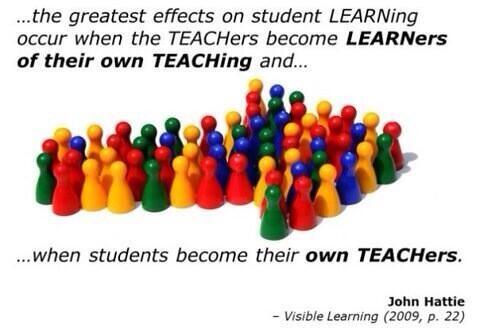
The structured interview helps increase this validity by between .23 and .50 … without scientifically based interview instruments, traditional unstructured selection yields about a 30% (.30) predictive validity. See chart modified from the original:

Validity of Various Assessment Tools from: Schmidt, F., & Hunter, J.  (1998).  The Validity and Utility of Selection Methods in Personnel Psychology: Practical and Theoretical Implications of 85 Years of Research Findings. Psychological Bulletin, 124, 262-274.

Structured Interviews                                    .51

Reference Checks                                            .26

Training & Experience Point Method       .11


For more sources from the US Government Office of Personnel Management, click here: http://apps.opm.gov/ADT/Content.aspx?page=RelatedDocuments

While no system is perfect, we are proud of our systems for selection and development of talent at all levels, administrative, frontline support personnel, teaching staff, etc. We have high expectations for our students, staff, administrators, vendors, partners, everyone with whom we work.

As we seek candidates for our posted vacancies at the time of this post, as we work within and from without to search for the right best fit for each position, we are proud that like the U.S. Air Force, we Aim High!

The competition for teaching positions is at an all time high – for example, right now we have more than 3000 (yes, more than three thousand) active and complete applications in our database.

With all that we have going on as we prepare to bring to closure this pretty amazing school year, we like to take the time to celebrate and share and educate with respect to how we do what we do and how we practice the tenets of our mission Engage, Inspire, Empower – each and every day!

20150311-111453.jpg

Modern world is technology infused – Meet the needs of all learners

“The best kids are going to become the best. But the best thing about it is that you’re going to learn lessons in playing those sports about winning and losing and teamwork and teammates and arguments and everything else that are going to affect you positively for the rest of your life.”
-Carl Lewis

From time to time people ask “why did you go 1:1?”, or “what are the students getting out of all of this technology?”, or “what is our return on investment (ROI)?”. For me and educational leaders all over the world there are many reasons. I have been a champion of and for individualized expression and differentiated learning since I set foot in my first 8th grade social studies classroom in 1993. With the U.S. History Workshop instructional model students had guided practice, options in assessment, consistent expectations – high expectations for all – and we brought history alive so to speak. An amplifier for student learning was is and continues to be technology tools. Do you remember Netscape? I do – Do you remember HyperStudio>? – I do – Do you remember music/video clips to aid instruction (we still do with Discovery Education for example).

I’m proud to lead the 1:1 transformative learning movement in Deerfield with the outstanding leaders and teachers with whom I work every day because our students – like all students – deserve a world class education and learning environment.

Though I’m somewhat conservative in many ways, as a leader my record shows that more often than not I challenge the norm. I read a lot as most educational leaders do, and I aim to engage, inspire, and empower each and every person with whom I work and interact. Thankfully the Board of Education at DPS109 “gets it” and supports that our change and transformation is part of the new normal that we are creating and more importantly we are allowing our students to create.

At a conference recently I was reminded of some deeply relevant and comprehensive studies conducted by Apple including their 1985-1997 longitudinal study of the “why” in terms of using technology tools to amplify and expand student learning opportunities and teacher pedagogical opportunities. In brief, as the speaker shared, the study found that engaged learners supported by great teachers learn more than disengaged learners with not so great teachers. A great deal of engagement is shown to take place when technology and personalization are infused in the learning environment. That is the environment I want in every classroom every day – ENGAGE, Inspire and Empower is our mission/vision/tag line. Engagement is key – excellence is key as well.

The speaker went on to share the key findings from their follow up study from Apple’s Classroom of Tomorrow Today – 2008-2010. Not surprisingly, findings included that student growth and learning is most impacted when the learning environment is: creative, relevant, collaborative, and challenging. High expectations and challenging learning exercises support learning and growth.

Especially in our new leadership experience in DPS109 we review, consider, analyze and refresh the dialogue about our Vision -Why does our institution exist?

Our institution (Public school district) exists so that teachers may teach and students may learn. In addition we exist to allow teachers to provide excellent personalized learning with the best and most effective and impactful methods, resources, plans, and partners. I want our teachers and students to stretch their abilities and growth beyond where they are – technology amplifies – technology tools transform – technology tools open doors that exist all around us and infuse our lives. The partnership of teachers, students, community in support of relevant, challenging and modern learning environments – these are cornerstones of our educational mission, vision, values and goals.

A hot topic is how to meet the needs of different learners in the same classroom. There are volumes of literature and research about this topic, for the purpose of the blog and for this post in particular, I share a term I learned at the leadership institute:

Targeted Pedagogy – (instead of personalized learning or differentiated instruction)

We contemplated a very realistic Personalized Learning Challenge – We consider a typical 5th grade classroom in “anytown” USA (or Canada, Australia, the UK, etc.). This is a classroom where one child is reading at 1st gr and one at 8th grade level, one is reading at the 12+ grade level. With 23 learners, in my opinion, teachers need technology tools to transform the learning experience so the “normal” class can target pedagogy to challenge and meet the needs to close gaps for all children regardless of their individual reading level and remediate 1st grade level. I’ve written about the vast resources our Board provides for our teachers in that we are starting to learn how to leverage individual learning paths based upon valid and reliable metrics so that students are reinforced and challenged for growth and new learning each and every day.

A challenge shared with us at the conference was to ask teachers to shed their rooms of their file cabinets … reach out into the future – not the past – to curate, create, collaborate, and construct learning environments where each and every child is taken from their point to points far beyond any limits.

Engage, Inspire, Empower

John Hattie’s 8 Mindframes for Teachers

“By word and/or personal example, leaders markedly influence the behaviors, thoughts, and/or feelings of their fellow human beings. All leadership takes place through the communication of ideas to the minds of others.”
Howard Gardner

The major findings - distilling from millions of studies on what works.

The major findings – distilling from millions of studies on what works.


Currently the greatest source of what works in education, effects of impact on teaching and learning, comes from the extensive research and publishing of John Hattie. Hattie is Professor and Director of the Melbourne Education Research Institute of Melbourne, Australia and his extensive work shares a great deal of research based information and guidance about how we can impact student learning in meaningful and impactful ways. From his book Visible Learning for Teachers: Maximizing Impact on Learning he shares Eight Mind Frames (listed below and depicted in the video clip):

Mind Frame 1. Teachers/leaders believe that their fundamental task is to evaluate the effect of their teaching on students’ learning and achievement.

2. Teachers/leaders believe that success and failure in student learning are about what they, as teachers or leaders, did or did not do…We are change agents!

3. Teachers/leaders want to talk more about the learning than the teaching.

4. Teachers/leaders see assessment as feedback about their impact.

5. Teachers/leaders engage in dialogue not monologue.

6. Teachers/leaders enjoy the challenge and never retreat to “doing their best”.

7. Teachers/leaders believe that it is their role to develop positive relationships in classroom/staffrooms.

Mind Frame 8. Teachers/leaders inform all about the language of learning.