Either write something worth reading or do something worth writing.”
– Benjamin Franklin
With this school year coming to a close on June 4, 2020 I was reflecting on the power of a teacher, and in February 2017 I shared a similar story about one of the most impactful educators in my life. I thought it would be a good time to reflect on Dr. McFarland and share his impact on me again as we prepare to bring the most unprecedented school year to a close! Originally shared in February, 2017 I shared some thoughts about how a college professor from an undergraduate course on the American Presidency from many years ago impacted my life and my professional journey. A journey that currently has some powerful meaning/relevance with our district’s move to remote e-Learning. With this blog post, I’ll draw the connections!
As a former 6th and 8th grade social studies teacher (U.S. history, civics, law, world history, reading, etc.) I have a deep interest in our nation’s culture, history, values, beliefs, celebrations, etc. In addition, I hold a degree in political science, so I have been a “policy wonk” for many years, and to this day I follow the news, politics, etc.
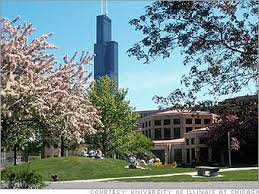
While I was a student at the University of Illinois at Chicago, UIC, I had some of the best teachers in my life. The late Dr. Twiley Barker Jr., Dr. Kevin Lyles, and Dr. Andrew McFarland, to name a few. During a course on the American Presidency, POLS 229, an event took place in my life that impacted my philosophies, beliefs, and actions as a teacher and educational leader over the past 30 years. In some ways it likely shaped my philosophies and impact as a teacher and as an educational leader so many years later. Right now there is a current challenging transition from the abrupt changes to remote e-Learning and how teachers have to “report progress” in this unusual time. Looking back at my personal educational history, I’m reminded of why meaningful feedback, teacher /student relationships, and the mastery of content and the flexibility of instruction supersedes any percentage grade or mark in terms of meaningful feedback and communication about learning.
 With this blog post, I’m reflecting on the congruity of an impactful event in my life during an undergraduate course, and the realization that this impactful event has impacted my beliefs whether I consciously knew about it or not. This is an “aha” moment for me – this is partially why I so strongly believe the growing pains and transition are worth the time, effort, energy, and extra work involved in pupil progress reporting.
 Change is hard (I’ve written a lot about the change process) – Unlearning is hard (I have also written about this concept).
My college professor Dr. Andrew McFarland gave me a chance in the “real world” -when I was in college. Because he knew me, he knew what kind of student I was – he knew my passion for political science he treated me like I was more than a percentage or a score. Dr. McFarland also taught so that students would learn. He had high standards for each and every student and he held himself to high standards too.
So what is this all about? What is this big event that caused me an “aha” moment? Dr. McFarland called me one night while I was eating dinner with my parents; it was 5:30pm – I don’t know how I remember this fact, but I do. This event took place in 1988 or 1989 and I still vividly remember our call!
He called me that night because earlier that day when I took the final exam, I inadvertently forgot to answer one or two additional questions. If Dr. McFarland graded or assessed based on the “old” system I would have received an F. Dr. McFarland, though, was using standards based learning and instruction (whether he or I knew it or not). He called me on the phone and asked me to respond to the final exam question prompts – for 30 maybe 60 minutes. Because he cared about learning – not about percentages or “harsh” lessons, I was able to demonstrate mastery and competency of the American Presidency course (in which I did earn an A, not only because of what I learned, but more importantly, because my professor cared about discovering what his students knew).
He assessed my knowledge acquisition in an alternative learning setting because my teacher was more concerned about assessing my learning and mastery than he was about issuing a grade or a percentage. Had this caring professor used traditional methods I would have failed the exam. In my opinion and in my experiences, standards based grading, reporting, learning, and assessment actually prepares people for real life by holding them accountable to learn. Thank you Dr. McFarland!
Our district will transition through this remote e-Learning to next year (whatever that may be … ideally safe, healthy, and in person). Through this transformational experience for our schooling and for our society, we have all shown how quickly we can unlearn when we must, we have shown how we can relearn schooling, and we will show that we can learn how to create a new reality as necessary.
Dr. McFarland unlearned old school and rigid grading and assessment practices and I consider him to be remarkable and gifted, he was a leader who impacted me and my practice. Let’s use modern instructional strategies to maximize the impact and effect of learning whether we’re in person or remote, or in a hybrid combination of both. Let’s help people unlearn practices that make no sense other than to have been used in their past school experiences.
Preparing students for the future world requires teaching them content that is meaningful in learning environments that are powerfully purposeful and full of clear, regular, meaningful feedback and opportunities to learn and demonstrate learning. As we bring the school year to a close, we are reminded of the impact and power of a teacher and his or her feedback. Thank you to all educators — and thank you again, Dr. McFarland!