The Unlearning Leader – Sharing a Mindset

“The illiterate of the 21st Century will not be those who cannot read and write, but those who can learn, unlearn, and relearn.” – Toffler

Nick Polyak and I wrote the Unlearning Leader: Leading for Tomorrow’s Schools Today (2017 Rowman & Littlefield) and we have had the good fortune to speak about the messages in the book all over our home state of Illinois, around the USA, and overseas as well. We did not “invent” the concept of unlearning, of course, and we’re not the first authors to publish on unlearning, either. We are called to UNLEARN in our service to Students, Communities, Boards of Education, Educational Support Staff, Teachers, Parents, & Society in general!

In this post, I’m sharing an excerpt of the book for reference, as well as an audio file from a recent keynote address Nick and I presented in Chicago. If you would like to read an article about our book, use this link from an article published in the Spring 2019 Update from the Illinois Association of School Business Officials.

We would love your input and insights on the concept of unlearning in your own leadership and in support of your own journey. Please comment and if you have read the book and you like it, feel free to share an Amazon comment/review.

Click the audio player to hear the Keynote address Nick and I presented at Cognia Connect Midwest, in Chicago:

From the Unlearning Leader: Leading for Tomorrow’s Schools Today – Preface:

Preface:
The Time is Now
In some school systems, executive leadership still does not understand or value current methods of communication, especially technological methods. Their relative lack of knowledge about social connectivity can become quite detrimental to a school system in search of change, innovation, and leadership. We want to help school leaders unlearn their current approaches to leadership in how they “connect”, lead, support student learning, transform schools, and impact organizational culture.

We wrote this book to celebrate the connected leader, show case study examples of change and modern change processes, and to help leaders unlearn to relearn! The premise of this book is that we all need to unlearn. Our landscape is applied to leadership, classrooms, pedagogy, and education in general. In order to change and prepare for tomorrow, we submit that much of what we have learned must be unlearned as we aim to create a new tomorrow for our nation’s children.

Our current public school system was essentially created by ten university leaders in the 1890’s. A lot has changed since then, yet our structures in public schools seem unable to unlearn the structures and conventions from the 19th Century. Our purposes include supporting leaders to lead and enabling leaders to lead for tomorrow’s schools. There is an urgency for change.

Futurist Jack Uldrich has made presentations across the country about the concept of unlearning. While at a Future Ready Summit in Illinois, we participated in an activity that has been practiced across the country from Jack and others. We were asked one simple question, “What color are yield signs?” Sounds simple. Uldrich asked the audience to raise their hands if they thought yield signs are yellow and black.

The majority of those in the audience raised their hands in a sign of agreement that yield signs are yellow and black. That was the correct answer, many years ago when members in the audience first learned about yield signs. Years after the audience members learned the yellow and black color scheme the yield signs across the country changed to red and white.

Folks knew intellectually that the signs were no longer yellow and black, but they “learned” this earlier in their lives and knowledge proves difficult to unlearn. This provides a powerful lesson about our need to unlearn old knowledge in order to modernize our thinking as to what is true today. And it shows the challenge. That which leaders learned early on in their careers, or in leadership schools, often stifles their growth with their inability to unlearn.

The world is changing at an exponential pace, but oftentimes our educational leaders and our educational systems are not. This experience (with the yield sign) was an epiphany of sorts for both us that has led us to look at educational leadership through the lens of unlearning.

Horace Mann is credited with saying
“Education then, beyond all other devices of human origin, is the great equalizer of the conditions of men, the balance-wheel of the social machinery.”

Now, more than ever, with the nation becoming an ethnic “minority-majority” leaders need to unlearn and to unleash powerful innovation in the new reality. Today is far different from yesterday. Leaders must get out from behind their desks and integrate doing and empowering others with managing and leading from a 30,000 ft. view.

Since 1983 our nation’s schools have been at risk. Since 2002 we have been leaving no child behind. Now with ESEA reauthorization, we are getting ready for every student to succeed. In order for every student to succeed, school leaders must unlearn the old ways and learn and practice leadership through innovative methods and courageous actions.

Representing careers in leadership and public education spanning many decades and impacting thousands of K-12 students and teachers, we are sharing a passion for excellence in education with the leadership lessons and insights throughout this book. We serve as educational leaders as part of a larger calling to serve. We wrote this book as part of this calling.

Students in each grade level have but one chance to experience that grade level. Students don’t have time to wait. We mentioned a sense of urgency – the urgency is that the 19th-century structures no longer serve as relevant to the needs of modern society. Why has it been so hard to change structures in schools? We submit that it is part of the challenge of unlearning. “Everyone” has attended school – they have a construct as to what it should be.

We are learned leaders in the education space. We too were schooled in traditional, 19th-century structures though we have enjoyed success and fulfillment. And we are from another era than our students. It’s incumbent upon us as leaders to demonstrate organizational agility and flexibility so that the current needs of children are reflected in the nation’s schools. We have a moral imperative, an economic imperative, a pedagogical imperative and leadership imperative to unlearn.

Just because our teachers, leaders, members of elected boards of education, parents, grandparents, and the community at large learned what school is – in another era – that does not mean we current leaders need to lead for nostalgia. Nostalgia has a place – in museums and other venues, but not in schools. Unlearning an individual’s experiences proves quite difficult. Learning is wired and challenging to unlearn.

Policymakers don’t know what is current in education – they know what made them successful and happy – they don’t know what is needed now since often they are many levels removed from schooling. Yet it is policymakers who are credited with legislating mandates, standards, expectations, training, rules, etc. yet they base their views on their own construct of education and schooling – that of nostalgia.

We wrote this book because nostalgic policies might be destroying public education. Nostalgic experiences are actually incongruous with the information generation. Voices in telephone devices can restate the 50 state capitals – that doesn’t mean it’s not important to learn the 50 state capitals, it means that memorization is not the only form of “learning” anymore. Just because you, your mother, your aunt, your grandfather, and his great grandfather also memorized capitals in 4th grade does not mean that it’s relevant for today’s youth.

We wrote this book because leaders who unlearn and innovate make possible opportunities for children. We wrote this book because leaders can unlearn ways of the past to create new and relevant futures. We wrote this book because so many great coaches and mentors and friends guide and support our unlearning and we feel called to share and illustrate how unlearning is impacting systems in our care. The time is now to change, unlearn, create a new system and a new construct of structures for schooling – we have the knowledge and we have the will, let’s unlearn together!
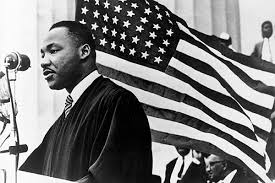
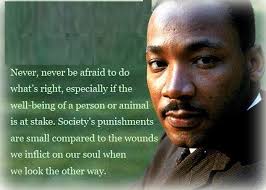
Honoring Dr. Martin Luther King Jr. – #engage109

“Live without pretending, love without depending, listen without defending and speak without offending.”
– Unknown

On Monday, January 16, 2017, our students have a “day off” – and in honor of this holiday honoring the great late American hero, we encourage service and reflection about the heroism and great work of Dr. Martin Luther King Jr. His

ENGAGE, INSPIRE, EMPOWER

messages and methods and beliefs and life’s work are especially relevant in today’s reality of conflict around the world.

(shared last year in honor of Dr. King’s Birthday):From Wikipedia:

Martin Luther King, Jr. Day (officially Birthday of Martin Luther King, Jr.)[1] is an American federal holiday marking the birthday of Martin Luther King, Jr. It is observed on the third Monday of January each year, which is around King’s birthday, January 15. The holiday is images (3)similar to holidays set under the Uniform Monday Holiday Act.

King was the chief spokesman for nonviolent activism in the Civil Rights Movement, which successfully protested racial discrimination in federal and state law. The campaign for a federal holiday in King’s honor began soon after his assassination in 1968. President Ronald Reagan signed the holiday into law in 1983, and it was first observed three years later. At first, some states resisted observing the holiday as such, giving it alternative names or combining it with other holidays. It was officially observed in all 50 states for the first time in 2000.


Give Where You Live –Deerfield: Participate in Day of Service on Martin Luther King Jr. Day

From a note we sent to our community today:

“Dear District 109 Community Members,

While schools are closed in observance of Martin Luther King, Jr. Day tomorrow, we have an opportunity to come together as a community in a day of service right here in Deerfield for Give Where You Live – Deerfield. On Monday, January 16, from 1:00pm to 3:00pm, round up your friends and come to Village Hall to participate in a variety of service projects available, appropriate for all ages, to benefit our area homeless. Volunteers are needed to collect and sort items, assemble gift bags, write letters and cards, along with other activities.

You also can bring items to donate, including socks, travel size hygiene products (soap, shampoo, conditioner, tissue, toothbrushes, toothpaste, etc.), water bottles, gift cards, and healthy snacks.

Deerfield Village Hall is located at 850 Waukegan Road.”

Click here for more information.


Excerpts from a blog post I wrote in the past:

A recommendation I have is for everyone to share the messages, teachings, precepts and principles espoused by King with their children and with their communities.

While we in the USA have come a long way since 1963 – we still have a long way to go until Dr. King’s dreams are fully realized. An educated youth and an educated populace with morals and values centered in respect, honor, and dignity can set the world free from racism and prejudice!

The transcript of the “I Have a Dream Speech”:

I am happy to join with you today in what will go down in history as the greatest demonstration for freedom in the histimages (5)ory of our nation.

Five score years ago, a great American, in whose symbolic shadow we stand today, signed the Emancipation Proclamation. This momentous decree came as a great beacon light of hope to millions of Negro slaves who had been seared in the flames of withering injustice. It came as a joyous daybreak to end the long night of their captivity.

But 100 years later, the Negro still is not free. One hundred years later, the life of the Negro is still sadly crippled by the manacles of segregation and the chains of discrimination. One hundred years later, the Negro lives on a lonely island of poverty in the midst of a vast ocean of material prosperity. One hundred years later, the Negro is still languished in the corners of American society and finds himself an exile in his own land. And so we’ve come here today to dramatize a shameful condition.

In a sense we’ve come to our nation’s capital to cash a check. When the architects of our republic wrote the magnificent words of the Constitution and the Declaration of Independence, they were signing a promissory note to which every American was to fall heir. This note was a promise that all men — yes, black men as well as white men — would be guaranteed the unalienable rights of life, liberty, and the pursuit of happiness.

It is obvious today that America has defaulted on this promissory note insofar as her citizens of color are concerned. Instead of honoring this sacred obligation, America has given the Negro people a bad check, a check that has come back marked “insufficient funds.”

But we refuse to believe that the bank of justice is bankrupt. We refuse to believe that there are insufficient funds in the great vaults of opportunity of this nation. And so we’ve come to cash this check, a check that will give us upon demand the riches of freedom and security of justice. We have also come to this hallowed spot to remind America of the fierce urgency of now. This is no time to engage in the luxury of cooling off or to take the tranquilizing drug of gradualism. Now is the time to make real the promises of democracy. Now is the time to rise from the dark and desolate valley of segregation to the sunlit path of racial justice. Now is the time to lift our nation from the quicksands of racial injustice to the solid rock of brotherhood. Now is the time to make justice a reality for all of God’s children.

It would be fatal for the nation to overlook the urgency of the moment. This sweltering summer of the Negro’s legitimate discontent will not pass until there is an invigorating autumn of freedom and equality. 1963 is not an end but a beginning. Those who hoped that the Negro needed to blow off steam and will now be content will have a rude awakening if the nation returns to business as usual. There will be neither rest nor tranquility in America until the Negro is granted his citizenship rights. The whirlwinds of revolt will continue to shake the foundations of our nation until the bright day of justice emerges.

But there is something that I must say to my people who stand on the warm threshold which leads into the palace of justice. In the process of gaining our rightful place we must not be guilty of wrongful deeds. Let us not seek to satisfy our thirst for freedom by drinking from the cup of bitterness and hatred. We must forever conduct our struggle on the high plane of dignity and discipline. We must not allow our creative protest to degenerate into physical violence. Again and again we must rise to the majestic heights of meeting physical force with soul force. The marvelous new militancy which has engulfed the Negro community must not lead us to a distrust of all white people, for many of our white brothers, as evidenced by their presence here today, have come to realize that their destiny is tied up with our destiny. And they have come to realize that their freedom is inextricably bound to our freedom. We cannot walk alone.

As we walk, we must make the pledge that we shall always march ahead. We cannot turn back. There are those who are asking the devotees of civil rights, “When will you be satisfied?” We can never be satisfied as long as the Negro is the victim of the unspeakable horrors of police brutality. We can never be satisfied as long as our bodies, heavy with the fatigue of travel, cannot gain lodging in the motels of the highways and the hotels of the cities. We cannot be satisfied as long as the Negro’s basic mobility is from download (1)a smaller ghetto to a larger one. We can never be satisfied as long as our children are stripped of their selfhood and robbed of their dignity by signs stating “for whites only.” We cannot be satisfied as long as a Negro in Mississippi cannot vote and a Negro in New York believes he has nothing for which to vote. No, no we are not satisfied and we will not be satisfied until justice rolls down like waters and righteousness like a mighty stream.

I am not unmindful that some of you have come here out of great trials and tribulations. Some of you have come fresh from narrow jail cells. Some of you have come from areas where your quest for freedom left you battered by storms of persecution and staggered by the winds of police brutality. You have been the veterans of creative suffering. Continue to work with the faith that unearned suffering is redemptive.

Go back to Mississippi, go back to Alabama, go back to South Carolina, go back to Georgia, go back to Louisiana, go back to the slums and ghettos of our northern cities, knowing that somehow this situation can and will be changed.

Let us not wallow in the valley of despair. I say to you today my friends — so even though we face the difficulties of today and tomorrow, I still have a dream. It is a dream deeply rooted in the American dream.

I have a dream that one day this nation will rise up and live out the true meaning of its creed: “We hold these truths to be self-evident, that all men are created equal.”

I have a dream that one day on the red hills of Georgia the sons of former slaves and the sons of former slave owners will be able to sit down together at the table of brotherhood.

I have a dream that one day even the state of Mississippi, a state sweltering with the heat of injustice, sweltering with the heat of oppression, will be transformed into an oasis of freedom and justice.

I have a dream that my four little children will one day live in a nation where they will not be judged by the color of their skin but by the content of their character.

I have a dream today.

I have a dream that one day down in Alabama, with its vicious racists, with its governor having his lips dripping with the words of interposition and nullification — one day right there in Alabama little black boys and black girls will be able to join hands with little white boys and white girls as sisters and brothers.

I have a dream today.

I have a dream that one day every valley shall be exalted, and every hill and mountain shall be made low, the rough places will be made plain, and the crooked places will be made straight, and the glory of the Lord shall be revealed and all flesh shall see it together.

This is our hope. This is the faith that I go back to the South with. With this faith we will be able to hew out of the mountain of despair a stone of hope. With this faith we will be able to transform the jangling discords of our nation into a beautiful symphony of brotherhood. With this faith we will be able to work together, to pray together, to struggle together, to go to jail together, to stand up for freedom together, knowing that we will be free one day.

This will be the day, this will be the day when all of God’s children will be able to sing with new meaning “My country ’tis of thee, sweet land of liberty, of thee I sing. Land where my father’s died, land of the Pilgrim’s pride, from every mountainside, let freedom ring!”

And if America is to be a great nation, this must become true. And so let freedom ring from the prodigious hilltops of New Hampshire. Let freedom ring from the mighty mountains of New York. Let freedom ring from the heightening Alleghenies of Pennsylvania.

Let freedom ring from the snow-capped Rockies of Colorado. Let freedom ring from the curvaceous slopes of California.

But not only that; let freedom ring from Stone Mountain of Georgia.

Let freedom ring from Lookout Mountain of Tennessee.

Let freedom ring from every hill and molehill of Mississippi — from every mountainside.

Let freedom ring. And when this happens, and when we allow freedom ring — when we let it ring from every village and every hamlet, from every state and every city, we will be able to speed up that day when all of God’s children — black men and white men, Jews and Gentiles, Protestants and Catholics — will be able to join hands and sing in the words of the old Negro spiritual: “Free at last! Free at last! Thank God Almighty, we are free at last!”

Source: http://www.foxnews.com/us/2013/08/27/transcript-martin-luther-king-jr-have-dream-speech/

Community Connections – Sharing Updates with Local Groups – Community Service

“It’s your place in the world; it’s your life. Go on and do all you can with it, and make it the life you want to live. ”
– Mae Jemison , First African American female astronaut

As part of our school district’s leadership planning we take pride in sharing our messages and interacting with community members as often as possible. Annually we share our State of the District message with the Board of Education, Picture (Device Independent Bitmap) 1annually we visit at the local Farmer’s Market, and annually we present to our local senior citizen organization. In addition, members of our leadership team are active in local civic and service groups like the Optimists and the Rotary. We truly believe “it takes a village to raise a child” and we take optimistclubgreat pride in being responsible members of the Village. Together with the Park District, Village, Police and Fire Departments, Library and other school districts, we work in concert with one another on behalf of service and community.
ittakesavillage
As school district leaders we are keenly aware that we serve a community larger than our 3000 students and 400 staff. We serve the entire village and surrounding areas. We serve youth, seniors, and everyone in between. Our grandparent initiative is another example of reaching out to members of the community who have indirect relations and invaluable experiences and value. Through philanthropy, outreach, and service learning we teach our students about the value of giving and helping. Through communication efforts we spread the good words and tell our stories. We also listen – 24/7 – we have a service called Let’s Talk where people can reach out anonymously or with identification – we listen and we can respond via this service.

See the presentation we made at the Patty Turner Senior Center Men’s/Women’s Club earlier this month:

In addition to periodic visits and updates, we also partner with local agencies and groups on 24/7 initiatives like Text-a-Tip in support of youth safety and community wrap around: