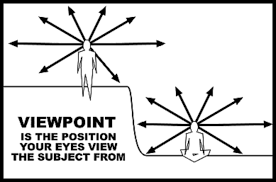
Perspective and Context – #Engage109

“Happiness is not something ready-made. It comes from your actions.”
– Dalai Lama 

As we approach this holiday season and the end of 2016 many people are busy getting the “new year’s resolutions” … eat better, exercise more, spend more time in nature, etc… The end of year is a fine 2017time for reflection and contemplation.

Did we accomplish what we set out to accomplish in 2016? Did we do the best we could for ourselves, our families, our co-workers, our communities? Did we listen enough to opposing viewpoints? Did we stand up for what is right? Questions like those and so many more fill our minds and hearts as the work world slows down, if only for the week between Christmas and New Years Day.20140803-165030.jpg

Whatever we did in 2016 … it’s coming to a close.

2017 allows us new opportunities, new learning, new challenges, and new realities! As this year comes to a close, and as I write the final blog post of 2016, I realized that my blog, in effect since July 2013, has about 300 posts.

So in roughly three and a half years I’ve written 300 posts, responded to about 100 comments; there have been 50,000 page views with an average reader spending a minute and a half reading the posts. Google Analytics reports that there have been 23,458 users engaging in one form or another with the blog. 40% of the blog readers are regulars and 60% of the readers are categorized as new visitors. This is pretty cool – in the context of one person’s blog. Is this significant in terms of all bloggers? Is this significant in the blog world of superintendents? Depends on the context of review.

Readers of this blog hail from the United States, Australia, Canada, the United Kingdom, Russia, China, India, Brazil, Japan, and some 1100 sessions unidentified.

The title of this blog post Perspective and Context came to me after viewing the following video that gives perspective to how earth relates to the rest of the “universe”. The context is “space” and size:

Our universe, this blog, your identity – all form ‘parts of wholes’. Wherever we are in time and space, from wherever we hail, we are significant and meaningful. Ideally we always add value to our family, our community, our world. We, though, are but a small parts of a larger reality.

Regardless of our perspectives, our importance, our perspectivevalue, we must be mindful of context. We also must be mindful that each new year allows us to learn more, to grow more, to do a better job than perhaps we did last year.

The new year allows us to “reset” to redo, to start whatever it is we’re doing with fresh eyes. Perspective and Context guide and define our thoughts and actions.

Earlier this year in the Deerfield Public Schools District 109, we spent time looking at two films: Beyond Measure and Most Likely to Succeed. Both were shown to hundreds of people in our community. Both challenged long held assumptions about public education and the forms of instruction best suited for our future. Both challenged our perspectives and caused a review of our context. I wrote blog posts about these films and the viewing experiences.

CScRi5IWsAAIIv8

As we approach 2017, I’m equally as energized with hope and vision about the realities we will create here in Deerfield, IL, and Riverwoods, IL (my small parts of the world) on behalf of students, staff, and community. We are on the forefront of causing change, perhaps forcing change in some contexts on behalf of the future we are creating – like it or not – we in education are future creators.

Are we supporting structures and systems that perpetuate the 1893 era thinking and needs and context? Or do we change our perspective and support structures designed for future context.

Happy New Year 2017

Best wishes to us all to consider our perspectives and to consider our contexts, and to realize the value and power of change for innovation, improvement, and the future.

future


ENGAGE, INSPIRE, EMPOWER

ENGAGE, INSPIRE, EMPOWER


How school superintendents explored the future of learning together

“When a gifted team dedicates itself to unselfish trust and combines instinct with boldness and effort, it is ready to climb.”
– Patanjali

google-a51985becaa6

This following is from a blog post I co-authored with Nick Polyak, and it is originally published on the Google EDU blog

How school superintendents explored the future of learning together

As education leaders, we’re expected to have all the answers. When we don’t, we solve problems by talking to our peers. The School Superintendents Association (AASA) invites administrators and educators to come together and talk about the challenges superintendents face, like how best to integrate technology in the classroom. This is a focus of the AASA’s digital consortium leadership cohort, which recently reached out to Google to see how they could further the AASA’s goal of leading new ways to use digital media in classrooms. We also reached out to Education Reimagined, an organization that advocates a paradigm shift to learner-centered education.

Google hosted a meeting of the AASA’s digital consortium with Education Reimagined at Google’s Chicago office in July 2016. Our discussion led us to realize we were thinking about the problem we wanted to solve in the wrong way. We had been making plans for how technology would transform our schools without considering one of the most important voices — our students! “The group’s discussion was a powerful reminder that we don’t make decisions in a vacuum,” said Mort Sherman, Associate Executive Director of the AASA. Putting student voices at the center of everything we do will help us design the future with them and for them. This will be a long journey for all of us, but one we are thrilled to embark on.

Putting student voices at the center of everything we do will help us design the future with them and for them.

Discovering student voices

At the Google office in Chicago, Education Reimagined Director Kelly Young kicked off the day by emphasizing the need to put students at the center. She advocated for a student-centered approach, where learning revolves around the needs of individual students instead of traditional classroom structures. She also encouraged us to bring students to the event to make sure that student input informed all of our discussions.

Google then worked with us to leverage their innovation methodology, informally known as “10x thinking” or “moonshot thinking” to help solve the challenges we were facing. It’s a version of “human-centered design thinking” that helps participants develop solutions while keeping the end-user at the center of the process.

GEDU_AASA.jpg
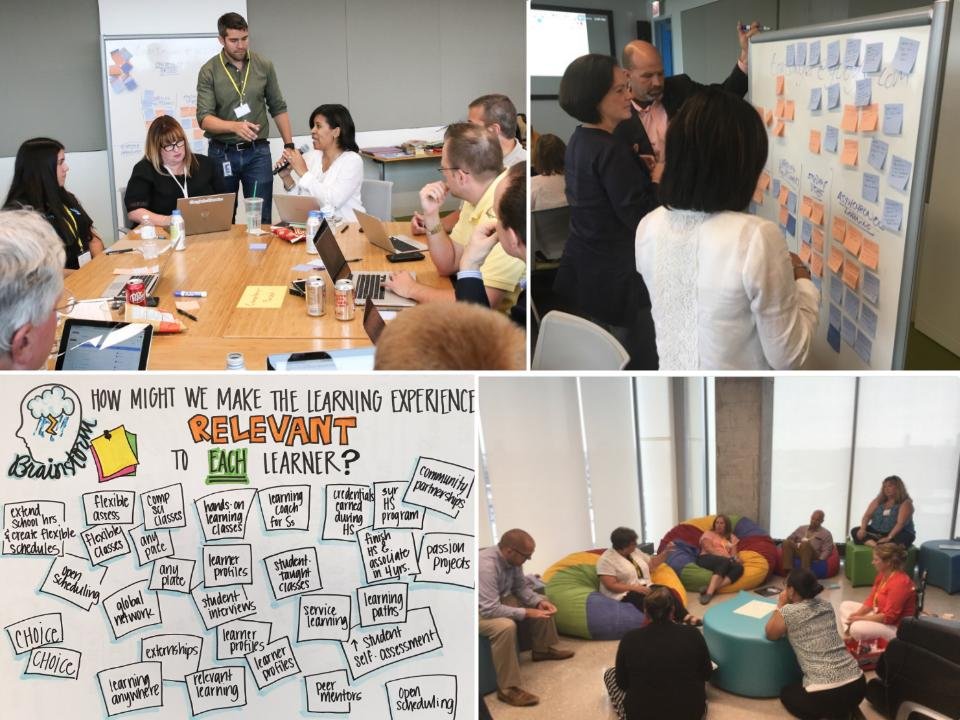
Superintendents used a design thinking process to explore learner-centered education
GEDU_AASA_students1.jpg
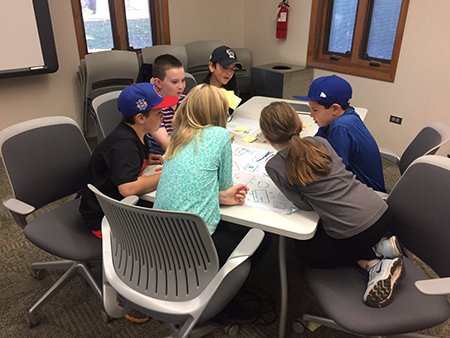
In the STAT program at Deerfield Public School District 109, students facilitate a technology review committee meeting.

As we began, it occurred to us all that students are our users, and our users weren’t part of our conversation as much as they should be. Without their input, we wouldn’t be poised for success, because we weren’t empathizing with their daily experience. By going through the 10x process with the students present, we gave them a voice in a way we rarely do. As the realization of user-centric education sunk in, we were excited to share our takeaways with our schools.

After meeting in Chicago, we returned to our districts to put this learner-centric approach into action. Leyden High School District 212, for example, created two student advisory board member posts, giving students the opportunity to weigh in on meaningful decisions. Another, Deerfield Public School District 109, set up the STAT program (Student Technology Advisory Team), in which students provide their input on how technology in the classroom impacts them and what tools, devices, or practices are relevant and effective from their perspective. These are just two examples of the learner-centric transformation happening across the country.

Cementing our progress

More recently the AASA’s digital consortium re-convened in California to discuss, among other things, how we could turn this “aha” moment into action. A huge barrier to action is getting buy-in from teachers and parents, most of whom grew up in a classroom-centric education system.

Consider this: each of us spends over 16,000 hours in the classroom — that’s a lot of experience to work against. So together, we’re working to develop ways for schools to pilot learner-centric education without abruptly abandoning the classroom model. Google’s approach to innovation had us work through six questions in groups. We asked questions such as “If I look back in 12 months, how will I know I succeeded?” We ended the session with answers to some of the questions we had posed, bearing in mind our work isn’t finished.

We’re still working to implement learner-centered education in schools. And it’s not easy. When we meet next spring, our superintendents will report on progress made in individual schools and districts.

It took combining Google’s approach to problem solving, the philosophy from Education Reimagined and the amazing network of superintendents brought together by the AASA to help us think differently about the role of technology in learning. Now that we’ve identified the paradigm shift that needs to happen, we’re excited to share our moment of realization with districts, schools, and classrooms across the country.

GEDU_AASA_students2.jpg
Vanessa Gallegos, left, of East Leyden and Noelle Lowther of West Leyden were introduced as student representatives for the school board during a meeting on May 12 at East Leyden High School.

From the Future Ready Team – “Speak Up Surveys”

“Success isn’t something that just happens. Success is learned, success is practiced, and then it is shared.”
– Sparky Anderson


Sharing an excerpt of an email as well as survey links on behalf of the Future Ready Schools

We want you to Speak Up! Future Ready Schools (FRS) is helping to support Project Tomorrow on the 2016 Speak Up surveys.

If you are not yet familiar, Speak Up is a national research project as well as a free service to school districts. The survey should take about 15 minutes and includes a series of multiple choice questions.

If you are interested in using any of the other Speak Up surveys (for teachers, school administrators, students, parents, librarians, community members), they are open through January 13th.

To learn more, please visit: http://www.tomorrow.org/speakup.

Thanks for taking the time to participate.

Our Best,

The Future Ready Team
Sara Hall, Tom Murray and Lia Dossin

Why Must We Change Instructional/Organizational Practices in Education? – #engage109

“Consider the rights of others before your own feelings, and the feelings of others before your own rights.”
– John Wooden


Why change?

What is the sense of urgency?

Why do we constantly seek new and better ways to educate?

Well … for many reasons … among them – the world is different today – like it or not – there is new research, empirical evidence of impact and effects (see John Hattie and a number of posts I have written) yet it is so hard to change habits and it is so hard to make people believe in change since change also causes loss …

From time to time I post “Did you Know” videos … today I’m posting a new version – please take a few moments to watch the video and think – then watch the second video and please share your thoughts and comments.

The next video has some repeat information – but it’s worth a look:

Change is needed in the schools today. In a recent article in the December 2016 issue of District Administration (on page 10), Marc Prensky is quoted:

…”Up until now education has been about improving individuals, “he says. “What education should be about in the future is improving the world–and having individuals improve in the process.”

What does that mean to you?

How does all of this reconcile with the empirical evidence of what works in education (and what myths need to be corrected) (from Hattie, et. al)?

This is an exciting and quite arduous time to be a public educator.


From my 2/25/2014 POST where I repost material from Dana Schon:

An Index Of Teaching & Learning Strategies: 39 Effect Sizes In Ascending Order by Dana Schonsai-iowa.org

Effect Size Defined-Statistically speaking, the strength of the relationship between two variables. John Hattie, Professor of Education and Director of the Melbourne Education Research Institute at the University of Melbourne, Australia, says ‘effect sizes’ are the best way of answering the question ‘what has the greatest influence on student learning?’Effect Size Applied

  • Reverse effects are self-explanatory, and below 0.0
  • Developmental effects are 0.0 to 0.15, and the improvement a child may be expected to show in a year simply through growing up, without any schooling. (These levels are determined with reference to countries with little or no schooling.)
  • Teacher effects “Teachers typically can attain d=0.20 to d=0.40 growth per year—and this can be considered average”…but subject to a lot of variation.
  • Desired effects are those above d=0.30 (Wiliam, Lee, Harrison, and Black 2004) and d=0.40 (Hattie, 1999) which are attributable to the specific interventions or methods being researched– changes beyond natural maturation or chance.
  • Blatantly obvious effectsAn effect-size of d=1.0 indicates an increase of one standard deviation… A one standard deviation increase is typically associated with advancing children’s achievement by two to three years*, improving the rate of learning by 50%, or a correlation between some variable (e.g., amount of homework) and achievement of approximately r=0.50. When implementing a new program, an effect-size of 1.0 would mean that, on average, students receiving that treatment would exceed 84% of students not receiving that treatment.
 Cohen (1988) argued that an effect size of d=1.0 should be regarded as a large, blatantly obvious, and grossly perceptible difference [such as] the difference between a person at 5’3″ (160 cm) and 6’0″ (183 cm)—which would be a difference visible to the naked eye.

Effect Size CAUTION

Reduce temptation to oversimplify. This is one more resource in our efforts to problem-solve on behalf of our students. We need to be careful about drawing too definite a conclusion from an effect size without examining the study. For example, homework is shown to have an overall effect size of 0.29, which is low and well below the average of 0.40. But when you look more closely, you find that primary students gain least from homework (d = 0.15) while secondary students have greater gains (d = 0.64).

Editor’s Note

Data is only as useful as its application. As hinted at above, don’t fall into the trap of assuming the teaching and learning strategies and other impacts on student achievement at the top of the list are “bad,” and those at the bottom are “good.” These are not recommendations, but rather a comprehensive synthesis of a huge amount of data. Every study has a story, and every strategy and impacting agent below has a background.

Ultimately, to best use this data to inform teaching and planning, every study we need to be looked at on its own. We would need to clarify what the terms were for success. Two of Hattie’s books–Visible Learning and the Science of How We Learn, and Visible Learning: A Synthesis of Over 800 Meta-Analyses Relating to Achievement–must-buys so that you can do that kind of analysis on your own rather than skimming a blog post and extracting misguided takeaways …That said, the results of the synthesizing of the data appear below.

What Has The Greatest Influence On Learning? A Synthesis Of Hattie’s Synthesis

Retention (holding back a year)

-0.13

Repeating a grade. Also negatively correlated with social/emotional adjustment, behavior, and self-concept.
Open vs traditional learning spaces

0.01

Open classrooms range widely in features—not correlated to increases in achievement.
Student control over learning

0.04

Effect of student choice and control over learning is somewhat higher on motivation outcomes than achievement outcomes, but neither have major consequences on learning and too many choices can be overwhelming.
Teacher subject matter knowledge

0.09

Little data to support claim that teacher content knowledge is critical to student achievement. Darling-Hammond claims content knowledge influential up to some level of basic competence but less so thereafter. Since publishing Visible Learning, Hattie has studied this topic more in depth and has shared that the issue is a pedagogical issue—teaching is occurring at a surface level such that deep content knowledge has not presented itself as influential or not. Expert teachers know how to connect their content to other relevant issues and content and how to organize that content.
Ability grouping/tracking/streaming

0.12

Refers to whether classes are heterogeneous or homogeneous. Studies consider achievement effects and equity effects. More than 300 studies show tracking has minimal effects on learning outcomes and “profound negative equity effects.”Separate gifted programming is not considered in this set of studies—see ability grouping for gifted.
Gender (male compared with female achievement)

0.12

Males and females are more alike than they are different, and differences are minor. 2,926 studies all point to the same conclusion. “The differences between males and females should not be of major concern to educators.”
Matching teaching with student learning styles

0.17

Contends different students have differing preferences for particular ways of learning—auditory, visual, tactile, or kinesthetic, for example. No gains in achievement found when teacher matched instruction to preferred modality.  Much skepticism surrounding claims around learning preferences. Research does not support correlation between matching learning style and increased achievement.
Within-class grouping

0.18

Defined as “teacher’s practice of forming groups of students of similar ability within an individual class.” Such groups that were studied were formed on semi-permanent basis. This is different from grouping for purpose of targeting instruction toward a specific skill area in which a heterogeneous group (achievement-wise) needs support for a short amount of time/intervention. Effects on research re: within class grouping (excluding gifted) was higher when class size was above 35—i.e. students in class sizes over 35 benefitted from small group instruction. Different from small group learning, defined as teacher assigning a task to small group and expecting them to complete.
Extra-Curricular

0.19

Not a high correlation between extra-curriculars and achievement—sports is even lower than academic-related activities like speech/drama/music; however, because students enjoy activities, they are engaged and keep attending schools where they “gain the dividend of instruction in more academic subjects.” Effects from activities were found to be more related to identity formation and peer self-esteem, which are especially important to adolescents.
Reducing class size (Reduce from 25-15, effect between 0.10 to 0.20)

0.21

Effects may be higher for working conditions which may or may not translate into effects on learning. For smaller class size to yield higher effects, the type of instruction needs to be re-conceptualized to ensure the needs of all students are met within whatever the class size. Need to focus on strategies that are maximized in smaller or larger groups and apply respectively.
Individualized instruction (Note: NOT special education)

0.22

Based on ideas that each student has unique interests and past learning experiences, and individualized program takes this into account. Allows for student flexibility and individual differences. Small effect, but one study claimed higher effects based upon teacher adapting instruction to needs of students and aligning to capability in addition to finding resources that were fitting. Other whole class/group influences like peer tutoring have higher effects.
School finance

0.23

Minimal relationship between educational expenditure and student achievement; more positive correlation between expenses for cost of instruction (e.g. teacher salaries and instructional supplies) and achievement. Not amount of money spent, but how it is spent.
Teaching test-taking and coaching

0.27

Many studies around SAT preparation show influence impacted by length of coaching/training. Other studies indicate that familiarizing students with the examination process and examiner can make a difference, more so than test prep. Students in the low SES group performed significantly higher on standardized tests when they were familiar with the examiner.
Homework (Note: Elementary effect size of 0.15, and high school of 0.64)

0.29

Involves “tasks assigned to students by teachers that are meant to be carried out during non-school hours.” Effects twice as large for high as for junior high, and twice as large again for junior high as for elementary. Smallest effects in math. Largest in science and social studies with English in the middle. Effects greater for higher than lower ability students. Homework for some reinforces that they cannot learn by themselves. Can undermine motivation and internalize incorrect routines and strategies.
Inquiry-based teaching (Note: Hattie wondered why effect wasn’t higher and since publishing, has learned that teaching content so students have some background knowledge about which they are inquiring increases effect)

0.31

Art of developing challenging situations—students observe and question phenomena, pose explanations, devise and conduct experiments, collect data, analyze data, draw conclusions, design and build models, or any combination. Open-ended. Greater effects when teaching process rather than content. Shown to produce transferable critical thinking skills.
Using simulations and gaming

0.33

Typically involves use of model or game (such as role playing, decision-making) with an aim to engage students in learning. Aims to mimic real-world problems.
Decreasing disruptive behavior

0.34

Teachers need skills to ensure no student disrupts his/her own learning or that of others. Argument is NOT that disruptive student should be removed.
Computer-assisted instruction (Note: Web-based learning, interactive video methods, and simulations are analyzed separately)

0.37

25 times out of 100, computer-aided instruction in the form of tutoring, managing, simulation, enrichment, programming, and/or problem-solving will make a positive difference. Majority of studies are about teachers using computers in instruction compared to those who don’t—fewer about students using them in learning in different ways. Use of computers more effective when a diversity of teaching strategies, when teachers receive pre-training in their use, when multiple opportunities for learning, when the student (not teacher) is in control of learning, when peer learning is optimized, and when feedback is optimized.
Integrated curricular programs (e.g. global studies class that incorporates both science and social studies or thematic unit– Friendship)

0.39

More effective in elementary and middle school than high school. Greater effect when instruction was organized around a theme (0.46) and process skills were emphasized (0.36). Greater effect for lower achieving compared to middle and higher achieving students and when more experienced teachers implemented.

Effect Size greater than 0.4 effects student achievement

How to develop high expectations for each teacher (Note: Hattie contends teachers must stop over-emphasizing ability and start emphasizing progress—steep learning curves are the RIGHT of ALL students regardless of where they start. Be prepared to be surprised!)

0.43

Studies included effects related to the notion of self-fulfilling prophecy—teachers are more likely to have their students reach their expected outcomes regardless of the “veracity” of the outcomes. Studies in this meta-analysis also show students know they are treated differentially in the classroom due to expectations by teachers for certain students to take AP courses, for example, or others to pursue technical fields.
Professional development on student achievement

0.51

Research re: PD seems to focus more on changes in teachers rather than impact on student outcomes. PD likely to change teacher learning but has less effect on teacher behavior. PD in science has highest effects on student outcomes (0.94) then writing (0.88). Seven themes re: what works best in PD were advocated as a result of 72 studies.
Home environment

0.52

Includes measures of the socio-psychological environment and intellectual stimulation in the home. Most highly correlated factors with achievement were maternal involvement, variety and play materials.
Peer influences on achievement

0.53

Studies include a variety of influences: peer tutoring, helping, friendship, and giving feedback. Studies examining what happens when a student moves schools show single greatest predictor of subsequent success is whether student makes friend in first month.
Phonics instruction

0.54

Teaching students the alphabetic code. Designed for beginners in early elementary.
Providing worked examples

0.57

Typically consist of a problem statement and the appropriate steps to a solution. Three steps: introductory phase, acquisition/training phase, test phase (assess learning). Reduces cognitive load for students such that they concentrate on the processes that lead to the correct answer and not just providing an answer.
Cooperative vs individualistic learning

0.59

Most powerful when students have acquired sufficient background knowledge to be involved in discussion and learning w/peers. Most useful when learning concepts, verbal problem-solving, spatial problem-solving, retention and memory.  Effects increase with age.
Direct instruction

0.59

Not to be confused with didactic teacher-led talking from the front. Refers to 7 major steps:

  1. Teacher specifies learning outcomes/intentions
  2. Teacher knows and communicates success criteria
  3. Builds commitment and engagement in learning task (the hook)
  4. Lesson design: input, model, check for understanding
  5. Guided practice
  6. Closure
  7. Independent practice

Speaks to power of stating learning intentions/outcomes and communicating standards for performance and then engaging students in getting there. Effects were found to be similar for regular education and special education—i.e. direct instruction is effective for all.

Concept mapping

0.60

Involves development of graphical representations of the conceptual structure of content to be learned. Importance of concept mapping is in its emphasis on summarizing main ideas in what is to be learned. Assists in synthesizing and identifying major ideas, themes, and interrelationships.
Comprehension programs (Interesting note: Hattie did not find a 4th grade reading slump, just no growth or increase during upper elementary years. Several possible reasons for plateau: most curricula does not attend to reading progressions, lack of building upon learning to read once students have learned to read, and possibly perceived “unimportant” reading difficulties appear for the first time in Grade 5 when students encounter information materials and multiple text types requiring more inference and comprehension.

0.60

Comprehension programs with dominant focus on processing strategies (e.g. inferential reasoning, rules for summarizing, and chunking texts) produced higher effect than did text programs (e.g. repetition of concepts and explicitness) and task programs.
Teaching learning strategies

0.62

Teaching kids how to learn and developing students’ strategies for learning. Need to provide students with learning strategies in the context of learning, a chance to practice, and assurance that the strategies are effective. Need to understand intention to use, consistency in appropriate use ,and knowing when chosen strategy is effective—learning to learn or self-regulation.
Teaching study skills

0.63

To get to deeper levels of understanding and effectiveness, combine study skills instruction with the content.
Vocabulary programs

0.67

Students who experienced vocabulary instruction experienced major improvements in reading comprehension and overall reading skills. Most effective vocabulary instruction included providing both definitional and contextual information, involved students in deeper processing, and gave students more than 1 or 2 exposures to the word to be learned.
How to accelerate learning (e.g. skipping a year)

0.68

Other forms of acceleration include compacting curriculum, telescoping curriculum, and advanced placement. No negative social effects for accelerated students were supported by the research. Effect size for 2 meta-analyses and 37 studies regarding all forms of acceleration was 0.88.
How to better teach meta-cognitive strategies

0.69

Meta-cognitive strategies refer to those “thinking about thinking” strategies: planning how to approach a learning task, evaluating progress, and monitoring comprehension. Self-questioning is another meta-cognitive strategy.
Teacher-student relationships

0.72

Interestingly, “when students, parents, teachers and principals were asked about what influences student achievement, all BUT the teachers emphasized the relationships between the teachers and the students.” “Building relationships implies agency, efficacy, respect by the teacher for what the student brings to the class (from home, culture, and peers) and recognition of the life of the student.”
Reciprocal teaching

0.74

Teaching cognitive strategies intended to lead to improved learning outcomes. Emphasis on teachers enabling students to learn and use strategies such as summarizing, questioning, clarifying, and predicting. Dialogue between teacher and students around text. Students take turns as teacher and lead dialogue to bring meaning to written word with assistance to learn to monitor their own learning and thinking.
How to provide better feedback

0.75

Among most powerful of influences, especially when it is from the student to the teacher. If the teacher is open to feedback regarding what students know and understand, where they make errors, when they have misconceptions, and when they are disengaged, then they can respond accordingly.  Feedback is about providing information about the task performance. Effect sizes from these studies show considerable variability, meaning some forms of feedback are more powerful than others. Least effective: programmed instruction, praise, punishment, and extrinsic rewards. Feedback is more effective when it provides information on correct rather than incorrect responses and when it builds on changes from previous trials.
Providing formative evaluation to teachers

0.90

Refers to teachers attending to what is happening for each student in their classrooms as a result of their instruction—when teachers ask, “How am I doing?” Highest effects when teachers seek evidence on where students are not doing well.
Teacher credibility in the eyes of the students (Note: This link is to an interesting article on credibility and how to build it: http://bit.ly/WRZ5iA)

0.90

“If a teacher is not perceived as credible, the students just turn off. If a student doesn’t get (the value of education) by the age of 8, they are behind for most of the rest of their school life. Students are very perceptive about knowing which teachers can make a difference to their learning. And teachers who command this credibility are most likely to make the difference.”
How to develop high expectations for each student

1.44

Refers to students’ expectations for and beliefs in themselves. Involves students predicting or self-reporting their grades. Implications: teachers need to provide opportunities for students to be involved in predicting their performance. “Making the learning intentions and success criteria transparent, having high, but appropriate, expectations, and providing feedback at the appropriate levels is critical to building confidence in taking on challenging tasks.”

(See above for effect sizes and context/explanation.)

  1. Retention (holding back a year)
  2. Open vs traditional learning spaces
  3. Student control over learning
  4. Teacher subject matter knowledge
  5. Ability grouping/tracking/streaming
  6. Gender (male compared with female achievement)
  7. Matching teaching with student learning styles
  8. Within-class grouping
  9. Extra-Curricular
  10. Reducing class size
  11. Individualized instruction
  12. School finance
  13. Teaching test-taking and coaching
  14. Homework
  15. Inquiry-based teaching
  16. Using simulations and gaming
  17. Decreasing disruptive behavior
  18. Computer-assisted instruction
  19. Integrated curricular programs
  20. How to develop high expectations for each teacher
  21. Professional development on student achievement
  22. Home environment
  23. Peer influences on achievement
  24. Phonics instruction
  25. Providing worked examples
  26. Cooperative vs individualistic learning
  27. Direct instruction
  28. Concept mapping
  29. Comprehension programs
  30. Teaching learning strategies
  31. Teaching study skills
  32. Vocabulary programs
  33. How to accelerate learning (e.g. skipping a year)
  34. How to better teach meta-cognitive strategies
  35. Teacher-student relationships
  36. Reciprocal teaching
  37. How to provide better feedback
  38. Providing formative evaluation to teachers
  39. Teacher credibility in the eyes of the students

The Unlearning Leader – Book Coming out in March 2017 – #suptchat

“I always wanted to be honest with myself and to those who had faith in me.”
– Rafael Nadal 


Have you ever had to “unlearn” something? Do you think Yield Signs are still yellow (as you may have learned), or do you know that they are red?

yieldsignyello

What about the planets? Do you still remember the mnemonic device “My Very Elegant Mother Just Sat Upon Nine Porcupines (Mercury, Venus, Earth, Mars, Jupiter, Saturn, Neptune, Pluto)”? Or do you know that Pluto is no longer a planet (due to scientific discoveries between 1992-2000).

Have you ever had to unlearn a concept like leadership or professional learning? Well, Nick Polyak and I have a book coming out in March 2017 with the following title: The Unlearning Leader: Leading for Tomorrow’s Schools Today, with the following chapter titles:

Chapter 1: Unlearning Connection
Chapter 2: Unlearning Planning and the Change Process
Chapter 3: Unlearning “That’s the Way We Have Always Done it”
Chapter 4: Unlearning Fear of Social Media
Chapter 5: Unlearning Professional Development
Chapter 6: Unlearning Leadership

In our book (available for pre-order now and in print in March 2017) we bring the concept of Unlearning to our leadership and influence in education. As part of our writing and discovery, we were recently interviewed by leadership expert Doug Eadie. With permission, I’m reprinting Doug’s blogpost and sharing his podcast where we are interviewed about the upcoming book. As always comments are welcomed and encouraged!


Reprinted with permission from the Board Savvy Superintendent Blog

Board Savvy Superintendent

Superintendents Michael Lubelfeld and Nicholas Polyak Talk About “The Unlearning Leader”

November 30, 2016

In today’s always changing environment – technologically, culturally, demographically, etc. – an organization’s capacity to innovate and change is the key to long-term success – to thriving and sometimes even surviving. Not systematically innovating and changing are a sure-fire path to failure.  So leading innovation and change is one of the highest priority – and one of the most challenging – functions of nonprofit and public chief executives, including superintendents.  Wearing their “Innovator-in-Chief” hat, superintendents must not only put in place and lead board members and staff through well-designed process for generating innovation initiatives, they’ve also got to play the leading role in overcoming the inevitable and very understandable human resistance to changing in important ways.

In my work with nonprofit and public organizations over the years, I’ve found that people’s resistance to change – even of the most sensible and well-conceived innovation initiatives – can be quite ferocious, principally because of that old demon fear: fear of failing, of being embarrassed, of losing status or ego satisfaction.  And this fear can be an especially insidious enemy of change when a person isn’t consciously aware of it.  I recently witnessed a classic case of unconscious fear at work.  I was facilitating a superintendent’s cabinet work session at which we were batting around the idea of transforming school board members into major league ambassadors of the district, who would be “booked” to speak on behalf of the district in key forums in the community, such as the county commission.  An associate superintendent – a thirty-year veteran who handled the district public relations portfolio – began to raise a number of questions about a variety of things that might go wrong if board members were sent out as district ambassadors, such as a board member veering off topic during a presentation, or getting facts wrong, or expressing personal opinions at odds with other board members, or……..on and on and on.  After sitting through this monologue for fifteen minutes I realized that I was once again hearing from a self-proclaimed devil’s advocate who, although no doubt well-meaning, was engaged in what I call “killing change with a thousand sensible questions.”  I have absolutely no doubt that she was fearful of losing control and status, albeit unconsciously.

In light of the tremendous importance of systematic innovation in the K-12 sector, Mike Lubelfeld and Nick Polyak’s forthcoming book, The Unlearning Leader: Leading for Tomorrow’s Schools Today (due out from Roman and Littlefield in spring 2017) is a welcome addition to the K-12 leadership literature.  The unifying theme of their book is that in order for significant innovation to take place in a district, board members, executives, and staff must engage in unlearning traditional assumptions and practices in all functional areas, clearing the way for essential new learning to take place.  Looking over Mike and Nick’s manuscript, I was pleased to see that they pay close attention to a subject that this blog has addressed in recent articles:  the innovation planning process.  Observing that traditional five-year strategic planning is a largely ineffective district tool in these changing times, Mike and Nick go on to discuss how plans can be turned into action, the key role of mission and vision as drivers of change, and the human resource dimension of implementing planned change.


The podcast that Mike and Nick have recorded for www.boardsavvysuperintendent.comprovides a great introduction to a powerful new book that you’ll want to add to your leadership library.


suptchatnote