Global Service – On my way to help build a school in the Dominican Republic

“Our environment, the world in which we live and work, is a mirror of our attitudes and expectations. ”
– Earl Nightingale


Image retrieved from: http://www.lifetouchmemorymission.com/photo-gallery.html

This January I will be a part of a team that will build an elementary school in Rio Grande, a small community in Constanza in the Dominican Republic. The team of volunteers will consist of superintendents, principals, educators, PTA members and others who all share a passion for serving children and families. This memory mission trip is sponsored by LifeTouch and supported by the American Association of School Administrators (AASA), the National Association of Elementary School Principals (NAESP), the National Association of Secondary School Principals (NASSP), the National School Boards Association (NSBA), and the National Parent Teacher Association (PTA).  I am proud to be one of the superintendents representing the AASA on this mission!

As part of the process of participating in the mission, there are some volunteer questions which I was asked and answered and I want to share via the blog as an amplification as to the purpose of this upcoming leadership and life experience for me.

Question: Why did you volunteer for the Lifetouch Memory Mission?

Response: I view education as a calling and as a call to service. I have been blessed with guidance, mentorship, coaching, and opportunities from others, and I want to pay it forward and servleadquotee globally. Over the course of my career (23 years in public education so far) I have worked with students from various nationalities, economic stations, religions, and perspectives. I believe, and I know from experiences, that spending meaningful time in another country serving a local community will improve my life and my service. My aim is to also show via modeling for my own children and family and for the folks in the community where I serve that I am willing to “walk the walk” in multiple venues and situations.

Question: What do you hope to learn from the experience of building this school, interacting with the residents of Constanza and working as a team with your fellow Memory Mission volunteers?

Response: I expect a truly life changing experience in terms of culture, language, building, caring, and doing. I am hoping to see the world through the lens of the people of Constanza and through that lens Image result for public diplomacybetter clarify my own lens. I hope to spread “public diplomacy” as well by showing the good side and caring side of our American people and of our school personnel. I look forward to making life long friendships and connections with my fellow volunteers. I want to make my wife and children proud of me by modeling a life of service.

Question: How do you think the Memory Mission will change you? Do you have personal goals for what you take away from this experience?

Response: I think this trip will change me in terms of the building experiences, the family/citizen interactions, the overall cultural exchange in the Dominican Republic. My goal is to listen, learn, embrace the culture and the people and aim to give as much as I can to these projects.

Question: Please tell us about any past experiences with international travel. Where have you visited? What experiences abroad have left the greatest impression on you?

Response: I have traveled to Germany, Spain, Mexico, Canada, Bermuda, St. Kitts, St. Maarten, Dominica, Barbados, St. Croix, and Puerto Rico. I lived with a family in Cuernavaca, Mexico in 1992 while attending coursework at a school. The homestay in Mexico gave me an appreciation and respect 20140803-165030.jpgfor the Mexican people, culture, and ways of life as well as the life long skills of biculturalism and bilingualism. My travels to Spain included recruiting Spanish teachers to work in the USA in a dual-language Spanish/English immersion education program. I learned about Germany in 1995 during the opening of the Berlin Wall and the wrapping of the Reichstag. In addition I visited schools, professional learning institutes and government facilities. The greatest impressions I have include the “sameness” that we all share regardless of language, heritage, country, etc. We are all citizens of the world with contributions and benefits to share and to serve. My Caribbean experiences broadened my appreciation for global history, economic interdependence and natural and cultural beauty.

My efforts to help support this project stretch beyond manual labor. There is still a great need to raise funds for the construction and furnishing of the school. Your donation of any size to the Lifetouch Memory Mission can help us continue to raise a village out of poverty. Let’s create a positive change for hundreds of children and their families in this community!

Each day Kids Risk Lives to Reach School

For most parents and kids, crossing the street to catch the school bus may be the riskiest part about getting to school. Could you imagine sending your child on a 2 ½ mile hike up a mountain in order to receive an education? Or what if you didn’t have the ability to send them in the first place?

Children in Constanza, Dominican Republic face these unfavorable conditions daily. Many choose not to take the long journey to school and stay home instead. With the lack of educational resources in this part of the world, children are being deprived of reaching their full potential.

For more information:

Mike Lubelfeld’s Page Lifetouch Memory Mission

We are Building Schools – And Hope – And You Can Help

Photo Review of Year 2015 – Public Education Succeeds! #Engage109

“Our ideals resemble the stars, which illuminate the night. No one will ever be able to touch them. But the men who, like the sailors on the ocean, take them for guides, will undoubtedly reach their goal.”
– Carl Shurz

2015 was full of growth, change, leadership, excitement, and educational excellence! The photos in this post provide highlights of our amazing year in service to our community!

Thanks for an amazing 2015 and

here’s to an even more amazing 2016!

Engage

Inspire

Empower

20150129-215758.jpg

The Deerfield Public Schools District 109 – Proudly Educating Students since 1847


20150129-215415.jpg

The little Red Schoolhouse (1890 replica) – shows our honoring of the past and the valuing of relationships as we move to the future


the Governor, me and Principal Filippi admiring the photovoltaic cells as well as the wind turbines, rain barrels and bird houses at Shepard

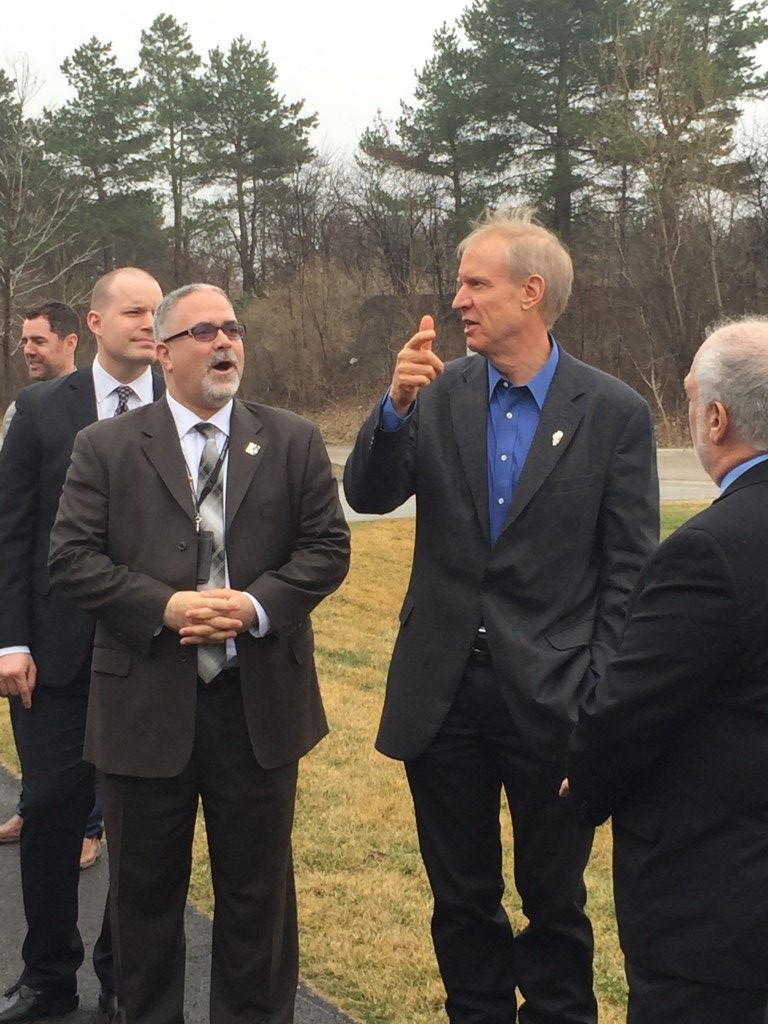
The Hon. Bruce Rauner, Illinois Governor, me and Principal John Filippi admiring the photovoltaic cells as well as the wind turbines, rain barrels and bird houses at Alan B. Shepard Middle School – home of the prototype (award winning) Phase I science labs.

Governor Rauner speaking with members of of the DPS109 and Deerfield community

Governor Rauner speaking with members of of the DPS109 and Deerfield community

Governor Rauner and science teacher Christian Ball doing the "science fist"

Governor Rauner and science teacher Christian Ball doing the “science fist”

Showing the governor solar panels and wind turbines at Shepard

Showing the governor solar panels and wind turbines at Shepard

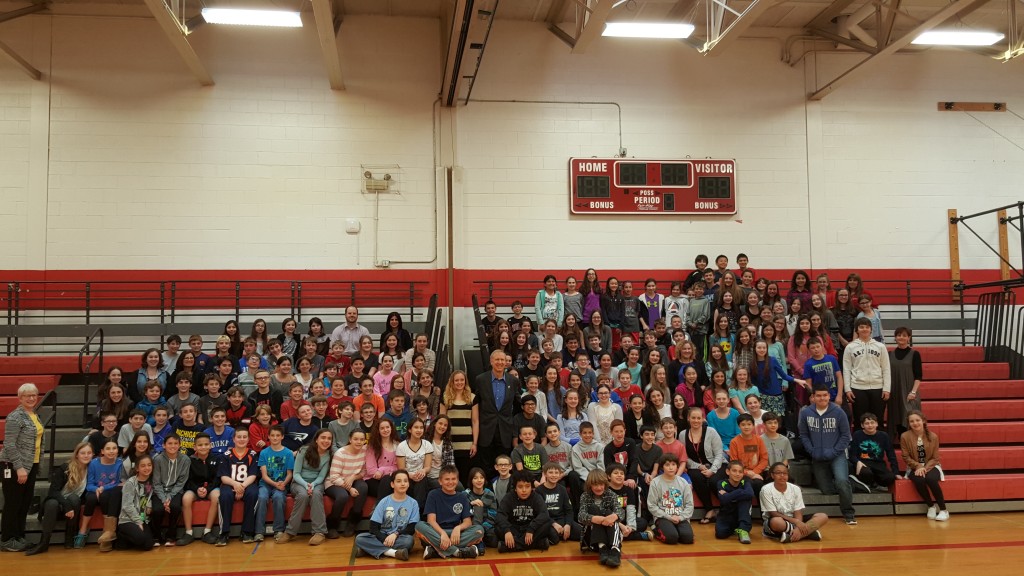
The Governor with our sixth grade students and teachers

The Governor with our sixth grade students and teachers


11150403_896764493721309_26793826252620571_n

The Governor visiting his hometown school district (he attended our schools in the 1960’s)


11088336_896764333721325_6206112643057760180_n

Science labs for the Next Generation! Collaborative planning, creative design, critical thinking and communication – labs for the next century!


11096512_896053810459044_5584188265777827988_o

Students get to “do” science now! Hands on, learner centered instruction is becoming the norm in DPS109.


digcitweek_missionmessage3_261x261

With all of this technology and communication and trust, it’s incumbent upon us to work with community and students on proper usage.


CScRi5IWsAAIIv8

Community screening of Most Likely to Succeed with local high school – upcoming screening of Beyond Measure with staff – engaging community in discussion about the need for a new “committee of 10” – redesign for future!

While he is a man who deserves GREAT credit for much of Public Schooling - it's time to move beyond rigid 19th Century structures!

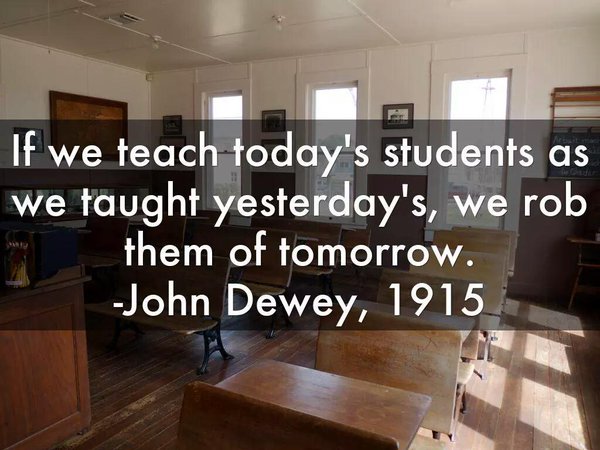
While he is a man who deserves GREAT credit for much of Public Schooling – it’s time to move beyond rigid 19th Century structures!

CSWju_OUsAAJMue

Farmersmarket620q5

Being present, in the community as the school system is a cornerstone of our mission!


IMG_20150411_115555

Newly published book from our Edu-Star Dr. Zoul! Dr. Z. is a multi-published author, speaker, leader, and inspired colleague! We are proud to work and learn and lead with you Dr. Zoul.

IMG_20150504_151743

Hon. Scott Drury, IL Representative visits our schools, interacts with our students and continues our mission!


FB_IMG_1428546013397

On left the Hon. Harriet Rosenthal, Deerfield Mayor and on right the Hon. Julie Morrison, IL State Senator – both engaged community members and informed reps of the people!


Hon. Bob Dold, US Congressman from IL (10th) visits with and interacts with students - Open Q & A

Hon. Bob Dold, US Congressman from IL (10th) visits with and interacts with students – Open Q & A

CWW6omnUkAA47Ci

Shadowing the fourth grade class of Mrs. Samantha Johnson at Walden Elementary School! Learning through the lenses of the children keeps it real for our leaders!

lunchatwalden

Students are fun to eat with!


hour of code leaderboard 250pmCT 129

joining in the world movement and the White House initiatives!

index

 ENGAGE, INSPIRE, EMPOWER

ENGAGE, INSPIRE, EMPOWER

Why do we teach? A short video to help reflections.

“Don’t count the days, make the days count.”
– Muhammad Ali

index
As the calendar year comes to a close and many of us are recharging with friends and family over the holidays, it’s a time to reflect.

The following short video was shared with the staff at one of our schools and I thought it would be nice to share here – it’s a video with images and text causing reflection and motivation. We teach because it is Engaging, Inspiring, and Empowering!

As Kay Toliver said “My educational philosophy is simple: All students can learn. It is a teacher’s job to expand minds and take children from the known to unknown.”

Magic happens in 4th grade!

“The secret of joy in work is contained in one word–excellence. To know how to do something well is to enjoy it.”
– Pearl S. Buck

Walden1

Today I had the opportunity to view school through the lenses of Mrs. Johnson’s 4th grade class at Walden School in our District. Mrs. Johnson facilitates learning for 22 wonderful students. As part of our administrative commitment to leading through learning, I “shadowed” or spent the entire day (lunch, art, recess too) with my new friends at Walden School. The focus of today’s shadowing was to learn what it’s like to learn in a typical classroom in Deerfield Public Schools – District 109. Each year our holiday presents as a leadership team is a holiday “presence” where we administrators substitute teach for a full day – that experience is wonderful and over the past two years I have taught self-contained special education, 7th grade math, and after the new year in 2016 I will teach 1st grade!

lunchatwaldenToday’s leadership focus was learning about our work and our leadership through the experience of the students we serve. I’m drafting this post during writing time; it’s the first time today I’m doing my own work; I was doing the actual 4th grade student coursework all day. I participated as a student in number corner, language arts whole group and small group, art,lunch/recess, match, science and around the world!

With the help and support of the awesome students I learned the routines, rules, procedures, expectations, essentially “how” to be a 4th grader at Walden School. The students were really busy all day and the day flew by. The students and I were busy pursuing authentic learning tasks. We analyzed complex text, we reviewed multiple sources of informational text. The conversations were high level, complex, meaningful and quite impressive. Mrs. Johnson runs an active classroom and she clearly puts in tons of time planning, preparing, reviewing, teaching, helping, listening – she is an excellent teacher! In

workwithkids floorwork math class we followed the Illinois New Learning Standards and we worked collaboratively and with multiple methods of discovery and presentation. Mrs. Johnson respects the individual needs and abilities and interests of her students.

Our teacher, Mrs. Johnson is amazing! She is kind, considerate, well planned, organized, authoritative, focused, diligent – truly excellent in every sense of the word and per all criteria I have studied, read, and implemented over the years about effective instruction. As a student I participated in guided learning,

CSWju_OUsAAJMueindependent practice, individualized activities and personalized opportunities. I had clear expectations and clear outcomes to produce yet often I was able to select the way in which I could produce the learning.

Through deliberate conversation and teaching I was reminded naturally of the Illinois New Learning Standards as a normal part of the vocabulary and discussion. It’s as natural for Mrs. Johnson’s students to speak the language of Standard NF.3d as it is for them to use the “real” vocabulary of mathematics. The students are learning to become fluent in math vocabulary, concepts, practice, and mastery of standards based learning. In art class I learned about Wassily Kandinsky, the color wheel, and how to make colors out of paint using the primary, secondary, and tertiary colors. My one hour as a fourth grade art student was fun, engaging, informative, and active. I completed the primary and secondary color abstract painting with the help of my fellow students and wonderful teacher Ms. Summers.

artphoto


Today, in “real life” I saw examples of learning on the cognitive, affective, and psychomotor domains. The students routinely performed thinking tasks, considered the feelings of other and they were moving around all day long. This was a classroom preparing students for today and tomorrow! This was a modern, contemporary, relevant learning environment for some wonderful students.

I saw and I experienced the 4C’s: Collaboration, Communication, Creativity, and Critical Thinking. The natural integration of multiple processes, routines, actions, and learning make me quite proud. Mrs. Johnson spoke in the language of high expectations and kindness and courtesy and focus. The students roiwere normal, typical kids – a little rambunctious, funny, fun, interactive, and to a person – ENGAGED in the learning. Mrs. Johnson is teaching students and they are learning. They learn how to work with one another, they focus on social emotional learning (they use the Botvin Life Skills program as do all 4th and 5th grade students in the district). The students with whom I learned today truly were engaged in their tasks, learning, content, subject, one another, and school in general. They inspired me as their superintendent and their performance all day – bell to bell – truly was inspired. They were empowered to select from a variety of resources and tools both technological/digital and in print throughout the school day.

The students were learning and engaged in authentic learning tasks aligned with best practices from the minute they walked in to the minute the bell rang at 3:25pm. Mrs. Johnson is an outstanding representative of an outstanding faculty! What a great experience! I am fortunate to work, lead, and serve in the Deerfield Public Schools.

ENGAGE, INSPIRE, EMPOWER

ENGAGE, INSPIRE, EMPOWER

PARCC Student Score Reports Explained

“Never say never, because limits, like fears, are often just an illusion.”
– Michael Jordan

With the recent release of the PARCC scores and our district’s sending student score reports home, we found this video that clearly shows what the new report will look like. It’s worth a watch for anyone involved in education, PARCC reports, and especially for parents. Another source of information is the website referenced in the video: Understandthescore.org

Sharing excerpts from a note we sent to all parents in the school district:

images

“During the 2014 – 2015 school year, students in grades three through eight took the PARCC Assessment for the first time ever. This assessment was given in two parts over multiple days and was a replacement for the ISAT. Soon, the results of the PARCC assessments will be released and we wanted to share accurate information regarding our scores.

Each student who took the assessment will be given a scaled score in the areas of Math and English Language Arts (ELA). The scores are then broken down into five categories:

Score of 1 – Did not meet expectations for College & Career Readiness
Score of 2 – Partially met expectations for College & Career Readiness
Score of 3 – Approaching Expectations for College & Career Readiness
Score of 4 – Met Expectations for College & Career Readiness
Score of 5 – Exceeded Expectations for College & Career Readiness

Illinois considers a score of four or five to be meeting college and career readiness standards. When Illinois released the preliminary results in September, just over one-third of the students in the State scored at a level four or five.

We do not believe that our students have changed in any way and we know that this does not reflect reduced standards or lower performance than past years. It does represent a higher standard and a new roibaseline for which our scores will be measured against in future years.

During the coming weeks, we will be sending you a copy of your child’s score report. Information about the PARCC Assessment is available on our website and we will be holding two parent information sessions on January 6, 2016 (10:45 a.m. and 6:30 p.m.) at the District Center, 517 Deerfield Road, and we will walk through the score reports, the assessment, and our plans for using these data.”

isbe_bIf you would like to learn more about PARCC, please read the Illinois State Board of Education’s PARCC Place webpage from the IL State Superintendent, and the Parents’ Guide to New Assessments in Illinois, from the Illinois PTA and ISBE.

In District 109 people may contact Amy Rubin, District 109’s director for learning and assessment services if you have questions about PARCC testing in District 109.

ENGAGE, INSPIRE, EMPOWER

ENGAGE, INSPIRE, EMPOWER

It’s Not My Job? – Yes, Actually It Is! Education For ALL by All #HourOfCode

“Being a leader is not about you. It’s about the people that are on your team and how you can help them be successful.”
– Susan Vobejda

hourofcode
Last year in December I wrote about the Hour of Code; this followed up from a post the previous December as well. This Hour of Code is held during Computer Science Education Week. Here is a link to an article about White House support for Hour of Code.

Here is a video about the Hour of Code from Computer Science Education Week:

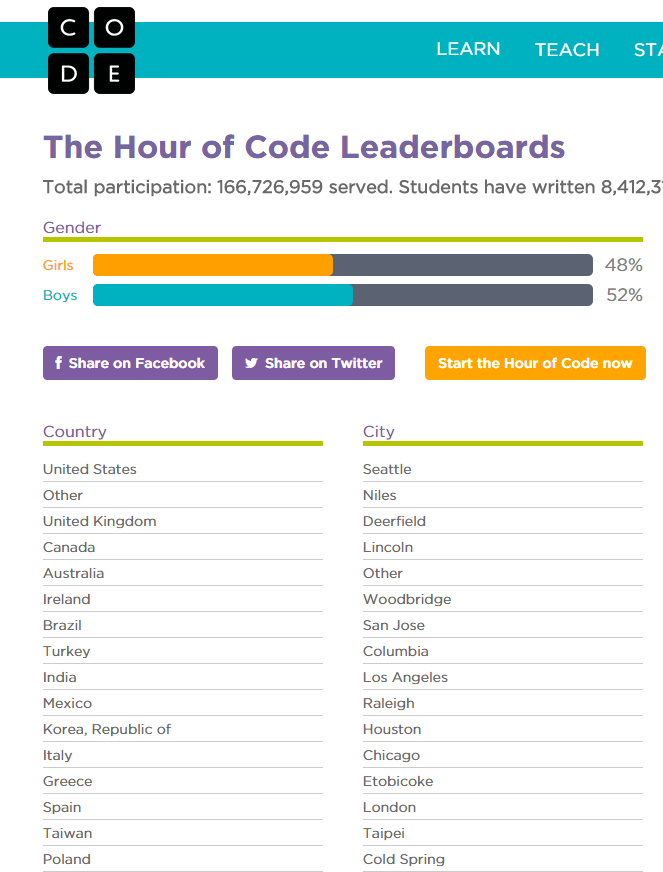
All across District 109 students and teachers and administrators are experiencing Computer Science by participating in the Hour of Code! So much energy was devoted to this endeavor that our town made the Leader Board (as of 2:50 Central time on 12/9/2015):

hour of code leaderboard 250pmCT 129

One of the main leadership tenets under which we operate in DPS109 is “MICEE” from Leadership Challenge.

Model the Way
Inspire a Shared Vision
Challenge the Process
Enable Others to Act
Encourage the Heart

To that end, today we Modeled the Way during our Leadership Team Meeting (see Periscope video) The video runs 24 minutes, so you may want to watch parts … the point is we leaders in DPS109 (superintendent, assistant superintendents, executive directors, principals, associate/assistant principals), as part of our leadership development we participated in the hour of code.

The blog post’s title: It’s Not My Job? – Yes, Actually It Is! Education For ALL by All #HourOfCode is meant to show how educating our children, supporting the growth of one another and our teachers, is the job/responsibility of each of us. Education is often referred to as a calling, leadership is a set of practices and a foundation of service, together we can best serve our students.

Kudos to the students, teachers, and leadership around the world, and in DPS109 for living the Leadership Challenge exemplary practices of leadership! It’s fun to be on the “Leaderboard” but the real fun is experiencing computer science, coding, problem solving and problem based learning. Through real life experiential learning our students will continue to be engaged, inspired, and empowered – our Vision and our Mission – each and every day!

It is incumbent upon us to “get out of the way” in terms of modern approaches to student learning. Students are bright, they have the ability to collaborate and create and think critically and communicate. Students have voice, agency and power. Schools are designed for student learning. School systems support student, staff, leadership, and community learning. It’s a time of change and energy in public education. It’s time to bring back problem based learning experiences tied to the 4C’s linked to standards and student interest. Passion projects, genius hour, excitement and energy is what school should be all about. It’s affirming and rewarding to serve in a community dialed in to what’s right about schooling!

ENGAGE, INSPIRE, EMPOWER

ENGAGE, INSPIRE, EMPOWER

ALL Students Every Day – #Engage109

“In teaching others, we teach ourselves.”
– Proverb 


CSWju_OUsAAJMue

 As a teacher, an advocate, and a supporter of public education, I often think about creating systems and structures that allow our students to reap the benefits of “being in the right place at the right time.” I believe the only way to do that is to ensure that the right place and time is our own classrooms. As I have written often, we educators only have a single school year to make the best possible impact on our students. Students only have one chance to be in kindergarten, first grade, second grade, etc. This means we have just 180 days per year to facilitate learning in the most meaningful way possible. We don’t get do overs – we have tremendous power over our students’ lives, and we have tremendous responsibility to ensure that they are in the right place at the right time, set up to achieve success.

Meeting individual students’ needs is an often-elusive goal for American educators. For as long as I can remember, we’ve been learning about and promoting “differentiated instruction,” or providing different students with varied approaches to learning. Certainly a lofty goal, but our industrial-era school system was designed for groups, not individuals. Consider the classroom design of the typical schoolroom: rows of desks all pointed toward the front of the room. Group instruction is based on rigid CScRi5IWsAAIIv8and fixed schedules regulated by bells, mass movement of large groups of students, standardization of assessments and “batch” organization of students. That model served us well from the 1800’s through the 1900’s.

Times are changing. Scores of research reports inform us about more effective ways to facilitate learning, and the buzz around differentiation is growing. Educators and school systems are more interested in how to incorporate differentiation into their approach. The good news is that information on how to differentiate is all around us. Studies focusing on everything from neuroscience to instructional practices inform us of the need to change and the ability to do so.

Early in my career, I published an article that touched on the subject, sharing this story:

With U.S. History Workshop, I was able to teach traditional units of instruction more effectively than before. For example, most U.S. history teachers are familiar with the Civil War and Reconstruction period (roughly 1850-1880). For this and every unit taught with the workshop, I taught the students to view social studies and history as human experiences. This unit, like the others, separates history into five core areas or themes: Civil Rights, Women in History, Science & Technology, Politics, and War & Conflict. I identified key ideas, concepts and so on for each area and allowed student teams to explore these key concepts rather than the whole concept of the Civil War and Reconstruction. Instead of teaching this unit as one big complication, I presented it as one big puzzle–each of the concepts or ideas from each of the areas was like a piece of a puzzle. The challenge for the students was to piece together the puzzle independently, cooperatively, and with direction from the teacher. (Page 11)
I share this experience to provide a conceptual background to passion for meeting students where they are. Fast forward to 2015, and in our classrooms we have differentiation, individualization, and personalization in the mix of instructional improvements.

Another good example of differentiated instruction comes from a third grade classroom I visited recently in our district. After viewing the video Caine’s Arcade, one teacher’s classroom was inspired to spend 30 minutes a day for two weeks working on their voice projects. These students experienced a combination of differentiated instruction (different project for each child/group), individualized instruction (each child’s unique voice and interest came alive in their projects) and personalized instruction (each child had full creative license to produce learning in their own ways).

In addition to this type of engaging and creative lesson planning, our school district also supports digital tools for meeting individual student needs. We have invested time, dollars, resources, planning, training, and support for this transformation of teaching.

To support teacher use of the digital resources to differentiate instruction, our district has intentionally and deliberately acquired services like Discovery Education. We use subscriptions, tools, and programs to support teachers and students. We use combinations of free, open, educational resources as well as paid resources.
images
Some of the companies with whom we partner are web-based subscriptions, which allow for 24/7 school and home access! The possibilities are endless as we truly become a COMMUNITY of learners.

As a superintendent, I see learning every day and my aim is to support every classroom’s transformation into an engaging, motivating, challenging learning space for our nation’s most precious assets – our children! It’s imperative that we act with urgency to provide the most excellent educational system for ALL children.

I originally posted this at: http://blog.discoveryeducation.com/blog/2015/12/02/defining-differentiation-in-todays-classroom/

More on Hattie and Marzano – We KNOW what works!

“The experience of others is the best classroom you will ever find.”
– Warren Buffett

From time to time I share information about relevant and timely educational research. in this post I am reprinting excerpts from an earlier post regarding the powerful and influential research findings from John Hattie. The excerpt is from a post on January 2015 about my own connections educationally with the constructivist philosophy as well as some powerful findings of impact/effect from John Hattie’s meta analytical research. Following the excerpt, I’m reprinting a blog post from Shaun Killian that shares commonalities from Robert Marzano’s findings and Hattie’s findings. So much information about impact and effects of instructional methods rests at our fingertips – it’s exciting to have multiple mediums to share and communicate and inform!

As early as in 1995, I experimented with U.S. History Workshop where students were given voice and choice – with guidance, support, and direction – as they learned about U.S. History. I published an article in “The Councilor” (the official publication of the Illinois Council for the Social Studies), Volume 56, pages 11-25, title: “Planning Powerful and Engaging Social Studies: The U.S. History Workshop for Students”

Looking back at past blog posts I shared about Hattie’s research and in commentary where I have read and written about Hattie’s meta analytical research, I found that the effect size of student expectations also referred to in his writing as self-reporting grades is 1.44, for more on Hattie, there are books, articles, publications, and links from my blog. The main points are for us to keep our eyes on the prize so to speak, raise our expectations – remove limits and obstacles – teach better, create more active learning spaces and allow our students to soar – using what we know and using what we believe -there are no limits!

It is incumbent upon us – public education leaders – to learn from research findings, apply interventions in the ways enumerated in the syntax of the research – and to cede some control to the students as we activate their learning and as we support their limitless growth and success!


From Shaun Killian’s Blog Post: Reprinted and shared with permission

8 Strategies Robert Marzano & John Hattie Agree On

Robert Marzano and John Hattie have both reviewed research into what teaching strategies make the biggest difference to students’ results. While they used different methods and terminology, they agreed on these 8 powerful strategies.


Strategy 1: A Clear Focus for the Lesson

focusJohn Hattie highlights how important it is for you (and your students) to be clear about what you want them to learn in each lesson. According to Hattie, teacher clarity is one of the most potent influences on student achievement. Robert Marzano agrees, including lesson goals in his top 5 list of factors that affect how well students do at school.

Hattie states that lesson goals:

  • Clearly state what you want your students to learn
  • Can focus on surface or deep learning (or both)
  • Must be challenging for the students relative to their current mastery of the topic
  • May be grouped (i.e. a single lesson may have more than one goal)
  • Need to be shared with the students

Marzano also found that posing questions at the start of a lesson is an effective way to focus students: For example:

  • How do you add mixed fractions with different denominators? That’s what you must know by the end of this lesson.
  • What is the difference between elements and compounds? …
  • Why is Persuasive Essay A better than Persuasive Essay B? …
  • When (what period) were Egypt’s great pyramids built? …

Hattie suggests using questions a slightly different way:

  • What are today’s lesson goals?
  • What do I already know that will help me achieve these goals?
  • What actions will I need to do to ensure I achieve these goals?


Strategy 2: Offer Overt Instruction

Robert Marzano claims it is important to explicitly teach your students the things they need to learn. His review of research actually revealed it was the most important factor (teacher controlled) affecting students’ success. You need to tell them what they need to know and show them how to do things they must be able to do for themselves.

John Hattie did not review explicit teaching per se, but he did find that Direct Instruction was very effective. Direct Instruction involves explicitly teaching a carefully sequenced curriculum, with built in cumulative practice.

Furthermore, Hattie highlighted the power of giving students worked examples when explaining how to multi-step tasks. Marzano also highlights the importance of giving examples and non-examples (similarities and differences) of the concept you are teaching. For example, when teaching prime numbers it would be useful to highlight 2 as an example, and 9, 15 and 21 as non-examples to avoid confusion with odd numbers.

Marzano also found that you can explicitly teach deeper levels of understanding by using graphic organisers You should use graphic organisers to show how different ideas were related to each other (e.g. steps, cause-effect, hierarchy, lists, comparisons, etc.).

Neither Hattie nor Marzano believes that great teaching is nothing more than standing out the front of the class and imparting knowledge. However, both agree that telling students what they need to know and showing students what they need to be able to do are essential aspects of teaching.


Strategy 3: Get the Students to Engage With the Content

While it is essential to actively teach students what they need to know and be able to do, it is also important to get them to actively engage with the content.

Marzano and Hattie agree that this starts with students actively linking your newly provided information with their prior knowledge of the topic. Students need to engage with the content as soon as they hear it by:

  • Adding it to what they already know, or
  • Using it to clarify some of the faulty assumptions they currently hold

Your students can then engage with your information in other ways. Hattie talks about the value of getting kids to take notes. Marzano also found there was great value in having your students take notes, and getting them to work with physical manipulatives.  Also, he found that the simple act of asking students to recall information that you have just taught them (i.e. asking basic questions) had a substantial impact on how well they mastered the material. All these strategies are useful, but they only allow students to engage with the material at a surface level.

vennRobert Marzano also found several ways for students to engage with the material in ways that help them deepen their understanding beyond surface knowledge. These include the use of graphic organizers that show how information is connected (e.g. steps, cause-effect, in comparison to, hierarchical classification). It also includes the use of analogies, such as:

  • Persuasive devices are to a writer what tools are to a tradie, or
  • The Magna Carta offers citizens what a referee offers a game of soccer.

These are practical strategies that exemplify the higher levels of the SOLO taxonomy (an alternative to Bloom) that Hattie also advocates.


Strategy 4: Give Feedback

It is important that you give your students feedback after they engage with any new material. This:

  • Highlighting what is right and wrong, or good and bad about their work
  • Helping students to see how they can improve

Robert Marzano highlighted that students need to be given feedback while there is still time to improve (i.e. before finishing a topic or assigning a formal assessment task). John Hattie agreed with this but went further, showing that novice or struggling students need immediate feedback, while more experienced students do better when they receive delayed feedback. Hattie also discovered that different types of students need distinct types of feedback (see How to Give Feedback: The Advanced Guide).

Hattie also highlighted that feedback is a two-way street, where student results tell the teacher the degree to which their efforts are working (or not). When teachers see feedback this way, it has an even larger impact on their students’ subsequent results.


Strategy 5: Multiple Exposures

If you want students to internalize new information, you need to expose them to it several times.

When exploring how to enhance students’ vocabulary, Robert Marzano found that it was critical for teachers expose students to the same word multiple times. When each exposure was coupled with an explicit comment about the word and its meaning, students’ vocabulary acquisition doubled.

John Hattie picks up on the significance of multiple exposures by revealing the critical importance of techniques such as rehearsal and review.  Put simply, rehearsal means going over material until you can remember it, while review involves going over things you have learnt previously.

He also stresses the merit of giving students time to practice doing the things they have learned to do. When spaced out over time, Hattie found that having students practice things led to a 26 percentile improvement in their marks.

On a more cautious note, Hattie warned that practice without feedback can be dangerous as it leads to students internalizing the wrong things.


Strategy 6: Have Students Apply Their Knowledge

Robert Marzano found that helping students apply their knowledge deepens their understanding.

Knowledge application is a deductive process whereby students apply general principles to specific case studies or problems. Marzano found that teaching students how to think deductively and giving them guided practice in doing so helps them generalize their learning beyond the particular topic or task at hand. Hattie confirmed that deductive processes (i.e. general principle applied to specific situation) is much more effective than inductive teaching (i.e. asking students to discover general principles from observing specific situations).

Knowledge application also involves problem-solving. Robert Marzano’s synthesis of research revealed that problem-solving had a large effect (d = 0.54) on students’ understanding. Marzano believes that problems should require students to apply previously learned knowledge and skills – and Hattie agrees.  When problem-solving is used in this way, Hattie found a similar effect size (d = 0.61) to Marzano. However, when a problem is used to stimulate discovery learning, the opposite is true (d = 0.15). Hattie also emphasized the importance of teaching students how to solve problems, e.g. understand the problem  come up with a plan of action implement the plan  review the results.


Strategy 7: Get Students Working Together

group workRobert Marzano and John Hattie both agree that getting students to work with each other helps them to achieve better results. The use of cooperative learning groups adds value to whole-class instruction (d = 0.41) and to individual work (d = 0.59-0.78).

They also agree that inter-group competition can increase the effect of cooperative learning even more.

However, neither Marzano nor Hattie believes that cooperative learning should replace whole-class instruction or individual learning activities.

  • Hattie highlights how students need you to teach them topic-related facts and skills, so they can make genuine contributions to their group. If students haven’t gained sufficient mastery of the material, they cannot actively participate in cooperative learning tasks.
  • Marzano adds that it if students are to master what they are being taught, they also need opportunities for individual practice and feedback.

Finally, Marzano and Hattie agree that cooperative learning is only effective when you:

  • Structure it carefully
  • Keep groups small
  • Teach students how to work in groups

For further information, read Group Work That Works.


Strategy 8: Build Students’ Self-Efficacy

Self-efficacy refers to a student’s belief about their ability to successfully complete a task. It is situation specific. For example, a student may feel confident that they can dance well on stage but be insecure about public speaking.

Hattie & Marzano both found that students’ self-efficacy had a substantial impact on their subsequent achievement. Students who believed they would master fractions were more likely to do so, while students who saw themselves as poor readers were less likely to improve their reading.

Marzano’s review of research showed that you can build students’ self-efficacy through praise, and expressing your belief that they can do well. However, to be effective, such praise must:

  • Be genuine – i.e. only given when students have made real improvement
  • Refer to specific accomplishments related to the task

As Carol Dweck noted, if you praise lavishly and liberally, you end up praising mediocrity, which in turn sends a message that you believe that is all you think they are capable of.

Hattie highlighted the fact that the link between self-efficacy and achievement is reciprocal. That is, achieving genuine success has as much impact on subsequent self-efficacy, as self-efficacy has on subsequent achievement.

John Hattie and Robert Marzano have each conducted significant reviews of what works best in the classroom.

There are some clear differences in their work.

  • They use different terminology to each other
  • Marzano uses more isolated strategies, while Hattie combines strategies into broader approaches
  • Marzano’s findings are based heavily on teacher-designed assessments, while Hattie’s findings make more use of standardized tests

However, as you can see, there is significant agreement between Robert Marzano and John Hattie when it comes to what works best in the classroom.


Who Is Robert Marzano?

Robert Marzano conducts educational research, and is the co-founder of Marzano Research.

Robert Marzano has authored many books worth reading, and compiled a seminal meta-analysis on the effectiveness of various instructional strategies entitled, A Theory-Based Meta-Analysis of Research on Instruction

Who Is John Hattie?

John Hattie is a professor at the University of Melbourne’s Graduate School of Education. He is also chair of the board for the Australian Institute for Teaching & School Leadership.

John Hattie has reviewed over 800 meta-analysis of research studies exploring the degree to which various factors affect student achievement. It is the most extensive review ever taken.

About the Author

Shaun Killian is an experienced teacher and principal with a passion for helping students to excel. He believes that assisting teachers to adopt evidence-based education is the best way to make this happen. Shaun is committed to bringing you practical advice based on solid research.